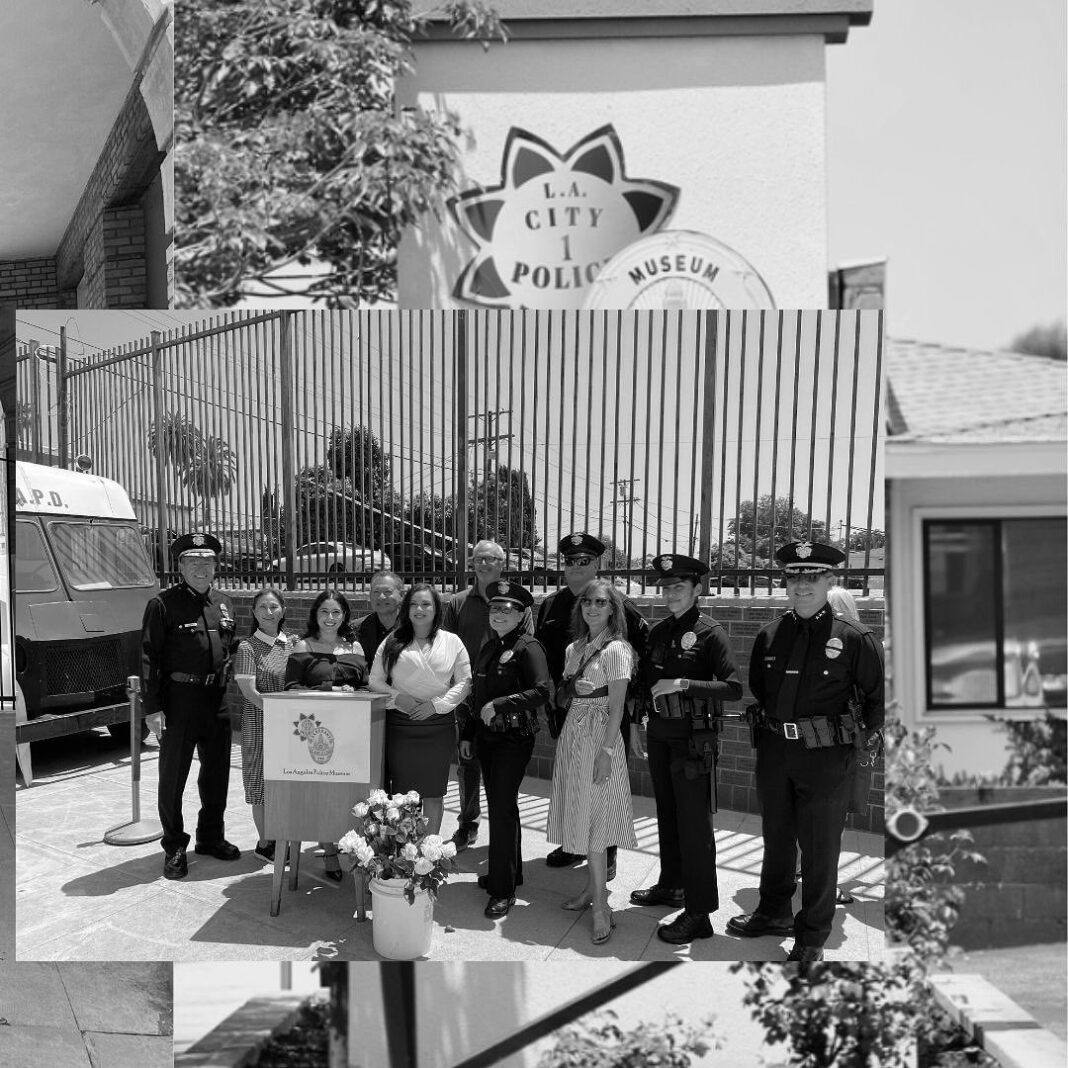

In 1853, the Los Angeles Rangers, known more commonly as the first Los Angeles police force, came into existence. From its humble beginnings as a volunteer force that aided the Los Angeles County Sheriff’s Department, the LAPD has since evolved into a highly professional law enforcement agency. To learn more about the LAPD and its historical background, check out layes.info.
LAPD
It serves as the primary law enforcement agency in Los Angeles, California. As of 2023, the LAPD had 8,967 officers and 3,000 civilians. When it comes to the size of municipal police departments, LAPD is the third largest, following New York City and Chicago. It’s fascinating to delve into its origins, considering that independent investigative commissions have uncovered instances of police brutality, corruption, misconduct, and discriminatory practices within the LAPD.
So, let’s start at the beginning. The Los Angeles Rangers were later replaced by the Los Angeles City Guards. Unfortunately, both of these volunteer forces failed to accomplish their intended purpose and were inefficient. Since then, Los Angeles has become notorious for criminal activity, including violence, gambling, and other morally unacceptable behavior.
In 1869, the city’s police force reached a milestone by forming its first paid police force. Six officers were appointed to their roles, led by City Marshal William C. Warren.
Jeffersonville Mayor John M. Glass led the way in increasing the number of officers to 70. However, that was still insufficient, as there was only one officer for every 1,500 citizens. As a result, in 1903, the force was expanded to 200 officers.

Women in the police force
In 1910, Alice Stebbins Wells became the first female police officer in the United States when she was appointed in Los Angeles. The city then hired its first African-American female police officer in 1916, just six years later. These milestones are significant moments in history.
By that time, starting in 1890, many cities in California had hired female employees who specialized in caring for female prisoners. They also worked not only in city and county jails but also in various correctional facilities.
On her first day of the assignment, Mrs. Wells received a key to the phone booth, a rule book, a first aid book, and a police badge. Back then, officers were entitled to perks like free rides on the trolley bus. However, when Alice Wells displayed her badge to the conductor, she was wrongly accused of impersonating her husband. The LAPD resolved the matter by issuing her a ‘Policewoman’s Badge Number One’.
Here are a few instances of the responsibilities carried out by the first policewoman:
- Overseeing and ensuring compliance with laws at dance halls, skating rinks, arcades, shows and public entertainment venues
- Identifying and removing offensive billboards
- Looking for individuals who are missing
- Maintaining a general information office for women seeking guidance on matters related to police administration.
Despite the historical changes taking place, there was resistance to granting women equal authority as men in the police force. In 1925, the City Council even proposed transitioning the policewoman’s role to civilian status.

The LAPD’s issue with corruption
For a long time, this problem was relevant and required an immediate solution. It is worth mentioning that corruption was not limited to the police force but also extended to the city administration. This issue persisted into the 1940s.
The establishment of a Reserve Unit in 1933 was a crucial step towards overcoming this massive problem. The main task of the Reserve Unit was to combat crime, and eventually, it transformed into the Metropolitan Division (Metro).
In 1946, the Gangster Squad, also known as the Organized Crime Intelligence Division, was founded. This specific division was launched to tackle the American Mafia and the Los Angeles crime family, often known as the ‘Mickey Mouse Mafia’.

World War II and changes in the police force
During the war years, the military’s requirements led to a decrease in the overall count of police personnel. From 1949 through 1950, William A. Wharton, a retired US Marine General, took on the role of Interim Chief of Police, followed by William H. Parker. The man dedicated his life to the police force until his passing in 1966, always underlining the importance of professionalism among police officers and their independence from civilian administration.
The Bloody Christmas scandal was a turning point in history and prompted action. On December 25, 1951, LAPD officers brutally beat seven civilians, causing broken bones and ruptured organs. William H. Parker conducted an internal investigation, which led to the indictment of eight police officers, the transfer of 54 and the suspension of 39.
Following these events, the Special Weapons and Tactics Unit (commonly referred to as SWAT) of the Metro and the Special Investigations Section (informally called the Death Squadron), a covert tactical surveillance team, were formed.
Street gangs
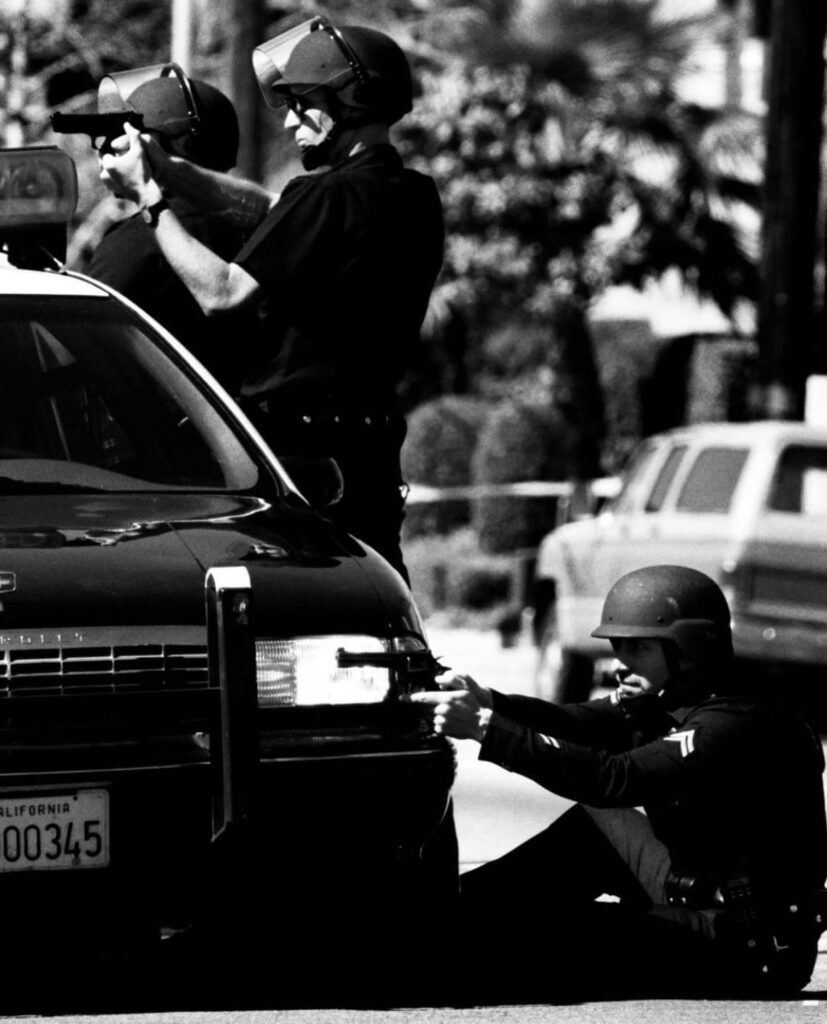
Back in the 1970s and 1980s, city residents and police force encountered a new obstacle known as street gangs. To address this issue, the LAPD created a gang intelligence unit called Community Resources Against Street Hoodlums (CRASH). In 1987, CRASH launched Operation Hammer, a successful large-scale effort to combat gang violence in the city. However, in 2000, the unit was dissolved following revelations of corruption and misconduct among police officers. Here are some high-profile cases:
- In 1991, Rodney King, an African-American man, fell victim to police brutality following his arrest for drunk driving after a high-speed chase. The beating of the unarmed King was captured on camera by a bystander and subsequently aired by the media. This incident sparked a wave of public outrage.
- In 1992, public riots erupted in Los Angeles following the acquittal of four LAPD officers who had beaten Rodney King. The verdict sparked six days of rioting, which included mass looting, assaults, and arson. The local police were unable to control the situation.
- The next was the Rampart corruption scandal in the late 1990s and early 2000s, exposing widespread criminal activity within the LAPD’s Rampart Division’s anti-gang unit. This scandal proved to be the breaking point, resulting in over 140 civil lawsuits against the city, ultimately costing Los Angeles approximately 125 million dollars.
The disbanding of CRASH was a direct consequence of these events.
General information
The LAPD’s main office is located at 100 West 1st Street in the Civic Center district. The department has a complex structure and a wide range of resources. It includes 21 community stations divided into four bureaus under the Office of Operations. The Detective Bureau, under the Office of Special Operations, has multiple divisions. Additionally, there are specialized units like the Metro, Air Support Division and Major Crimes Division, which fall under the Counter-terrorism and Special Operations Bureau. Apart from these, other offices provide support to the Chief of Police in areas such as constitutional police activity and professional standards. The Office of Support Services takes care of facilities management, personnel, training and more.
Discover more about the LAPD and its rich past by visiting the Los Angeles Police Museum, originally known as the Los Angeles Police Historical Society and founded in 1989.