
Most Americans believed that enemy raids in the United States were inevitable. The attack by Japanese forces on Pearl Harbor in 1941 heightened anxiety and hysteria among the residents. The next event was a false alarm and the release of anti-aircraft fire in the sky over Los Angeles. Layes.info will remind you of all these past events.
Attack on Pearl Harbor
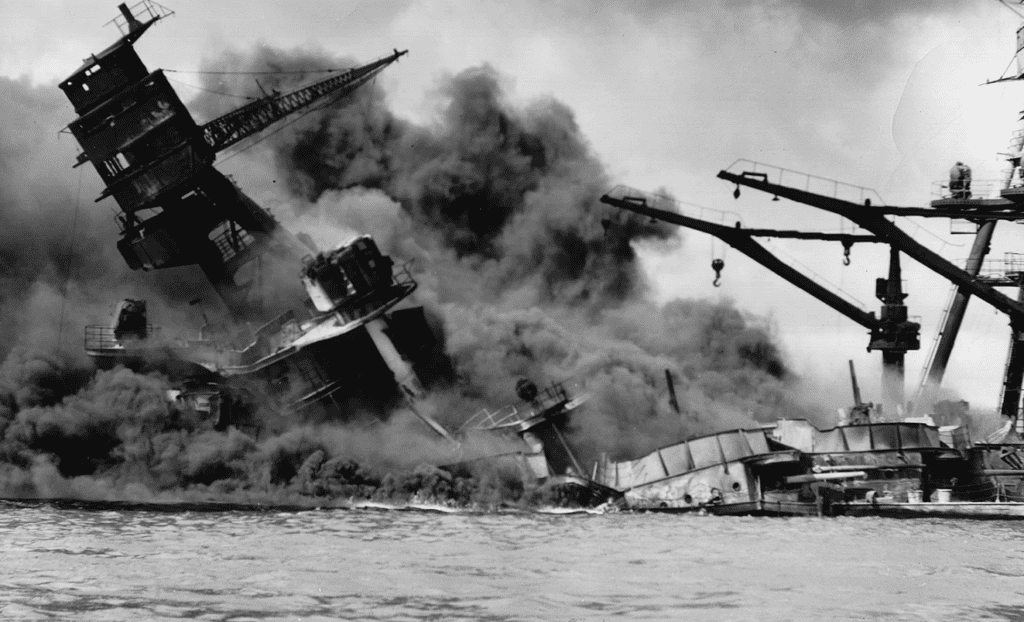
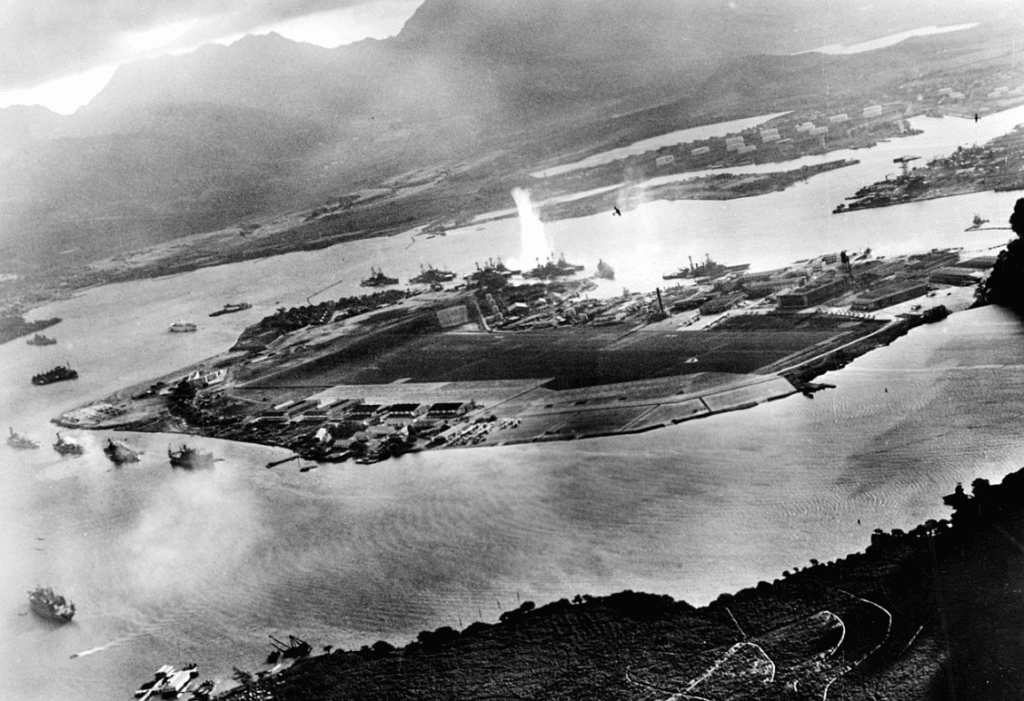
Let’s briefly talk about this event. On December 7, 1941, Japanese forces launched a devastating strike on the U.S. military base at Pearl Harbor. The base was located near Honolulu, Hawaii. On that Sunday morning, hundreds of Japanese fighters landed at Pearl Harbor. As a result, about 20 US Navy ships and over 300 aircraft were destroyed or damaged.
Besides technical losses, over 2400 Americans (including civilians) were killed and around 1000 people were wounded as a result of the attack. After that, Franklin D. Roosevelt, the 32nd President of the United States, asked Congress to declare war on Japan.
Psychological pressure
After the attack on Pearl Harbor, specifically on December 9, 1941, unfounded reports were received regarding the approach of planes and the threat of invasion to New York. This led to a drop in stock prices.
After America announced its entry into the Second World War, public indignation, paranoia and fear spread throughout the country. Here are examples presented in different sources of how the population behaved:
- In the city of Juneau, Alaska, local residents were ordered to close their windows at night.
- The city of Oakland closed schools, announced power outages and air raid sirens (civil defense) on police department patrol cars started wailing across the city. Radio broadcasts had to be turned off for safety reasons (radio silence). There was no attack, but paranoia was growing rapidly along the coast.
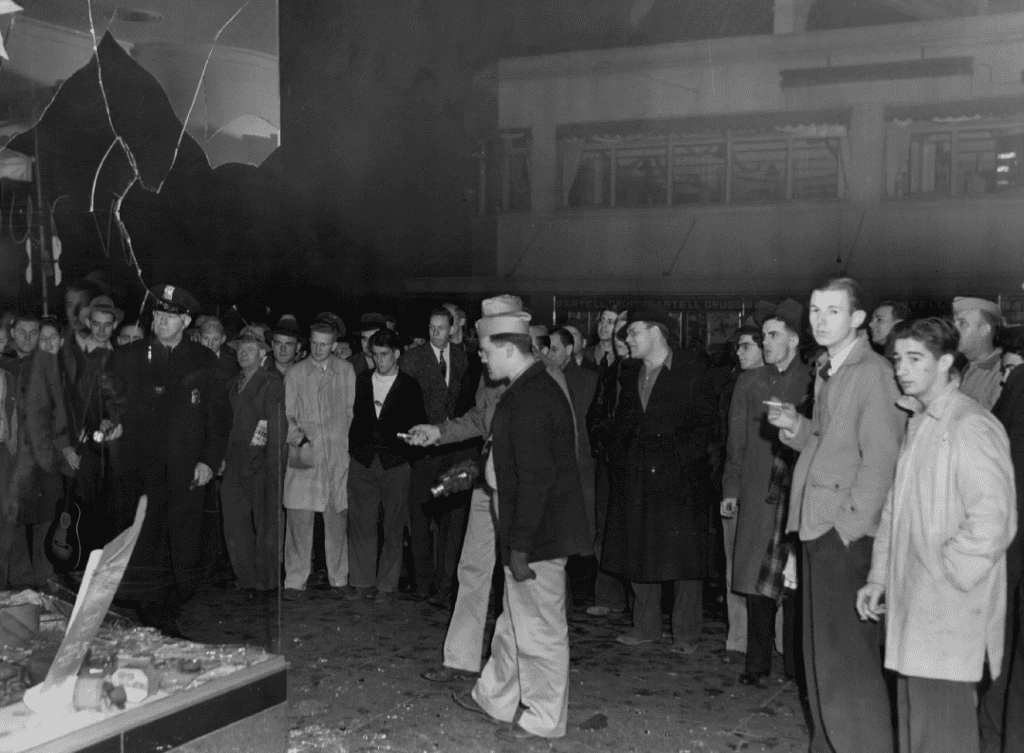
- All buildings and vehicles in Seattle have been turned off from the electricity. These restrictions started at 11:00 p.m. in order to ensure that Japanese planes would not notice them. Radio stations also did not work at night so that the Japanese could not pick up their signals. A recorded incident occurred in downtown Seattle where a crowd of 2,000 people smashed display windows and signs because several shops left their lights on. During the blackout, gatherings of three or more people were not allowed. Alcoholic drinks could be bought until the blackout (by order of the Control Council on December 9, 1941).
One can only imagine how scared, panicked and angry the residents were.
The Battle of Los Angeles
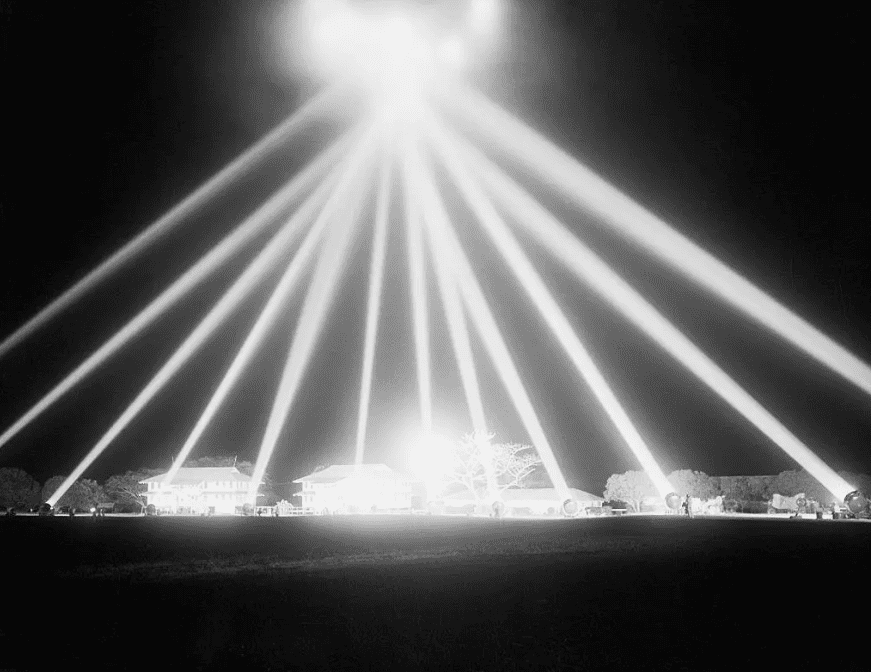
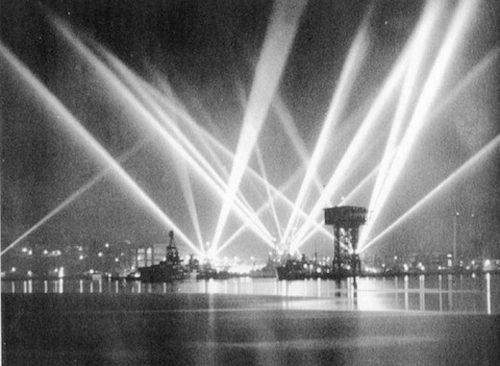
This event took place on February 25, 1942, when American military units opened anti-aircraft fire in the sky over Los Angeles due to a false alarm. The event is also known as the Great Los Angeles Air Raid. At 2:15 a.m., radar detected an object flying 120 miles off the coast of Los Angeles, 5 minutes later, air raid sirens went off, and the entire city was blacked out after 10 minutes. Anti-aircraft guns were put on alert, and after losing radar contact, searchlights illuminated the coastline. The first shots were heard by 3:16 a.m., as the 37th Coast Artillery Brigade began firing anti-aircraft shells and .50 caliber machine guns into the sky. The artillery fire lasted until 4:14, with 1440 rounds being fired.
Attacking forces from Japan were believed to be the target of the airstrike. However, the US Secretary of the Navy called this attack a “false alarm” at a press conference. Various reports and speculations were published in the media suggesting that the US Navy was actually trying to cover up a real invasion by enemy aircraft.
This incident was viewed from different perspectives:
- The US Coast Artillery Association documented this incident in 1949, stating that a balloon (a sounding balloon) went up at 1:00 a.m. In their opinion, it provoked the gunfire, as “imagination created all kinds of targets in the sky and everyone joined in”
- The U.S. Office of Air Force History stated in 1983 that this event was a result of “war nerves.” The weather balloon, intensified random blasts and shell bursts from batteries, all caused panic.
This incident became one of the most striking examples of incompetence, ironically called the “Battle of Los Angeles” or the ” Great Los Angeles Air Raid.”
Consequences
It is appropriate to assess the consequences of the infamous Battle of Los Angeles through these events. Five civilians perished as a result of falling shell fragments. Two of them died from heart attacks caused by severe stress and three individuals were killed in car accidents. The fallen shrapnel damaged several buildings and vehicles. The incident was front-page news across the country.
After the end of World War II and the repair of relations with Japan, it was determined that they did not attack Los Angeles that night (February 25, 1942). Their ships or planes did not approach California at that time. Initially, Japan wanted to invade Los Angeles on Christmas 1941, but later they changed plans.
Battle: Los Angeles
On February 26, 1942, the Los Angeles Times published a photograph, presenting it as evidence of an extraterrestrial visit (UFO conspiracy theories). The photo clearly shows spotlights illuminating an alien ship. It is worth noting that the picture was retouched before publication to improve black-and-white contrast. Such a practice was common at that time.
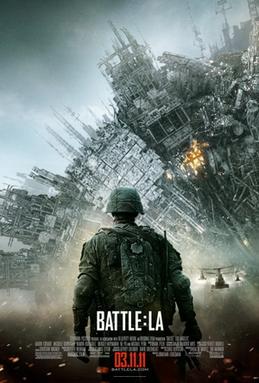
According to writer Larry Harnish, this photo and sensational newspaper headlines were featured as historical material in the 2011 film Battle: Los Angeles. This American military science fiction action film grossed $211 million at the global box office (with a production budget of $70 million) but received negative reviews from critics.
It is known that the story of this movie was partially inspired by the Battle of Los Angeles that occurred on February 24, 1942.
Commemoration
An entertainment event called “The Great Los Angeles Air Raid of 1942” was held every February at the Fort MacArthur Museum. Fort MacArthur was formerly a U.S. Army facility in San Pedro, Los Angeles, California. Today, a small part of it is still used by the United States Air Force as a residential and administrative annex to the Los Angeles Air Force Base.
Commemorating the events of 1942 is an interesting and most controversial date in the city’s history. On the night of February 25, 1942, thousands of the military and civilians were convinced that Los Angeles was attacked from the air. Some even seriously thought that it might have been a UFO invasion. Despite the numerous theories, this event remains a subject of much debate.
“The Great Los Angeles Air Raid of 1942” was a fundraising event for the Fort MacArthur Museum. Its attempt was to recreate the atmosphere of an evening in 1942 until it was interrupted by war.
In 2023, it was announced that the event would be canceled. While cleaning up the forest area of the Department of Recreation and Parks, workers discovered a Great Owl’s nest. The city ecologist identified it as a nest of a Great Horned Owl, a protected species in the state of California. Therefore, the 300-foot area around the tree cannot be used as part of such a large-scale event. Restrictions also apply to noise levels. Fans of the event who bought tickets in advance got their money back in full.
Organizers considered all options for relocating the event but concluded that they would not be able to offer the same level of service.