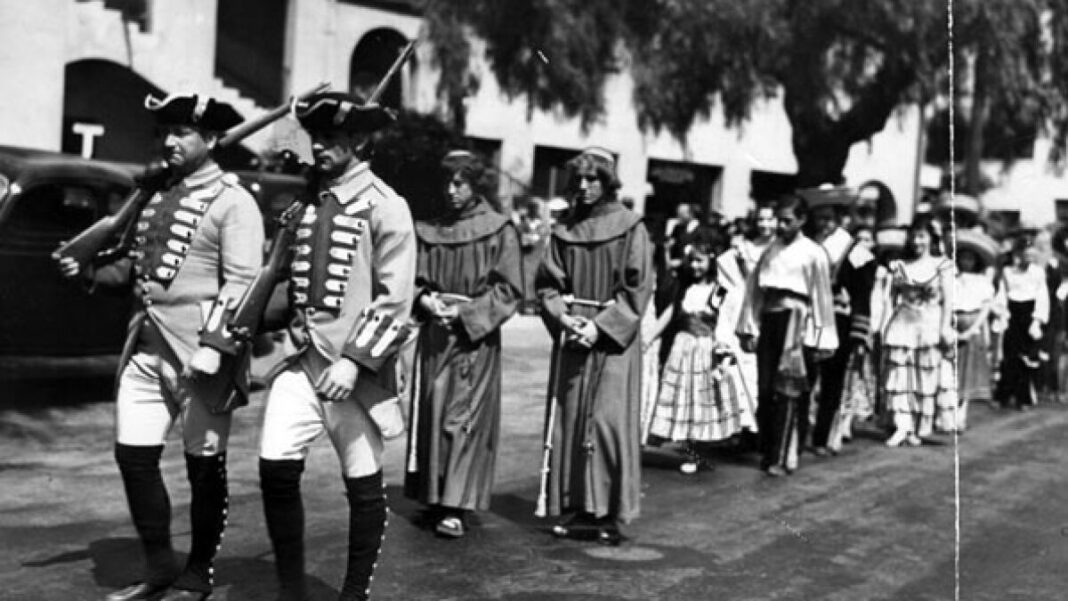

This is a Spanish soldier who once held the position of the fourth governor of California. Felipe de Neve is one of the founders of Los Angeles and an important figure in the history of the region. His policy influenced the future development of California. More about the famous figure can be found at layes.info.
Governor of California
Felipe de Neve was a native of Bailén, Spain. He grew up in one of the respected families of Andalusia. He joined the army in 1744 (at the age of 16). Before arriving in New Spain, he served in Cantabria, Flanders, Milan, and Portugal.
On October 18, 1774, Felipe de Neve was appointed as the fourth governor of California. He held this position until 1782. He received this appointment from Viceroy Antonio María de Bucareli y Ursúa. Initially, Felipe de Neve resided in Baja California, and later moved closer to the central coast of California, to Monterey.
It is known that Los Angeles was founded by Mexican families from Sonora, but the name of the settlement was given by the Spanish governor of California. It is this period that we want to tell more about.

Felipe de Neve’s Initiative
The governor of California is known for his initiative to create public settlements (pueblos), which played an important role in the establishment of civil administration and economy.
Before Felipe de Neve’s arrival in California, the economy and administration were almost entirely dependent on Spanish missions and military garrisons (known as presidios). At the same time, the missions, managed by Franciscan monks, controlled agriculture, production, and most of the workforce. Felipe de Neve believed that for the stable and independent development of the region, civil settlements were needed. In his opinion, such a decision would allow for a reduction of this dependence.
After being appointed, Felipe de Neve traveled to Alta California to assess the situation and develop a plan. He aimed to found pueblos with a number of advantages.
- Provision of food for the military and reduction of dependence on supplies from Mexico and missions.
- Civil settlements became alternative centers of economic and social activity. Thus, the founding of pueblos reduced the power of the missions.
- Pueblos focused on the development of agriculture and crafts, so they positively influenced the growth of the region’s economy.
Felipe de Neve identified three main locations for founding the pueblos. These are Los Angeles, San Jose, and Santa Barbara.
Laws of the Indies
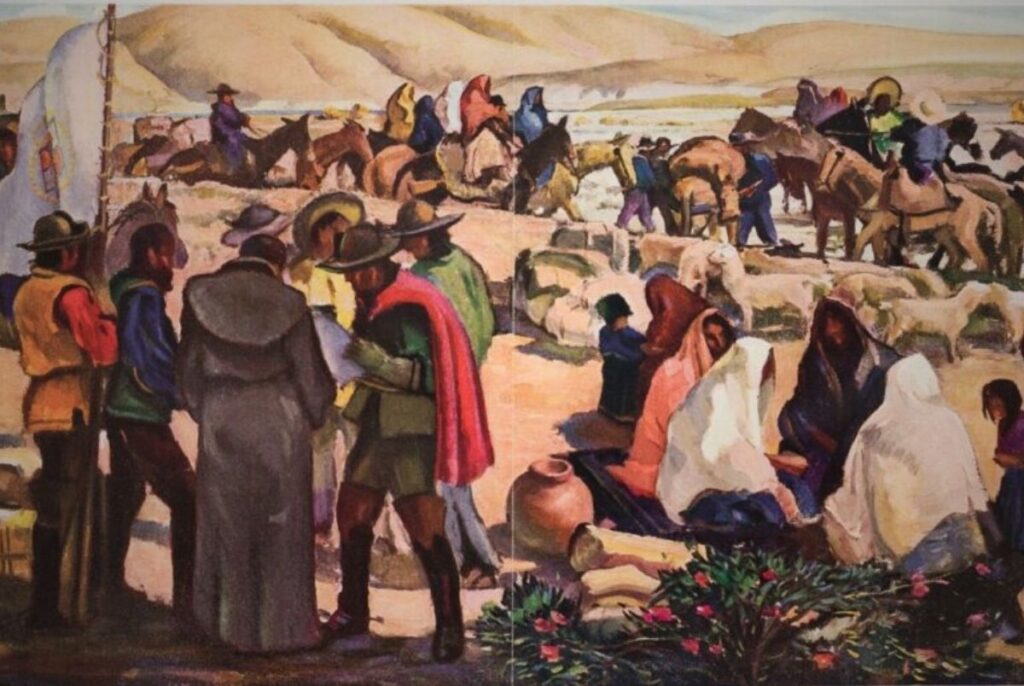
Felipe de Neve’s plans for building pueblos were based on the Laws of the Indies, which are Spanish urban planning laws. They were developed and published by King Philip II in 1573. This is a comprehensive collection of rules that regulated all aspects of life in the Spanish colonies. The rules also concerned the founding of new cities. Several features of urban planning defined in the Laws of the Indies can be highlighted:
- it was allowed to build a city only around an open central square. It was to become the center of social, religious, and administrative life;
- a fortified church, administrative buildings, etc. must be located around the building;
- for easier planning, land distribution, and city development, streets were to be located on a grid principle;
- land was specifically divided into plots intended for agriculture, as well as residential plots.
Based on the plan described in the Laws of the Indies, Felipe de Neve founded the pueblo San José de Guadalupe on November 29, 1777. This settlement went down in history as the first civil municipality of California. It was he who laid the foundation for the founding of such cities as Los Angeles, San Francisco, Tucson, San Antonio and many others.
Founding of Los Angeles
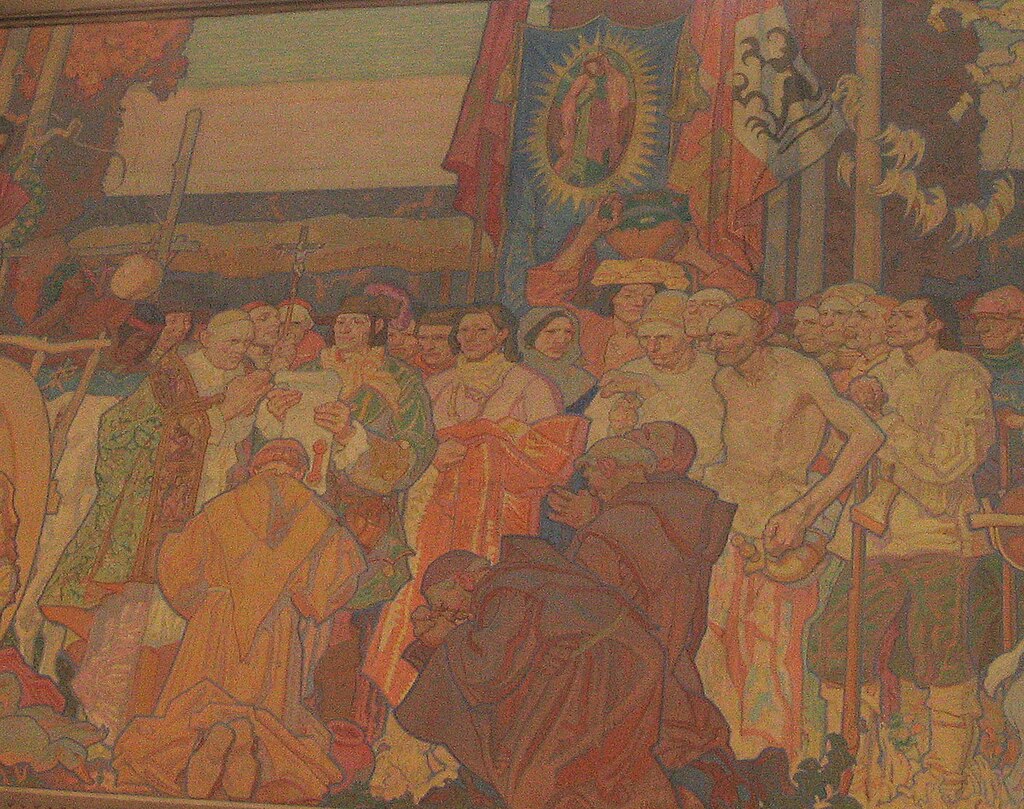
In December 1777, Viceroy Antonio María de Bucareli y Ursúa and General Commander Teodoro de Croix approved Felipe de Neve’s plan to create a municipality in Los Angeles and a new presidio in Santa Barbara.
To implement this plan, the vice-governor of California Fernando Rivera y Moncada (Felipe de Neve’s predecessor) was appointed responsible for recruiting colonists. This task included recruiting 55 soldiers for the new garrison, finding 22 settlers with families, and gathering a thousand head of cattle and horses for military needs. Despite significant efforts, this plan failed. He recruited only 12 settlers and 45 soldiers, most of whom had mixed indigenous and Spanish ancestry.
Unfortunately, the expedition ended tragically. As a result of a rebellion of the Quechan tribe, 95 settlers and soldiers died. Among them was the vice-governor of California Fernando Rivera y Moncada himself.
Los Angeles was founded by Pobladores or settlers. This is how 22 adults (20 of whom had Afro-American or Native American ancestry) and 22 children from Sonora (the modern territory of Mexico) were called. The settlers arrived in California in separate groups. The first group was led by José de Zúñiga, they arrived on July 18, 1781. During that period there was a smallpox outbreak, which is why all members of the group were quarantined near the San Gabriel Mission.
The second group arrived in stages throughout August 1781. After the quarantine was completed, the settlers reached their destination.
Legacy
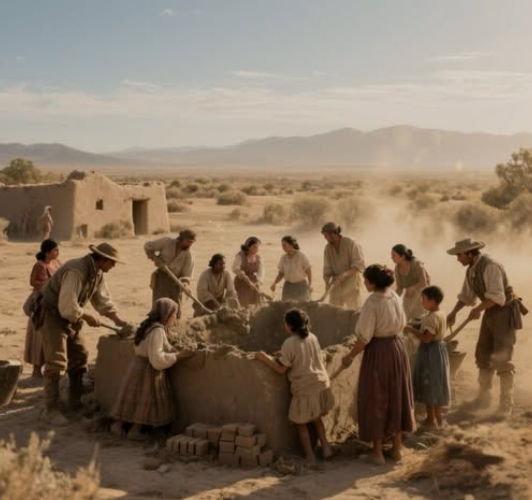
Felipe de Neve’s policy influenced the development of California. In many sources, he is called one of the founding fathers of California.
During Felipe de Neve’s time in power, he, together with Lieutenant José Joaquín Moraga, built a military garrison. This is the Presidio of San Francisco. And on November 29, 1777, he founded San Jose. The settlement played the role of an agricultural community, whose members provided food for two key military outposts: the Presidio of San Francisco and the Presidio of Monterey.
He managed to balance the power of the church, the military, and civil settlements. This approach and Felipe de Neve’s contribution contributed to the sustainable development of the region. We would like to highlight the founding of pueblos, which laid the foundation for urban centers. They later turned into the largest cities in the region.
Later, after the approval of the viceroy, Felipe de Neve received approval to found the second large pueblo in Alta California. He gave the city the name: El Pueblo de Nuestra Señora la Reina de los Ángeles del Río de Porciúncula (The Town of Our Lady the Queen of the Angels of the Porciúncula River) or modern-day Los Angeles.
Felipe de Neve’s initiative bore fruit. Thanks to the policy of the fourth governor, California began to develop its own economy, based on agriculture.
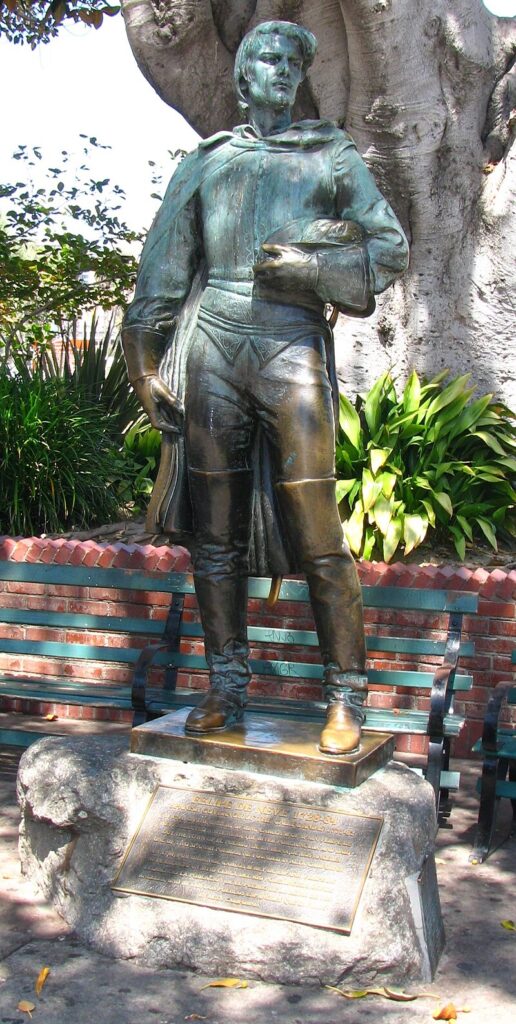
Bronze Statue of Felipe de Neve
A bronze statue of Felipe de Neve was installed in Los Angeles Plaza park in 1932. This is a work by Henry Lion, the height of which was 2.3 meters. On the statue there is a bronze memorial plaque with information about the Spanish governor of California.
De Neve Drive in the Westwood neighborhood of Los Angeles is named in honor of Felipe de Neve. In addition, the student dormitories at De Neve Plaza at the University of California, Los Angeles, as well as the Felipe de Neve Library branch of the Los Angeles Public Library, are named after him.