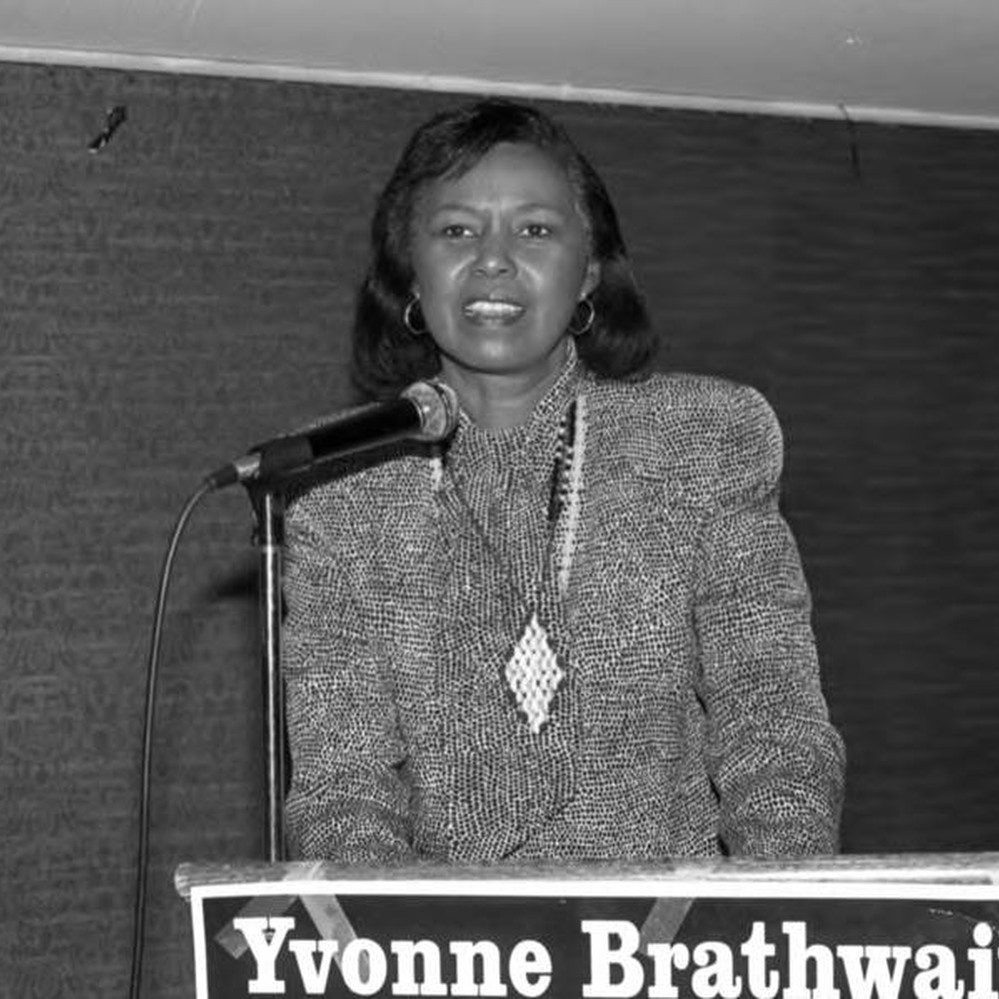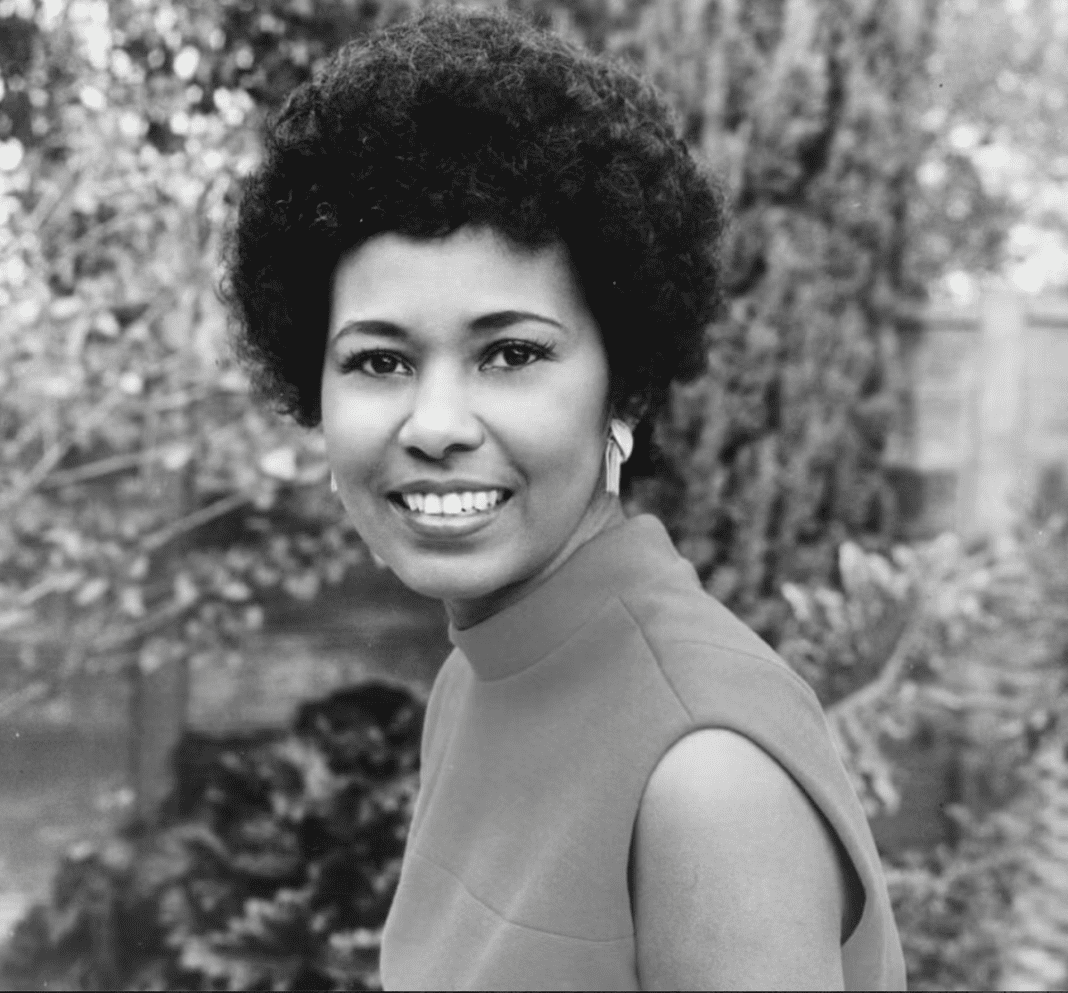

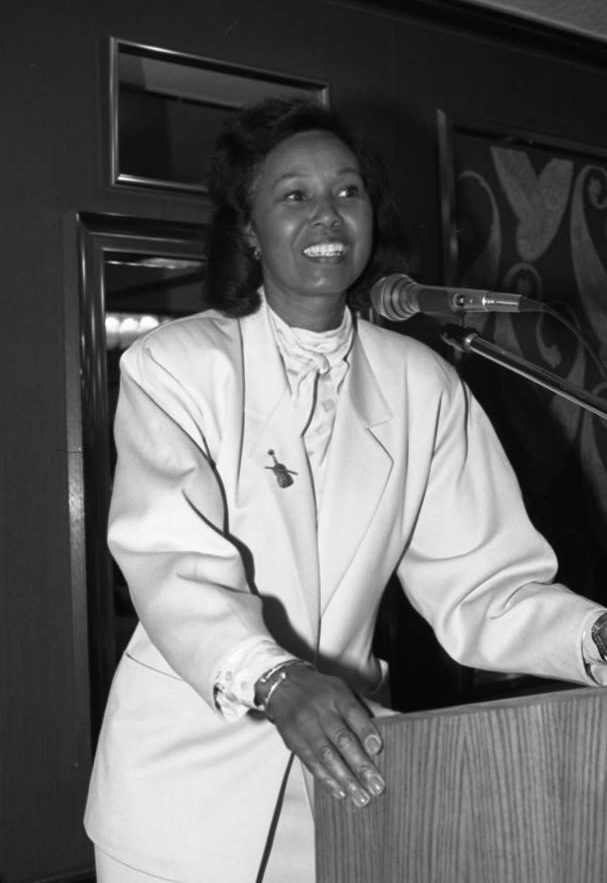
Yvonne Brathwaite Burke was an American politician and lawyer renowned for her long service in California and her numerous achievements at both the state and national levels. She became the first African American woman elected to Congress from California and the first woman to serve on the Los Angeles County Board of Supervisors. Her career is a story of perseverance, the fight for equality, and a significant contribution to American politics. Throughout her long career in public service, Yvonne Burke made substantial efforts to improve the quality of life for minorities, women, and the poor. Learn about the history of elections in 20th-century Los Angeles. More at layes.info.
Biography
Yvonne was born on October 5, 1932, in Los Angeles, California. She was the only child in her family. Her father, James A. Watson, worked as a janitor at MGM studios, and her mother, Lola Moore Watson, was an elementary school teacher who later became a stockbroker. Yvonne grew up in a multi-ethnic neighborhood in Los Angeles. In 1949, she enrolled at the University of California, Berkeley, but later transferred to the University of California, Los Angeles (UCLA), where she earned a bachelor’s degree in Political Science in 1953. Yvonne became only the second African American woman accepted into the USC Law School. After graduation, realizing that no major law firm would hire an African American woman, she decided to start her own practice. She specialized in civil and real estate law. She also served as a Deputy Commissioner for the State Corporation Commission and a Hearing Officer for the Los Angeles Police Commission.
In 1957, Yvonne married Louis Braithwaite. However, the marriage lasted only seven years and ended in divorce. Six years later, she married William A. Burke, the creator of the Los Angeles Marathon. They had one daughter, Autumn Burke. Yvonne and Autumn later became the first mother-daughter pair to both serve in the California State Assembly.
Political Career
In the 1960s, as the Civil Rights Movement gained momentum, she actively participated in the fight for African American rights. In 1966, Yvonne became the first African American woman elected to the California State Assembly, representing the 63rd district. During her time in the legislature, she focused on civil rights, prison reform, childcare, equal opportunities for minorities and women, and education. She chaired the Assembly Urban Development Committee.
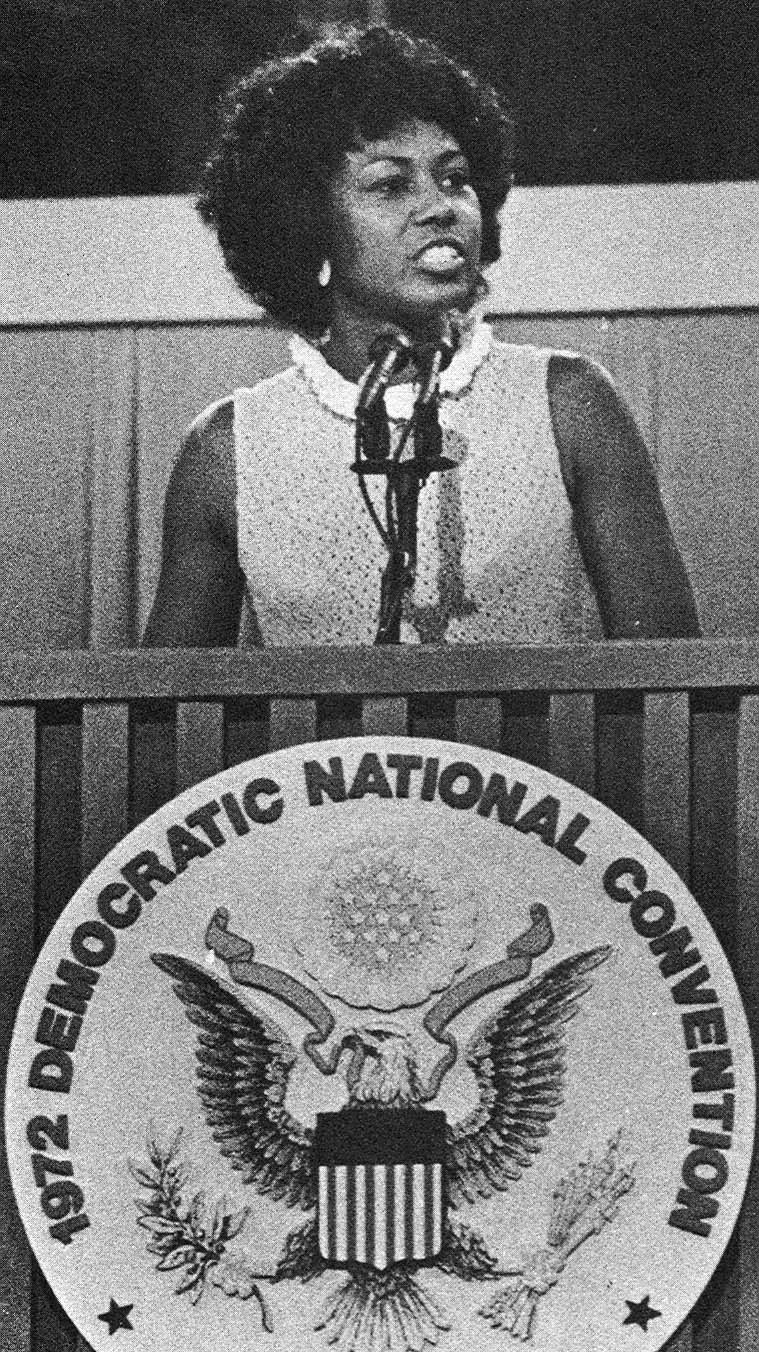
In 1972, Yvonne was elected to the U.S. House of Representatives, becoming the first African American woman to represent the West Coast in the U.S. Congress. While in Congress, she served on the House Appropriations Committee, where she fought to increase funding for local jurisdictions to comply with desegregation mandates. In 1973, she became the first congresswoman to give birth while in office and the first to be granted maternity leave by the Speaker of the U.S. House of Representatives. This sparked a public discussion about motherhood and career in politics. In 1977, she fiercely criticized the Hyde Amendment, which prohibited the use of federal funds for abortions. In 1978, she introduced a bill to prohibit workplace discrimination related to pregnancy.
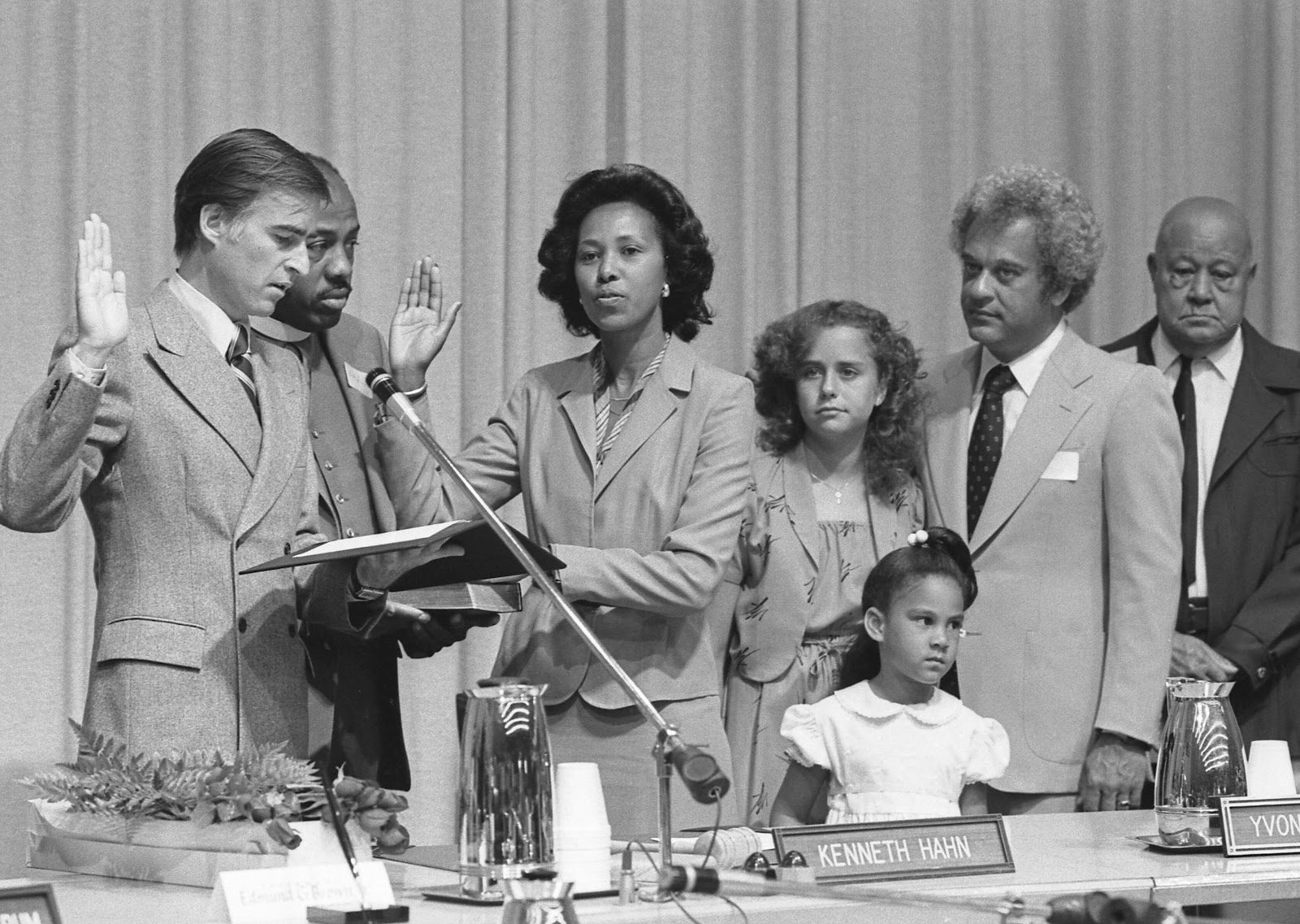
In 1978, she declined to run for re-election to the 96th Congress to campaign for California Attorney General. She won the Democratic nomination but lost to the Republican state senator in the general election. In June 1979, California Governor Jerry Brown appointed Yvonne to the Los Angeles County Board of Supervisors.
Work in Los Angeles
Yvonne was elected to the Los Angeles County Board of Supervisors, representing the 4th District from 1979 to 1980, and later the 2nd District from 1992 to 2008. She became the first woman and the first African American elected to the board. Here, she focused on urban development, education, transportation, and healthcare issues. Thanks to her efforts, numerous programs were implemented to support low-income families and expand public transportation in Los Angeles.
During her tenure, she focused heavily on the needs and education of children, especially those in the county’s care. In 1980, she lost her bid for re-election and returned to private law practice. In 1984, she served as Vice Chair of the Los Angeles Olympic Organizing Committee.
As a member of the Board of Supervisors, she focused on the needs and education of children, particularly those living without parental care. She was a key driver in creating a new Department of Children and Family Services program, promoting the placement of foster children in homes near their neighborhoods. She also established numerous childcare centers which, in addition to supervision, provided educational enrichment programs and nutritious meals.
She actively promoted economic development in the Second District, facilitating business creation in various neighborhoods. Yvonne also initiated the creation of a county website listing county contracts available to small businesses. She actively promoted computer literacy training and the accessibility of cyber technology for the poor. She encouraged private businesses and organizations to make computer labs accessible and utilize computer research facilities within the county library system.
Another key initiative was the creation of a multimodal public transportation system for Los Angeles. As a member of the Transportation Authority’s Board of Directors, she continually pushed for the development of the Crenshaw Corridor, as well as light and heavy rail systems to supplement bus routes. In 2010, California Governor Arnold Schwarzenegger appointed Burke to the California Transportation Commission. In 2012, she was appointed by U.S. President Barack Obama to the Amtrak Board of Directors.
Awards and Honors
Throughout her long public service career, Burke garnered numerous awards and honors. She was the first African American woman elected to the U.S. Congress from California in 1972, and the first woman to serve as Chair of the Los Angeles County Board of Supervisors in 1993. She served as Vice Chair of the 1972 Democratic National Convention. She was also the Chair of the Federal Reserve Bank of Los Angeles. Time magazine named her one of the “200 Future Leaders of America,” and she was chosen as “Woman of the Year” by the Los Angeles Times and Alumna of the Year by UCLA in 1996.
Yvonne Burke became a symbol of change in the U.S. political system. Her career is an example of how women and minorities can achieve the highest offices and transform society. She opened doors for subsequent generations of female politicians, such as Kamala Harris, and left behind a legacy of fighting for justice and inclusivity in American society. She passed away on December 1, 2023, but her contributions to politics and human rights will forever remain in U.S. history.