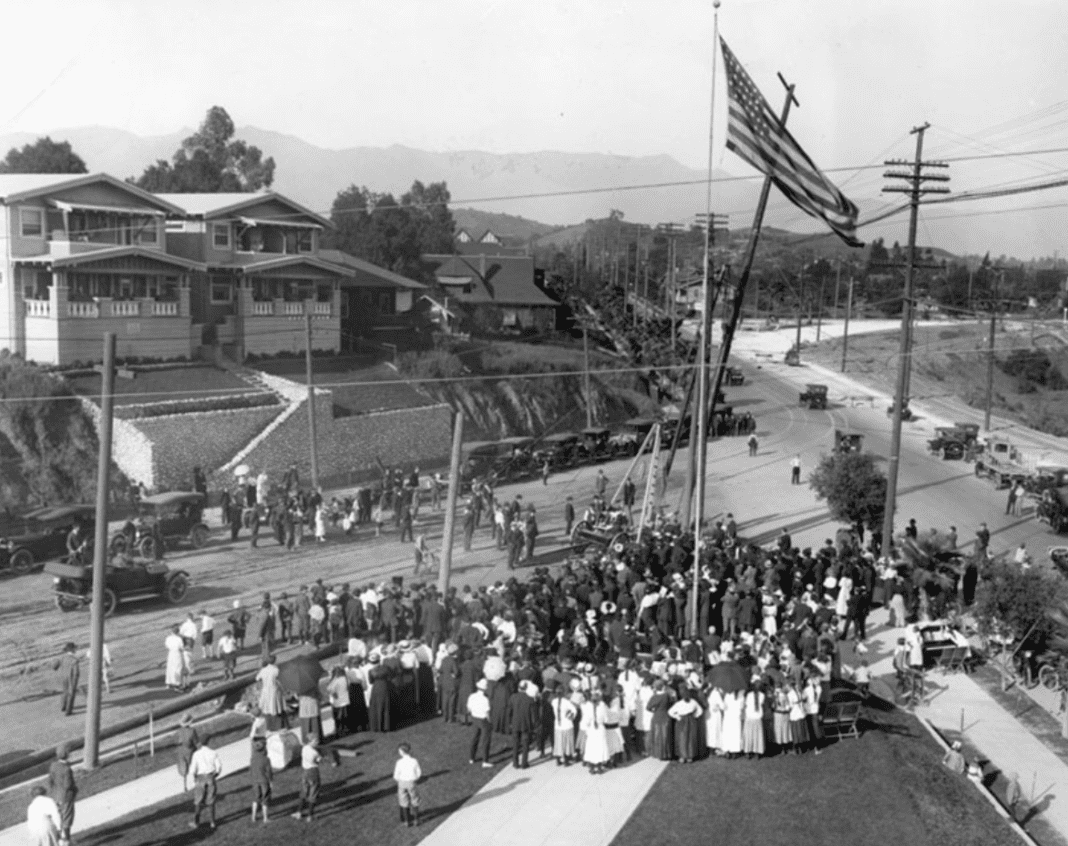

The history of the Department of Water and Power (DWP) is intrinsically linked to Los Angeles’s development as a major metropolitan center. No single factor in the city’s history has been as crucial as water. The Los Angeles Department of Water and Power is the largest municipal utility in the United States, supplying water and electricity to millions of city residents. Its creation was the result of decades of struggle for control over key resources, corruption scandals, and massive engineering projects that shaped the L.A. we see in the 21st century. Read more at layes.info.
Why the Department Was Created
In the late 19th century, Los Angeles was a small city with a population of about 50,000. Water supply was controlled by a private company, the Los Angeles City Water Company. This company held a monopoly but failed to invest in system expansion, making the problem of access to drinking water increasingly acute. City residents suffered from a lack of clean water, particularly during periods of drought. Thousands of complaints about poor service quality flooded the City Council. As a result, in 1902, the government responded to public calls: the city bought out the company and created the Los Angeles Water Department—the first municipal water authority.
The energy situation at the time was also very complicated. In the early 20th century, private companies supplied Los Angeles with electricity, the main one being Southern California Edison. This company was also a monopolist, which resulted in inflated tariffs and unreliable power supply for the public. The city desperately needed rapid, yet high-quality, changes to function and grow normally.

The Path to Reliable Resources
As the city’s population continuously increased, it became clear that Los Angeles would need significantly more water. Thus, the city authorities began searching for new sources. Engineer William Mulholland proposed an ambitious project: building an aqueduct from the Owens River, located 226 miles (360 kilometers) away. Construction lasted from 1907 to 1913, and the idea worked. The aqueduct provided the city with water but caused significant conflict with local farmers who lost their vital water resources.
Following the successful launch of the aqueduct, the city government realized that water resource management had to be centralized. In 1911, the Los Angeles Water Department was renamed the Bureau of Water Works and Supply. As Los Angeles secured a stable water supply, numerous surrounding communities voted to annex themselves to the city. Hollywood (1910), Palms (1915), the San Fernando Valley (1915), Sawtelle (1922), Eagle Rock and Hyde Park (1923), Mar Vista and Venice (1925), Watts (1926), Barnes City (1927), and Tujunga (1932) all joined Los Angeles. This effectively expanded the city’s area tenfold.
The city’s expansion and constant influx of people forced planners like Mulholland and the Department to again search for new water sources. As a result of preliminary surveys, the Los Angeles Department of Water and Power joined forces with other cities in 1928 to form the Metropolitan Water District of Southern California.
In 1963, plans were initiated to import additional water by building a second aqueduct parallel to the original Los Angeles Owens River Aqueduct. Construction of the second aqueduct was completed in 1970.

Boosting Power Generation Capacity
Simultaneously with the aqueduct’s construction, the city began experimenting with power generation. In 1911, Los Angeles residents were asked to vote on whether the city should develop hydroelectric facilities along the aqueduct or lease the resource to private utilities. The public voted overwhelmingly in favor of municipal ownership. By 1916, the Water Department was distributing electricity, and a year later, it began generating its own power from a hydroelectric plant on the aqueduct. This historic power plant continues to operate and is a popular tourist destination for those interested in Los Angeles history.
A significant addition to the electric system occurred in 1922 when the city acquired the distribution facilities of Southern California Edison. For over 40 years, Los Angeles relied on hydroelectric sources for its primary power supply. However, increasing energy demand eventually forced the Department to develop other power sources.
From the early 1940s to the late 1960s, the DWP built four major power plants fueled by natural gas and oil in the Los Angeles Basin to meet the population’s demand. But the introduction of the oil embargo in the early 1970s forced the Department to develop out-of-state coal-fired power plants. By 1986, the Department began receiving power from a large coal power plant in Utah and a nuclear power plant in Arizona. Coal remains an important source of electricity for the city in the 21st century.

The Department’s Official Creation
In 1937, the Bureau of Water Works and Supply and the Bureau of Power and Light merged into the single Los Angeles Department of Water and Power (LADWP). This decision lowered resource management costs, ensured a stable supply of power and water, and made the city less dependent on private monopolies. Subsequently, it allowed for the realization of large-scale infrastructure projects: the construction of new dams, the expansion of power grids, and the development of alternative energy sources.
The LADWP is the country’s largest municipal utility. During the 2001 California energy crisis, tens of thousands of people across the state lost power. However, customers of the Los Angeles Department of Water and Power and other municipal utilities largely avoided these issues.

The Board of Water and Power Commissioners consists of five members, who are appointed and can be removed, similar to most city commissions. The Department does not receive any funds from the city government. Its revenue comes from customer fees for used resources. The Board sets water and electricity rates, which are subject to approval by an ordinance passed by the City Council. The Board also annually determines the transfer of revenue from the Department’s budget to the city’s general budget. This amount has typically been about 5% of the municipal company’s revenue.
The creation of the Department of Water and Power was a key step in Los Angeles’s development as a metropolis. By controlling water and electricity, the city was able to grow, attract investment, and maintain a comfortable life for millions of residents. Despite historical conflicts and challenges, this department remains one of the most important institutions in city governance. Its history is studied in the 21st century, and the experience of creating the Department is being adopted in various parts of the world.