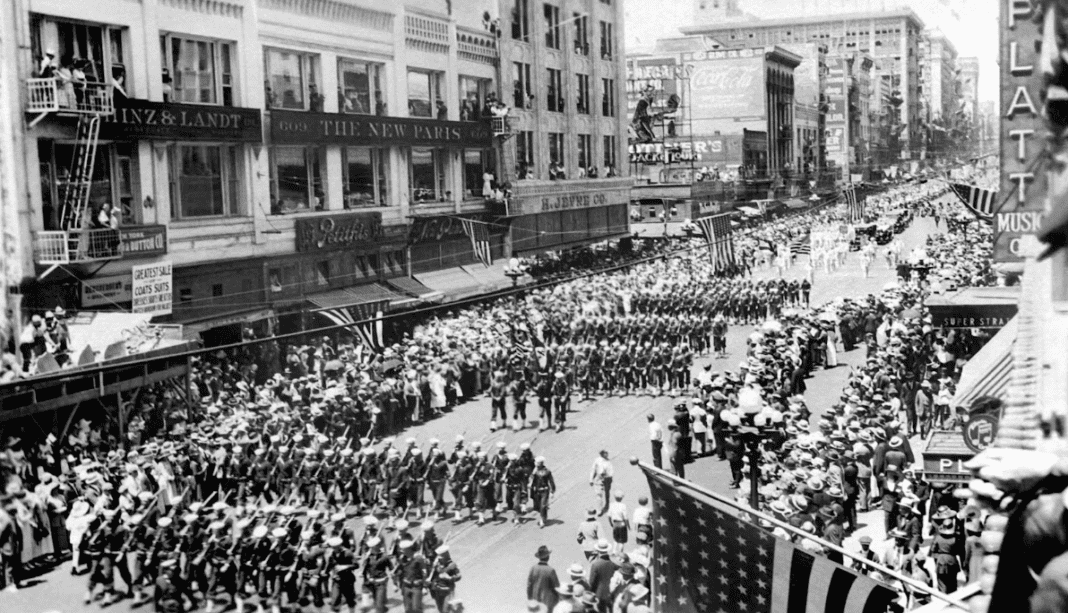

When the United States entered World War I in 1917, Los Angeles, like many other cities, became a vital hub for resource mobilization and military training. Although the fighting never reached the West Coast, the city played a significant role in supplying food, manufacturing weapons, and organizing public support for the military. Also, learn about the “Battle of Los Angeles” in World War II. More at layes.
Military Mobilization
After war was declared, President Woodrow Wilson implemented the Selective Service Act, which mandated registration for men between the ages of 21 and 30. In Los Angeles, thousands of young men lined up at registration sites. While many volunteered, there were also those who tried to dodge the draft, sparking a wave of public condemnation. Local residents enlisted in the Army and Navy and also joined the California National Guard. Recruitment campaigns were actively supported by the local press, businesses, and public figures. Newspapers urged young men to join the military, and large companies promised to hold jobs for mobilized employees. Additionally, training camps were opened in the city to prepare new recruits for combat.
The Port of Los Angeles and nearby Long Beach became crucial points for naval operations. Coastal defense bases were established to monitor the security of the Pacific coast and prevent potential attacks by German submarines. One of the key mobilization sites was Fort MacArthur, located in the San Pedro area. Los Angeles became a center for forming units of the National Guard and the regular U.S. Army. Servicemembers were sent to training bases in California and other states.
Although Los Angeles was far from the battlefields of Europe, the city’s mobilization played an important role in the overall U.S. victory. Thousands of soldiers from Los Angeles headed to the front, while its industries and port supported the nation’s war needs.

Wartime Industry
When the U.S. entered World War I in 1917, Los Angeles became a major center for military industry, arms production, and shipbuilding. Thanks to its strategic location and developed economy, the city played a key role in supplying the American Army and Navy.
One of the main sectors of LA’s military industry was shipbuilding. In San Pedro and Long Beach, large shipyards began mass-producing warships for the U.S. Navy. The Los Angeles Shipbuilding & Dry Dock Company was one of the largest yards, building destroyers, transport ships, and submarines. The Bethlehem Shipbuilding Corporation produced warships and repair vessels for the Navy’s needs. California’s naval bases, including Fort MacArthur, actively used the products from these facilities to support military operations in the Pacific. Although aviation was just beginning to develop in World War I, Los Angeles was already playing an important role in the sector. The Glenn L. Martin Company began producing military aircraft supplied to the U.S. Army Air Service. The city had numerous workshops that repaired and improved military aircraft. This period set the stage for LA’s future growth as one of the leading aviation centers in the U.S.
While the main arms manufacturing plants were located on the East Coast, Los Angeles also contributed to the supply of ammunition and military equipment. Local metallurgical plants retooled to produce shells, artillery parts, and other weaponry. Chemical plants manufactured explosives for the army’s needs. The growth in military production led to an increased demand for labor. Factories and shipyards needed thousands of workers, giving many women and migrants the opportunity to work in wartime industries.

Public Support
When the United States entered World War I in 1917, Los Angeles quickly became a center of active public support for the war effort. The local population, businesses, the film industry, and volunteer organizations took on the task of helping the front—from raising funds to producing essential goods for the army. One of the most important ways to help was financing military expenditures. Los Angeles held campaigns to raise money for Liberty Bonds. City residents actively purchased these bonds, helping the government fund military operations. Banks and large companies, such as the Los Angeles Railway Company and the Southern Pacific Railroad, organized mass bond-buying campaigns. Hollywood stars like Mary Pickford and Douglas Fairbanks participated in public events, urging citizens to support the army financially.
The women of Los Angeles played a vital role in public support for the war. They organized Red Cross charity committees, which sewed uniforms for soldiers, collected medicine, and prepared food packages. Many hospitals created special units of volunteer nurses who were later sent to the front or assisted veterans. Women also began working in factories and shipyards, replacing the men who had gone to war.
Numerous organizations operated in the city to help mobilized soldiers and their families. The Salvation Army and other charitable groups collected food, clothing, and money for military families left without means of support. Free legal and medical consultations were arranged for soldiers’ families. The film industry, already gaining momentum at the time, actively joined in patriotic propaganda. Hollywood studios produced films that supported the war effort and inspired young men to enlist in the army. Theaters and concert halls held performances to benefit soldiers and their families.
In addition to the Red Cross, many other volunteer organizations were active in Los Angeles. Community groups raised funds for wounded soldiers and supported shelters for veterans. Students and schoolchildren participated in food drives, canning food for the front.

The End of the War
World War I stimulated the economic development of Los Angeles. Military contracts spurred the expansion of factories and businesses, providing a boost for the city’s future growth as one of the main industrial centers in the U.S. LA’s military industry during World War I laid the foundation for its future role in the U.S. defense economy. Shipbuilding, aircraft production, and arms manufacturing became key sectors that helped the American army and navy in the war, and helped the city become a powerful industrial center in the future.
In addition to military equipment, Los Angeles supplied the army with food. Southern California farmers actively exported wheat, beans, citrus, and other products that fed soldiers overseas.
World War I not only changed the city’s economy and social life but also laid the groundwork for its future growth as a strategic military and industrial hub. After the war ended in 1918, many veterans returned to Los Angeles, contributing to the city’s further development. The military industry, which had expanded during the war, did not disappear but became the basis for the future growth of the aerospace sector. Overall, Los Angeles’s participation in World War I contributed to its economic rise and set the stage for its future role in the military conflicts of the 20th century.

- https://www.worldwar1centennial.org/index.php/california-in-ww1-places.html
- https://www.latimes.com/archives/la-xpm-1990-10-10-me-1993-story.html
- https://www.worldwar1centennial.org/index.php/california-in-ww1-then.html
- https://homesteadmuseum.blog/2022/07/20/democratic-and-fair-in-selecting-soldiers-to-uphold-the-national-honor-f-cecil-forbes-the-first-los-angeles-draftee-for-service-in-world-war-i-20-july-1917/