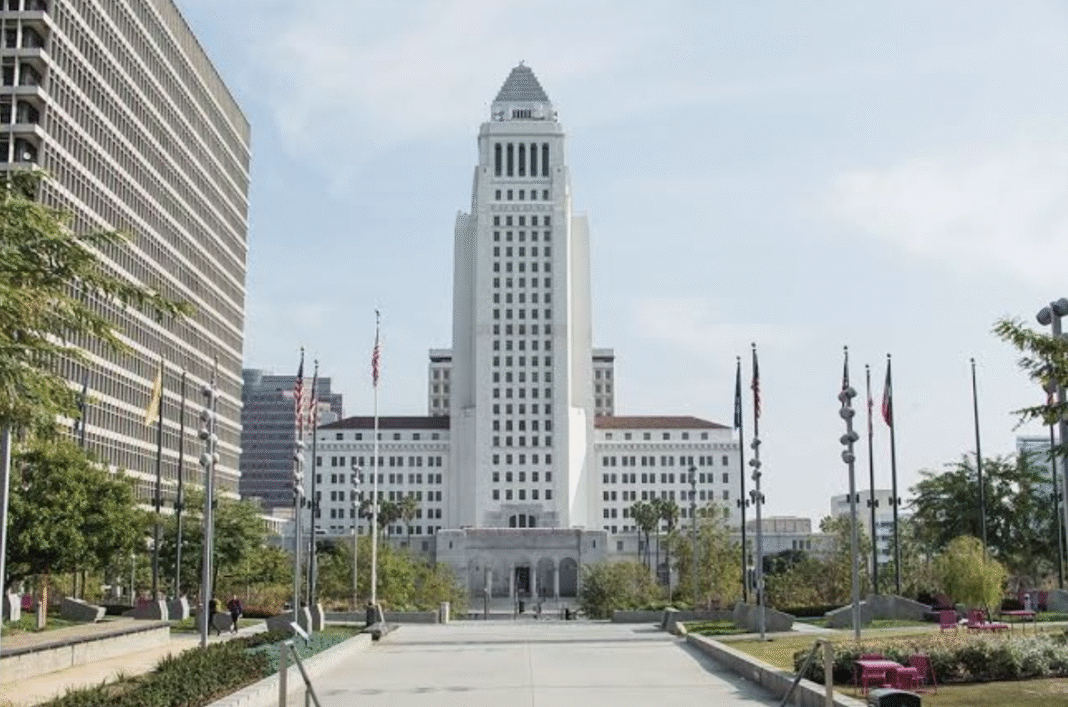

The Los Angeles City Council is the beating heart of local government in one of America’s largest metropolises. It acts as the legislative branch, shaping policies that affect millions of lives. L.A. operates under a unique model where each of its 15 districts essentially functions as a distinct political entity with its own representative. This is why journalists and political pundits often use the metaphor of the “fifteen kingdoms of Los Angeles.” It perfectly captures the high level of autonomy each district enjoys within a unified administrative system. Read more on layes.
Structure of the Los Angeles City Council
The City Council consists of 15 members, each representing a specific geographic district. These boundaries are drawn to ensure equal population distribution and are periodically adjusted through the redistricting process. While the council serves as the city’s legislative body, executive power lies with the Mayor of Los Angeles. In American politics, this framework is known as a “strong mayor-council system.”
The council handles a variety of critical tasks. Members pass local laws, approve the multibillion-dollar city budget, oversee municipal departments, and confirm the mayor’s picks for top city posts. Another key feature is the council’s close collaboration with 99 Neighborhood Councils. These grassroots groups act in an advisory capacity, bridging the gap between everyday residents and the corridors of power.
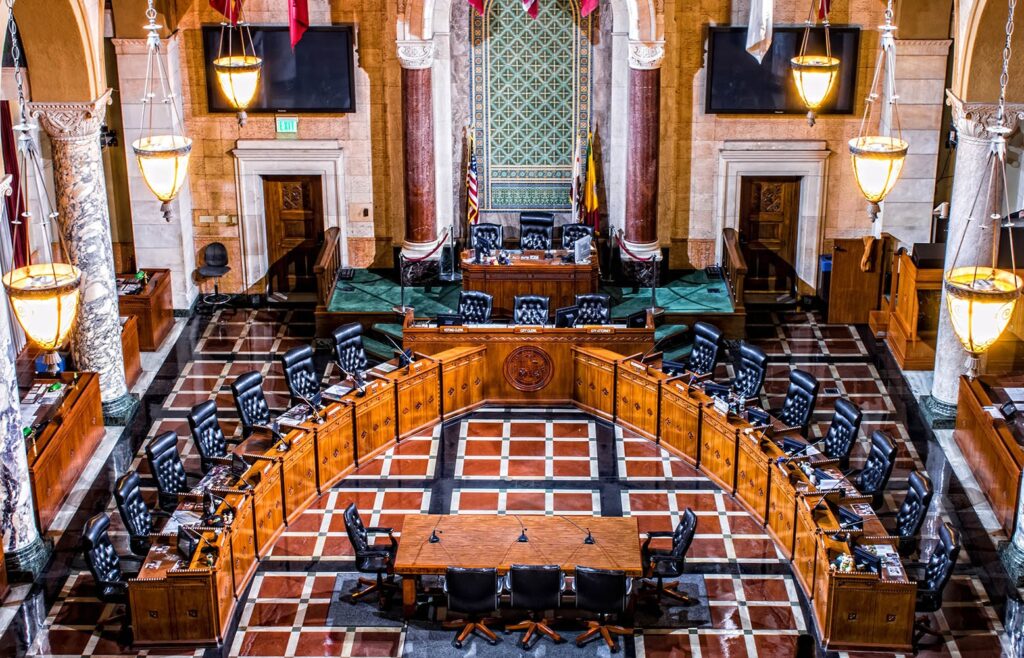
L.A.’s 15 Districts as a Political Model
The history of the city council dates back to the 19th century when Los Angeles was still a small frontier settlement. The first forms of local government actually predated the city’s official incorporation in 1850. Back then, the Los Angeles Common Council was formed, which eventually evolved into today’s modern body. Throughout the 19th and early 20th centuries, the governance system underwent several overhauls, shifting from multi-member districts to a ward system, and even to at-large elections. It wasn’t until 1925 that Los Angeles finally settled on the 15 single-member district model that remains in place today. In 1999, voters approved a new city charter that strengthened the mayor’s powers and cemented the current governance structure.
Today, each district has its own dedicated council member who fiercely advocates for the interests of their constituents. This dynamic turns the political map of Los Angeles into a patchwork of autonomous zones, each with its own unique problems, priorities, and power balances.
This is exactly why the phrase “fifteen kingdoms of Los Angeles” has become so popular in public discourse. Every district wields significant influence over local decisions within its borders. Yet, despite this localized autonomy, all 15 “kingdoms” remain integrated into a single metropolitan framework where major citywide issues are decided collectively.
Electoral System and Term Limits
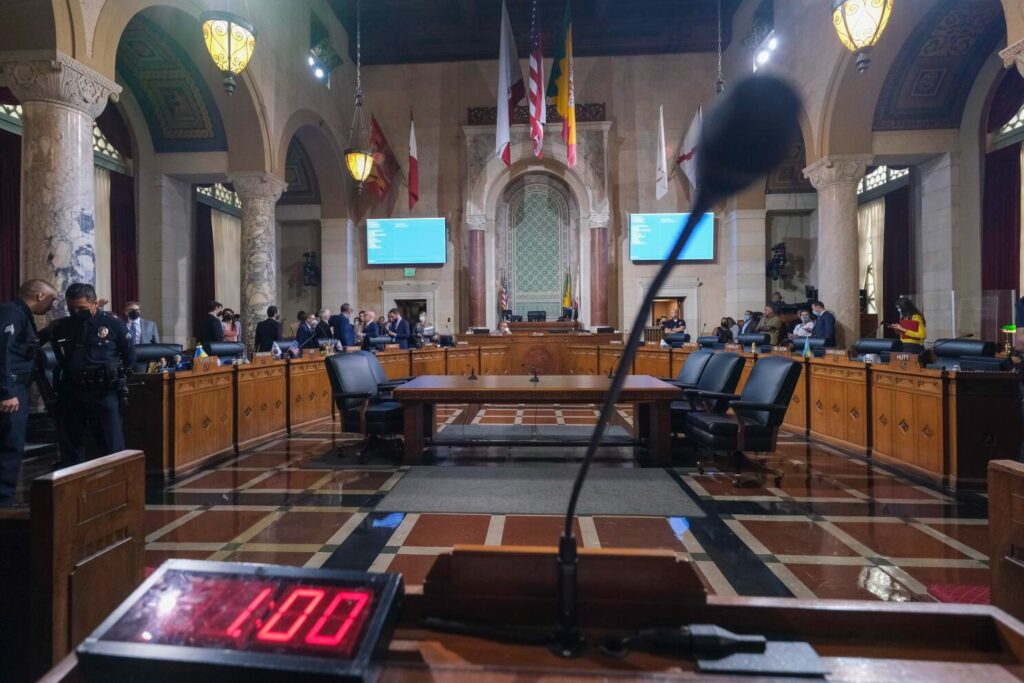
L.A. City Council elections are non-partisan and held within each single-member district. Voting takes place every two years on a staggered, rotating schedule, meaning only a portion of the council seats are up for grabs in any given election cycle. A single term lasts four years, and politicians are strictly capped at serving three consecutive terms (a maximum of 12 years). This term-limit system was designed to ensure a regular influx of fresh faces and prevent any single politician from monopolizing power.
The council’s work goes far beyond full plenary sessions. A massive chunk of the heavy lifting is done through a network of standing and special committees. This is where most local issues get their first real scrutiny. Only after a thorough debate in committee does a proposal make its way to the full council floor for a final vote. A central figure in this process is the Council President, elected by the members themselves. The president controls the agenda, runs the meetings, and coordinates committee assignments. This position carries immense political weight, as it dictates which issues get prioritized.
The council’s operations are strictly governed by the Brown Act, a California state law guaranteeing public access to local government meetings. Under this law, all council and committee sessions must be open to the public, and agendas must be published well in advance. This ensures transparency and allows for robust civic oversight. Additionally, the Los Angeles City Ethics Commission keeps a watchful eye on politicians. It enforces anti-corruption laws, monitors conflicts of interest, and reviews financial disclosures, acting as a crucial safeguard against the influence of private interests in city politics.
Powers of the Los Angeles City Council
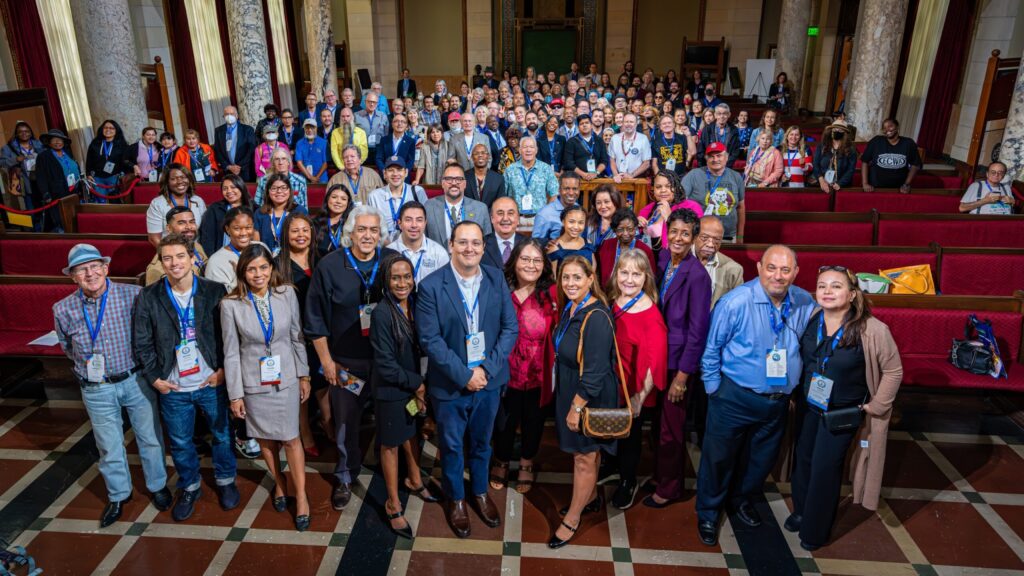
Under the city charter, the council is firmly established as the legislative branch of Los Angeles. It works in tandem with the mayor, who leads the executive branch. Council members review and approve the city’s massive budget, set policies for various municipal departments, and monitor the rollout of mayoral initiatives. Furthermore, if the mayor declares a state of emergency, it is the council that must approve it and oversee the subsequent administrative actions.
The council also plays a critical role in the redistricting process. Members help appoint the commissions responsible for redrawing electoral maps, though the council itself retains the final say and can modify the proposed boundaries.
A vital cog in L.A.’s political machine is the network of Neighborhood Councils. While they lack direct legislative power, they hold a strong advisory voice. They channel the concerns of local residents straight to City Hall, actively participate in public hearings, and shape local decisions through formal recommendations. This model effectively blends the centralized legislative authority of the City Council with a sprawling network of grassroots civic activism.
Salaries of L.A. City Council Members
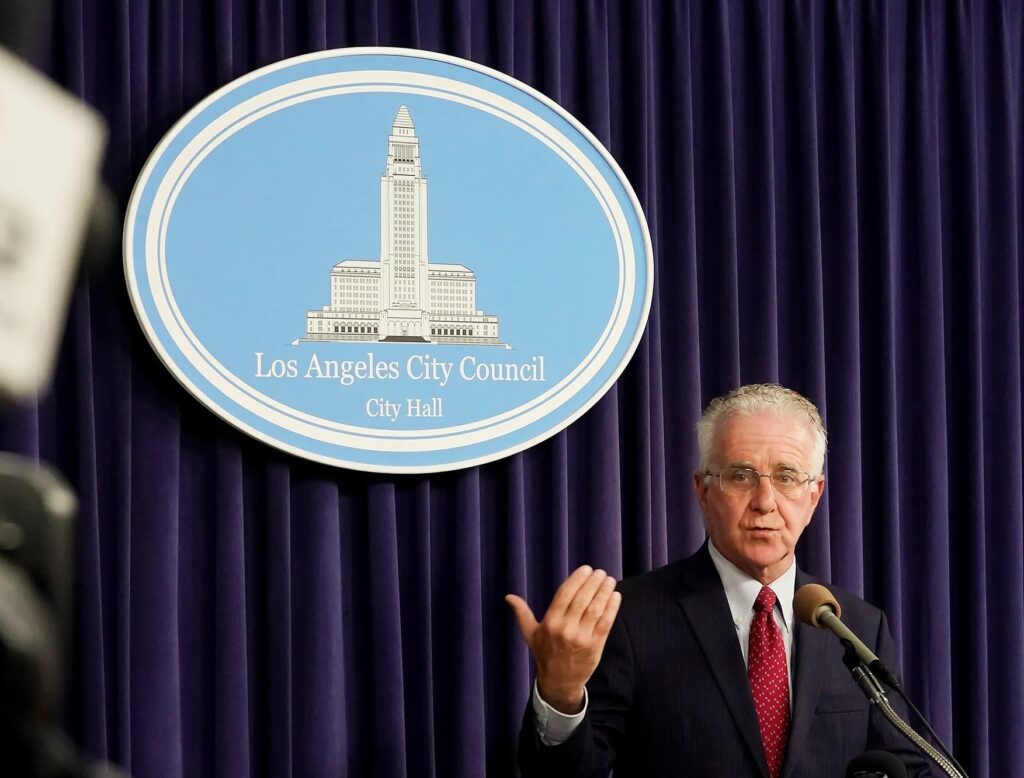
One of the most hotly debated topics in the local press is how much council members get paid. According to current official data, L.A. City Council members earn around $218,000 a year. This makes them some of the highest-paid city officials in the entire United States. These generous salaries were intentionally pegged to the incomes of municipal court judges. The logic behind this is simple: governing a sprawling, complex metropolis demands top-tier qualifications and comes with an enormous amount of responsibility.
However, there are strict mechanisms in place to control these payouts. If a council member is temporarily suspended from office, their salary can be frozen or revoked. L.A.’s political history has seen high-profile cases where paychecks were halted or later reinstated by decisions from the council itself or regulatory bodies.
Today, the Los Angeles City Council stands as a prime example of a complex, multi-layered system of local government where every district has its own champion and real political weight. While the “fifteen kingdoms” concept is entirely unofficial, it perfectly captures the city’s political reality. The 15 districts operate almost like separate political domains, yet they function as vital gears in the engine of a single giant metropolis. This model masterfully balances localized autonomy with heavily regulated decision-making processes and an incredibly high level of public transparency.