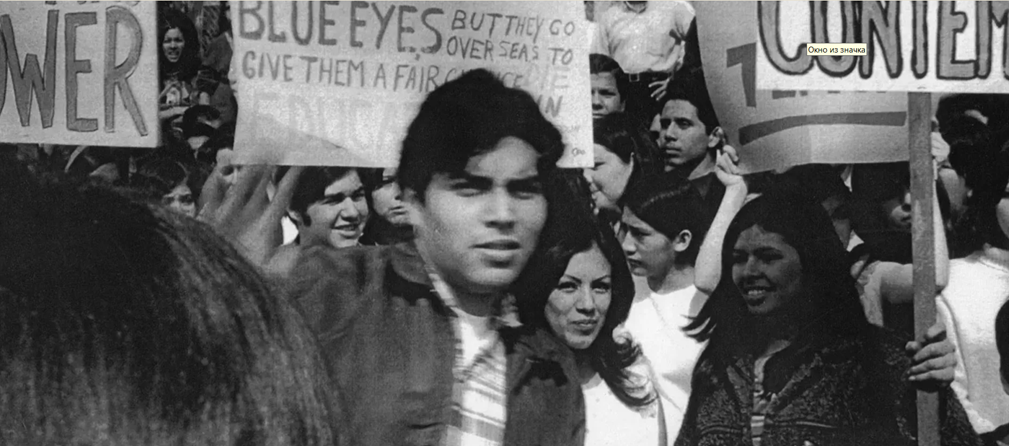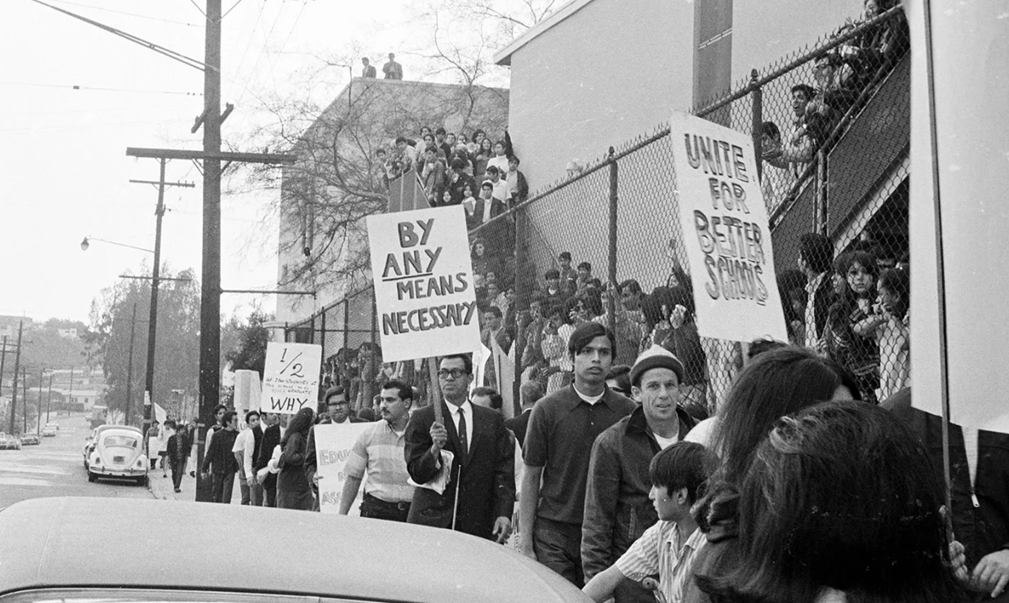

Throughout the 1950s and 1960s, students in Los Angeles faced significant educational inequality. The consequences were stark: about 60% of Mexican-American students dropped out of school. Those who did manage to graduate had an average reading level equivalent to an eighth grader. To learn more about the background and impact of these school walkouts, check out Layes.
Educational Inequality
The groundwork for the walkouts was laid by discriminatory practices. In some schools, students were forbidden from speaking Spanish. In others, Mexican-American students were funneled into a specific program intended for students with learning disabilities. School administrators actively discouraged these students from pursuing higher education. The pressure kept building until it reached a breaking point.
In response, students, parents, and teachers began organizing. This marked the beginning of the East Los Angeles school walkouts, which became famously known as the “Blowouts.” They were a massive reaction to deep-seated educational disparities and inequality. From March 1 to March 8, 1968, approximately 15,000 students walked out of their classrooms in protest of the inequalities within the public education system.
This led to the formation of the Educational Issues Coordinating Committee. Even after the walkouts ended, the committee continued its work. As a result, the Los Angeles Board of Education was presented with a list of demands, including recommendations for changes to the curriculum. The demands also called for bilingual education and a dedicated item about hiring Mexican-American administrators.
Arrests and Activism
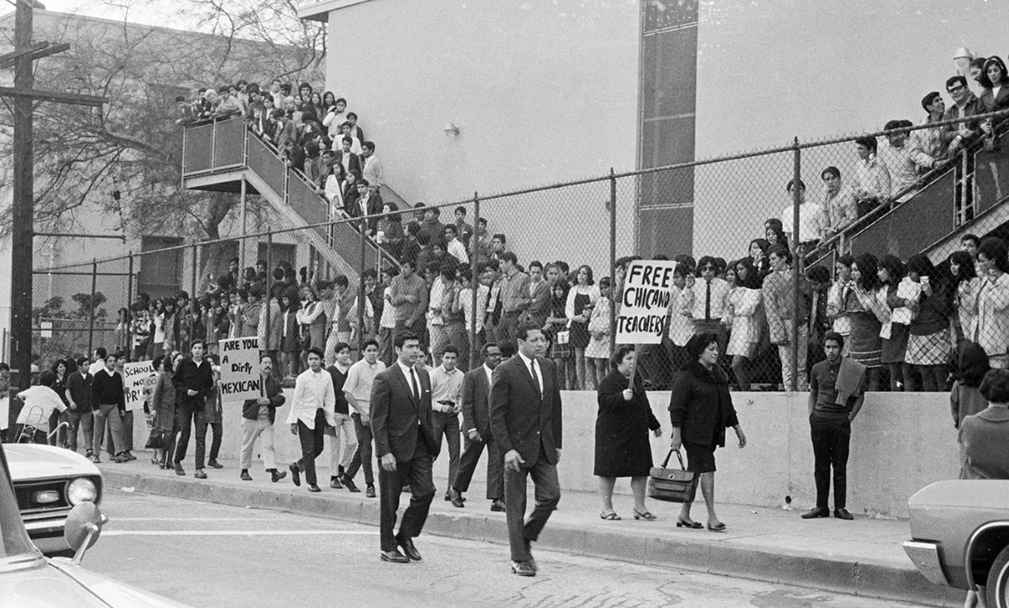
Due to a lack of funding, the demands could not be met. Subsequently, police arrested 13 organizers and charged them with conspiracy. Twelve of them were released, but Sal Castro remained in jail. A leader of the walkouts and a graduate of UCLA, he was a teacher of Mexican-American social studies at Lincoln High School at the time. He saw firsthand the inequalities in the public education system. He taught Mexican and Mexican-American history and culture, instilling a sense of pride in his students about their heritage.
At the start of the protests in March 1968, students from Lincoln, Wilson, Roosevelt, Garfield, and Belmont high schools took part.
Demonstrations continued in support of Sal Castro. Under pressure from the public, authorities and law enforcement eventually had to respond. He was released and reinstated at his school, a major victory for the movement.
It was Sal Castro who helped students formulate their demands for reform. In a 2010 interview with the Cal State LA alumni magazine, he humbly remarked:
“I was just doing my job.”
He argued that change happens through education. It’s a sentiment that’s hard to disagree with. Sal Castro passed away in 2013, and the LAUSD high school on the Belmont High campus was named in his honor.
50th Anniversary of the Walkouts
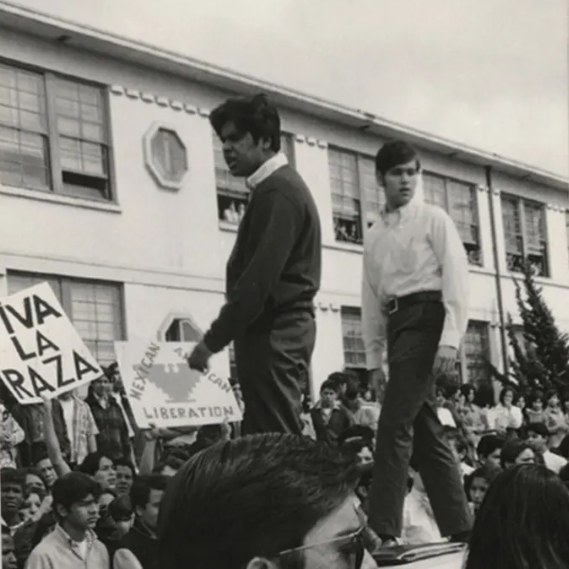
In March 2018, California State University, Los Angeles, commemorated the 50th anniversary of the East Los Angeles school walkouts. Hundreds of students symbolically walked to the campus for a series of workshops and discussions on the educational legacy of the protests. The two-day tribute on March 1 and 2 educated students about the historical context and the profound impact of the walkouts. It served as a powerful reminder to the modern generation of the bravery and determination of Los Angeles youth in their fight for change.
During the event, Cal State LA faculty, students, and staff held panel discussions and workshops to encourage students to pursue higher education.
Visitors explored an exhibition of historical photographs, documents, and local newspapers from that era. The display included photos taken in 1968 by Raul Ruiz, a student, journalist, photographer, and activist for the Chicano Student News. His photos show school administration blocking students from leaving and law enforcement officers arresting protesters. His photography is featured in a well-known exhibition at the Autry Museum. Ruiz noted that the main organizers of the walkouts were students and alumni of California State University, Los Angeles.
At the event, attendees remembered Sal Castro for his deep care and love for his students. His passion for educational equality inspired many.
A Call to Action
The East Los Angeles school walkouts became a powerful call to action for civil rights and educational access for the city’s Latino youth. Despite the Board of Education’s initial refusal to meet the demands, these events went down in history as some of the largest student protests in U.S. history.