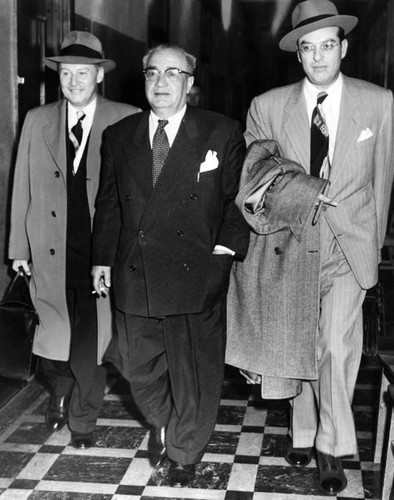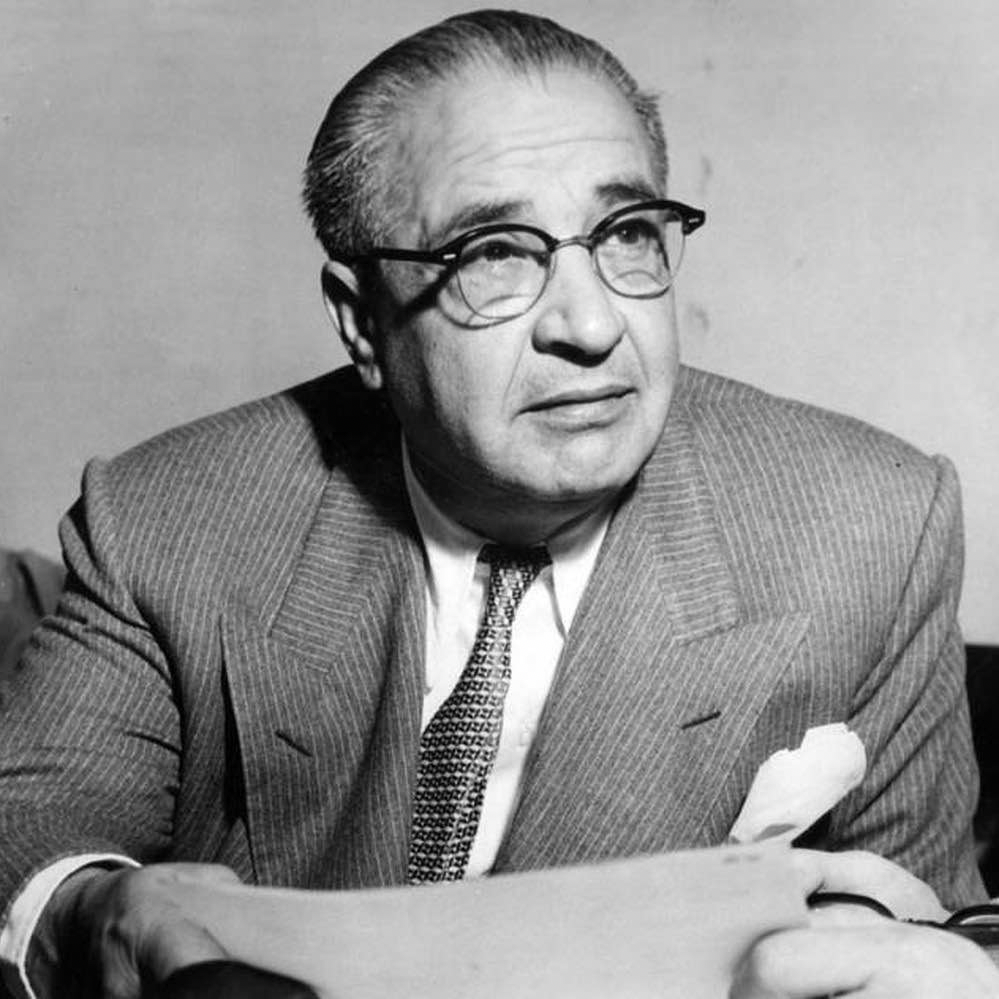

He was known simply as the discreet, often low-profile patriarch of the Los Angeles crime organization. Jack Dragna etched his name into the city’s history as a Mafia boss who maintained an unwavering, powerful hold on the territory from the 1930s until his passing. He operated beneath the radar, yet with resounding success. Dive deeper into the life of this influential West Coast mob figure with layes.info.
The Sicilian Roots
Ignazio Dragna, universally known as Jack, was born in Corleone, Sicily—a place synonymous with Mafia lore. Given his origins, it wasn’t surprising that Jack encountered the criminal life early on. He quickly assimilated the core principles and management tactics that would later define his role as a leading mob authority.
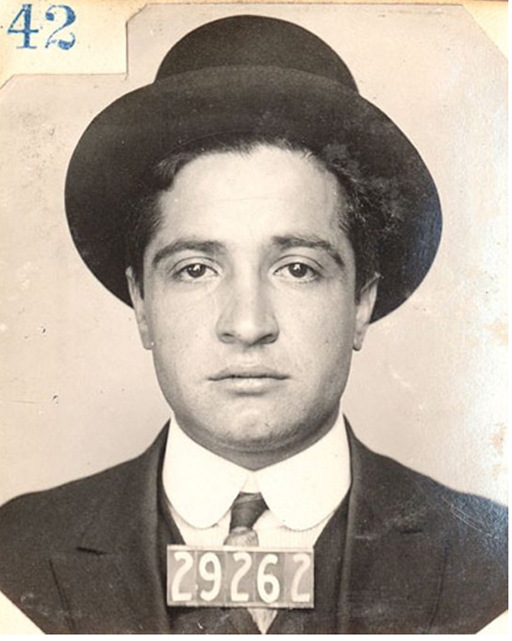
In 1914, he immigrated to the United States, first landing in New York. His time there was brief. Dragna soon recognized that the vast potential for upward mobility in the criminal underworld lay in Los Angeles. This realization propelled his decision to move west. During this era, organized crime in California was still in its formative stages, a key factor that allowed Dragna to ascend the criminal ranks swiftly.
Establishing a Foothold in L.A.
Following his arrival, Jack Dragna involved himself in an array of illegal schemes, including bootlegging during Prohibition, extortion rackets, and the management of illicit gambling operations. The West Coast was brimming with ambitious outlaws seeking to reach the pinnacle, but few possessed the drive to actually achieve it. Jack Dragna was a notable exception. He distinguished himself from other West Coast crime figures through a specific blend of attributes:
- A mix of guile and shrewd calculation. His innate caution and grasp of Mafia dynamics enabled him to expertly navigate the treacherous world of organized crime;
- A genius for cultivating strategic alliances that magnified his clout and reinforced the stability of the Los Angeles crime family;
- A preference for reserved, behind-the-scenes leadership. This was deliberate. Dragna consistently shunned the glare of public and media scrutiny, choosing a subdued profile to solidify his covert influence. Consequently, he remains less famous than flamboyant figures like Al Capone, Lucky Luciano, or Benjamin “Bugsy” Siegel, who craved publicity;
- He made it a priority to steer clear of needless conflicts and direct clashes;
- His tenure at the top was directly correlated with the expansion and potency of the Los Angeles crime family under his stewardship.
This enduring strategy proved highly effective, cementing his status as a pivotal figure and true power broker in the L.A. family from the 1930s until his demise in 1956.
The Dragna Era in Los Angeles
The year 1931 saw the death of Los Angeles’s founding Mafia boss, Joseph Ardizzone. His underworld peers on the West Coast, along with the New York Mafia Commission, swiftly endorsed Dragna as the successor. Thus, Jack Dragna stepped into the role of the L.A. crime clan’s leader.
Under Dragna’s dominion, the city’s criminal network experienced a significant surge in both reach and authority. His unassuming public profile paradoxically helped to facilitate the clandestine growth of his influence.
Dragna’s cornerstone strategy was to merge forces with other criminal enterprises, both to safeguard his existing interests and to project his power beyond L.A.’s borders into new territories, notably Las Vegas.
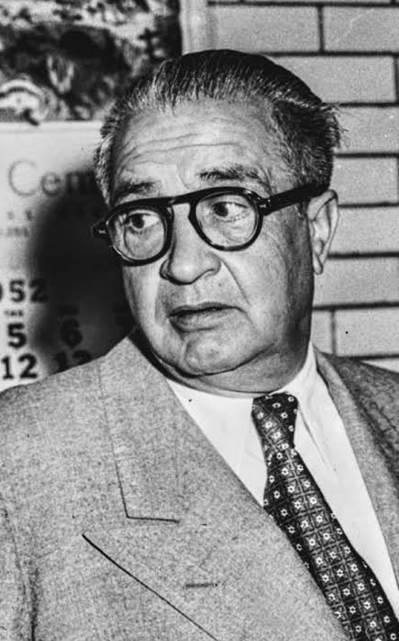
Dragna’s primary revenue stream came from extorting “protection fees” from local bookmakers. Beyond that, he was the city’s foremost illegal gambling czar. A look at his operations reveals that the head of the Los Angeles syndicate managed: gambling operations (gambling ships outside territorial waters), union control, extortion (racketeering).
Turbulence and Rivalries
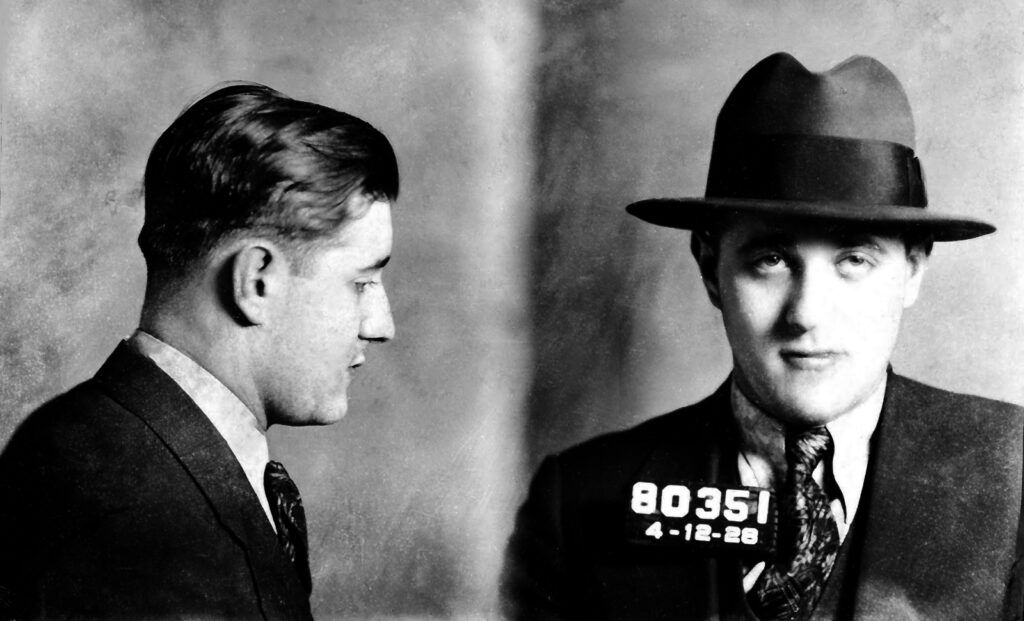
Even with his impressive longevity in the criminal world, Dragna wasn’t immune to friction. One of the most high-profile conflicts arose with the arrival of Benjamin “Bugsy” Siegel in Los Angeles. Siegel, connected to the East Coast Mafia, openly challenged Dragna’s authority. Their methodologies were worlds apart: Dragna favored obscurity, while Bugsy implemented brazen strategies and cultivated a flamboyant public image.
This rivalry reached its violent conclusion with the assassination of Bugsy Siegel in 1947. Historical researchers often speculate that Jack Dragna was deeply involved in masterminding the attack on his chief competitor.
Yet, a contrasting viewpoint comes from crime historian and Dragna’s own great-grandson, J. Michael Niotta. He suggests that Dragna and Ben Siegel were, in reality, trusted business associates. A review of federal files, including surveillance reports and wiretaps, uncovered no evidence of mutual hostility or conflict. Instead, Dragna spoke highly of Siegel, and each simply maintained control over their distinct turf: Ben in Las Vegas, and Jack across Southern California.
Coping with Law Enforcement Scrutiny
The Los Angeles crime family began to feel strain in the 1950s, largely due to intensified pressure from police and federal agencies. Dragna’s leadership coincided with the landmark Kefauver Hearings, a series of Senate probes into organized crime that cast a harsh spotlight on Mafia activities nationwide, including in Los Angeles.
Dragna’s quiet-operator strategy ultimately failed to shield him entirely. These external threats were compounded by internal discord, specifically factional dissent. A group within his crew became restive, voicing frustration over his conservative tactics and reluctance regarding aggressive expansion. They yearned for more power. This combination of rising law enforcement attention and internal power plays significantly eroded Dragna’s standing.
Private Life and Family
On April 30, 1922, Jack Dragna married Francesca “Frances” Rizzotto in Los Angeles. She and her family also hailed from Corleone. A curious detail is that Jack Dragna and Francesca were third cousins. He was 30 and she was 20 on their wedding day. They had two children: Frank Paul (born 1924) and Anna Rosalie (born 1926). Their son, Frank Paul Dragna, graduated from the University of Southern California and was a decorated World War II veteran, losing an eye in combat, which earned him the moniker “The One-Eyed Man.”
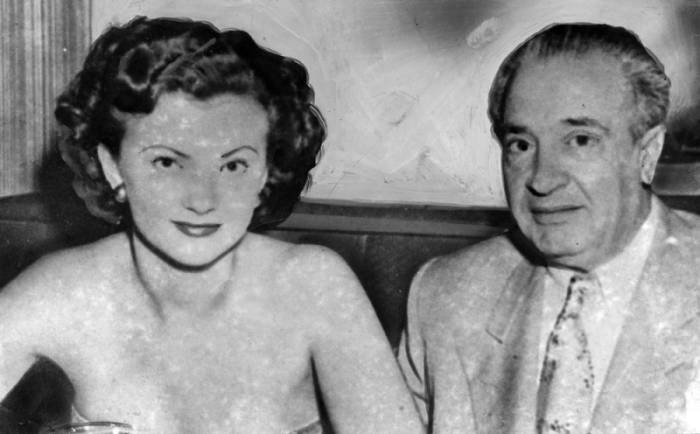
Frances died in 1953, a loss that led Dragna to lose his drive for managing the L.A. crime family, shifting his focus instead to a new preoccupation: women.
The Syndicate’s Demise
In 1953, the federal government issued an order for Dragna’s deportation to Sicily, stemming from an immigration violation in 1952 after he made an illegal entry into the U.S. following a short trip to Mexico. The crime syndicate’s chief executive suffered a fatal heart attack in 1956. At the time, he was still residing in California and actively challenging the deportation order. His death left the L.A. crime clan rudderless, and his passing is widely seen as symbolizing the beginning of the syndicate’s ultimate disintegration in the region. He was interred at Calvary Cemetery in East Los Angeles, California.
In summary, Jack Dragna is remembered in the criminal lore of Los Angeles as an effective and subtly powerful operator. His measured caution, cunning, and diplomatic skill ensured prolonged stability for his criminal enterprise. He also holds a place in Mafia history as the first L.A. boss to successfully establish peaceful relations with the other major Mafia families organized under the Luciano Commission.
Dragna’s enduring influence on the Los Angeles Mafia remains a matter of historical fact, cementing his legacy as an essential character in the broader narrative of the American mob.