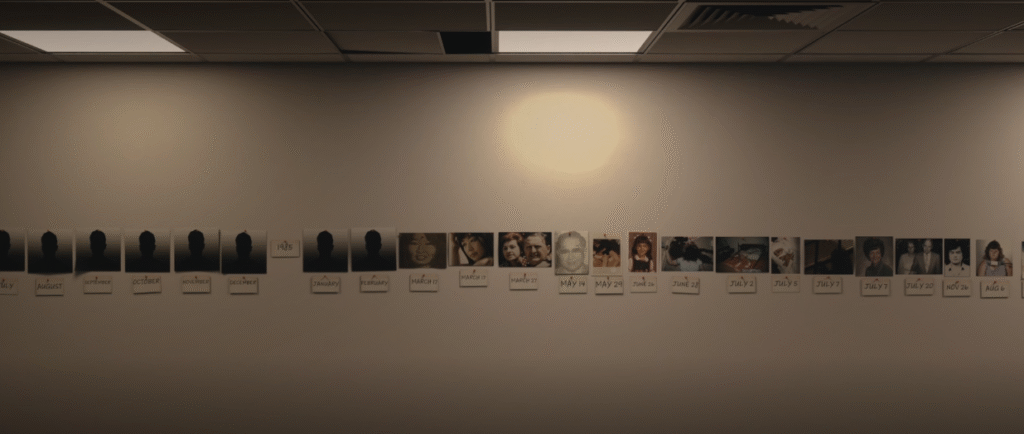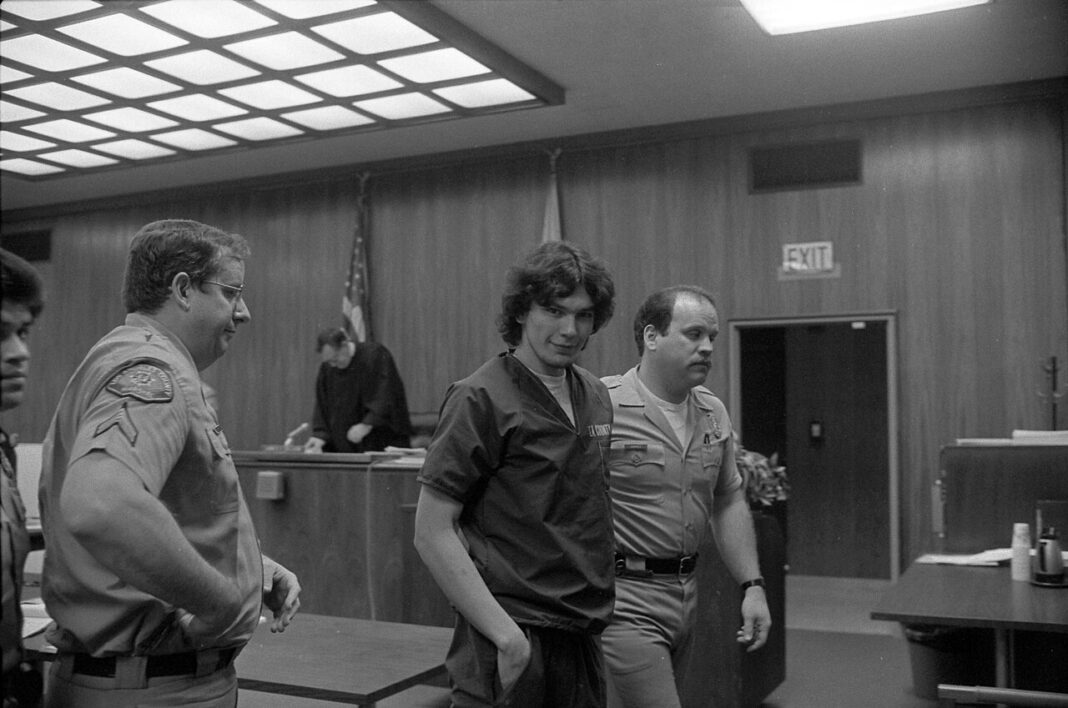

What is a single person capable of? Often, the first things that come to mind are stories of famous and talented individuals who achieved notoriety through art, culture, or philanthropy. However, this article delves into a starkly different figure: a notorious serial killer who claimed the lives of at least 13 people in California before his capture in 1985. You can learn more about this and other true crime cases at layes.info.
Childhood Trauma
Born into a family of Mexican immigrants, Mercedes and Julianiana Ramirez, Richard Leyva Muñoz Ramirez (referred to as Richard Ramirez) was the fifth child. His childhood was exceptionally difficult. He suffered regular physical abuse and mistreatment from his father at home. At the age of five, he fell unconscious on a swing, and from that point on, the boy began experiencing epileptic seizures. By the time he was 10, he had sustained a brain injury.
In his early teens, he fell under the influence of his cousin, Miguel. Miguel had recently returned from combat in Vietnam and would tell Richard graphic tales of the violence, torture, and mutilation he had knowingly inflicted on Vietnamese women. During these sessions, they would smoke marijuana and look at photographs confirming Miguel’s horrific accounts. When Richard was 13, he witnessed Miguel murder his wife. These terrifying events undoubtedly had a profound impact on Richard Ramirez’s still-developing mind.
First Arrests and Descent into Crime
Ramirez dropped out of school in the ninth grade, and in 1977, he was first convicted for marijuana possession. After his release, he moved to California. During this period, he developed a severe drug addiction, and his criminal activities escalated to include burglary and an embrace of Satanism.
In Los Angeles, he was arrested twice more—once in 1981 for auto theft and again in 1984 for the same offense. Ramirez’s first victim is believed to have been 9-year-old May Hsu Chan in April 1984.
This phase was also marked by Ramirez’s significant neglect of personal hygiene.

The First Murders
One crime often leads to another. On June 28, 1984, Richard Ramirez broke into the home of 79-year-old Jenny Winkow. He sexually assaulted the woman and stabbed her with a knife. The attack escalated into a series of violent crimes, including murder, rape, and robbery. The first proven murder for which he was later convicted was the murder of Joseph Dibedi, committed that same night.
The next homicide occurred on March 17, 1985. The intended victim was Maria Hernandez, but she managed to escape. He then killed her neighbor, 34-year-old Dayle Okazaki. Still not satisfied, he went on to shoot Tsai-Lian Yu. These attacks caused a media frenzy and widespread panic among city residents, who feared they might be next.
Developing a Style of Attack
The subsequent murders displayed Ramirez’s emerging signature style. His next victims were 64-year-old Vincent Zazzara and his 44-year-old wife, Maxine. Ramirez first shot the husband, then brutally attacked Maxine. He didn’t just stab her; he also gouged out her eyes.
The nightmare repeated in May 1985, claiming the lives of elderly couple William and Lilian Doi. Over the following months, Ramirez’s crime spree only intensified. Burglaries, robberies, and violent assaults were compounded by satanic rituals.
The entire city was consumed by panic, and the media only exacerbated the situation. The Los Angeles Police Department responded by creating a specialized task force, with the FBI eventually stepping in to help. The persistent media coverage, along with detailed descriptions provided by victims who had miraculously survived, eventually forced Richard Ramirez to flee Los Angeles.
The Night Stalker
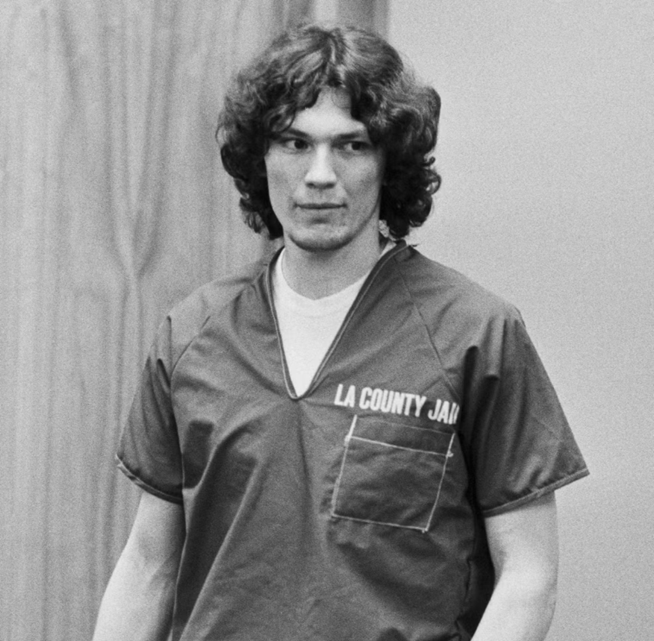
He headed to San Francisco, but his lifestyle and mindset remained unchanged. It seemed he couldn’t function without the need for violence and crime. The serial killer’s next victims were Peter and Barbara Pan. The media began to call him the “Night Stalker,” as his crimes exclusively occurred at night within his victims’ homes.
Capture
Before his trip to San Francisco, the killer left a crucial trail during an attack on a couple in Los Angeles. He broke into their house, shot the husband, and raped the wife. However, he didn’t kill the woman, instead forcing her to swear her love to Satan. The woman survived and was able to provide a detailed description of the perpetrator. Furthermore, a witness paid attention to his car and license plate.
The abandoned car was later found, leading authorities to establish Ramirez’s identity. The media immediately broadcasted Ramirez’s photograph and information gleaned from witnesses. Before his eventual capture, he attempted to steal two more cars, both unsuccessfully. As a result, he was brutally beaten by residents in East Los Angeles who recognized him from the news.
Justice and Death
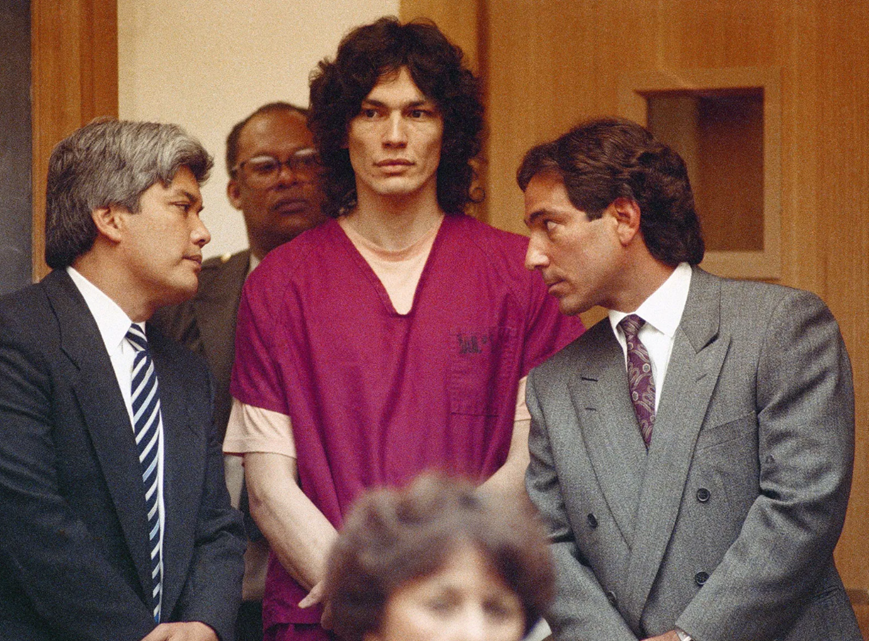
The list of his crimes is shocking. He committed at least 30 violent felonies, including multiple rapes and torture. Richard Ramirez waited in jail for his sentencing, but the court proceedings were repeatedly delayed. The jury selection finally began on July 22, 1988. On September 20, 1989, the jury found him guilty on 43 counts, including murder, attempted murder, sexual assault, and burglary.
Following the conclusion of the trial in 1989, Richard Ramirez was sentenced to death in the gas chamber and was sent to San Quentin Prison in California on November 7, 1989, where he spent the remainder of his life.
The trial cost $1.8 million, making it the most expensive murder trial in California history up until 1994, when it was surpassed by the Trial of the Century: The O.J. Simpson case.
In June 2013, he died of B-cell lymphoma (cancer) at the age of 53.
Personal Life
It may be surprising, but the serial killer married one of his admirers while incarcerated. She was 41-year-old Doreen Lioy, who believed he was innocent and wrote him numerous letters (around 75 in total). After a long correspondence, they met at San Quentin prison. Her visits increased to four times a week. They married in 1996, a decision that led to Lioy’s family disowning her.
Lioy severed all ties with Ramirez after the rape and murder of a 9-year-old girl in San Francisco was officially confirmed. While there are no official divorce records, the couple had no children.
At the time of his death, he was engaged to a 23-year-old writer. His body was never claimed, so he was ultimately cremated.

Netflix Documentary
He was known by several monikers: the “Walk-in Killer,” the “Night Stalker,” and the “Valley Intruder,” as his crimes almost always occurred after dark. In 2016, the Lifetime channel aired the film Night Stalker, which followed a lawyer attempting to justify the condemned serial killer. Ramirez’s crimes also inspired a four-part docuseries in 2021 titled Night Stalker: The Hunt for a Serial Killer.
Richard Ramirez’s story raises unsettling questions. On one hand, childhood trauma, like domestic violence, may have influenced him; on the other, his fervent satanic worldview clearly played a role. He was a follower of Satanism and occultism, leaving behind satanic symbols at his crime scenes. He purposefully sought out vulnerable people—especially women, the elderly, and children—in their own homes. While his victims seemed random, women were his primary targets for the most brutal and sexualized acts.
The horrific story of the Los Angeles serial killer left a deep and tragic mark on California history.