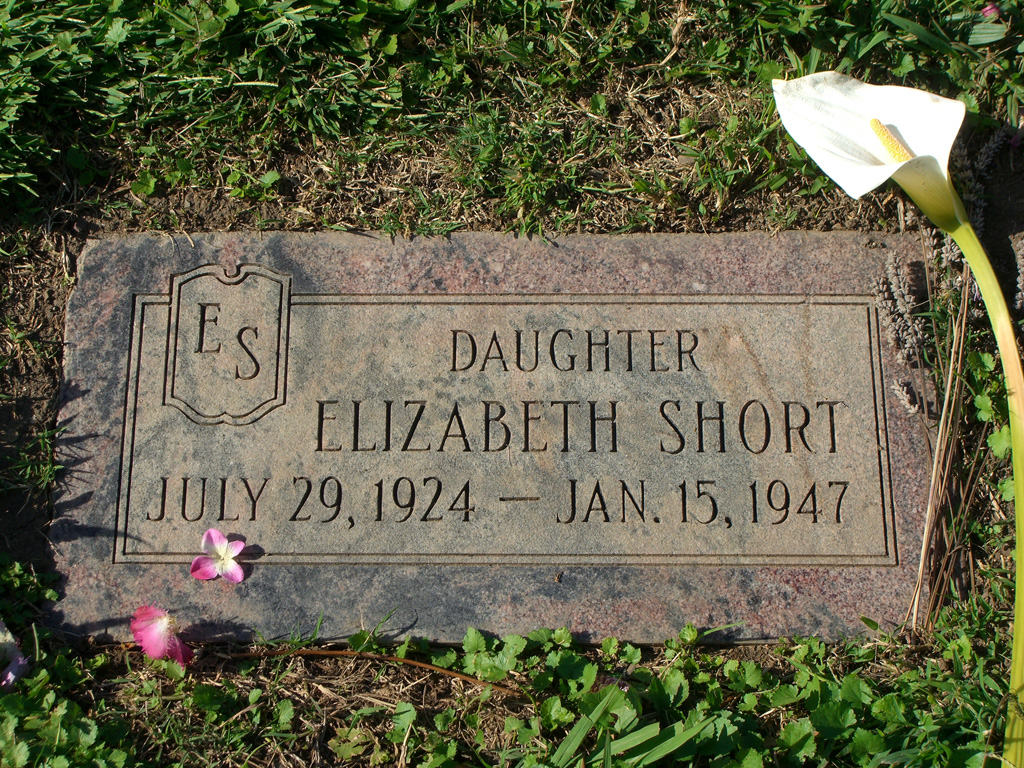

For decades, a chilling cold case has haunted the public and captivated true crime enthusiasts: the unsolved murder of Elizabeth Short, an aspiring Hollywood actress. This brutal and mysterious case has inspired countless books, films, and crime series. To delve deeper into this story and its notorious details, check out the full article on layes.info.
Elizabeth Short’s Early Life
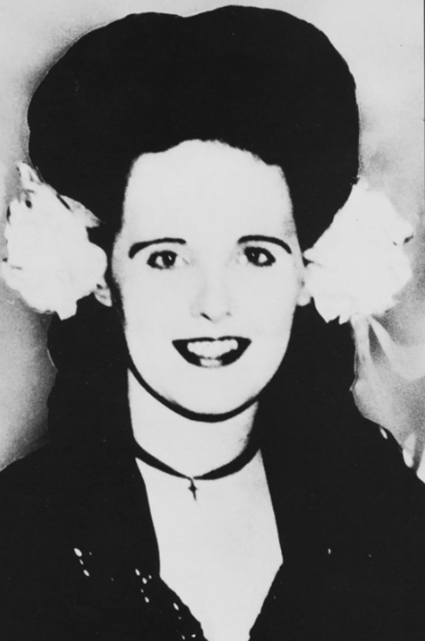
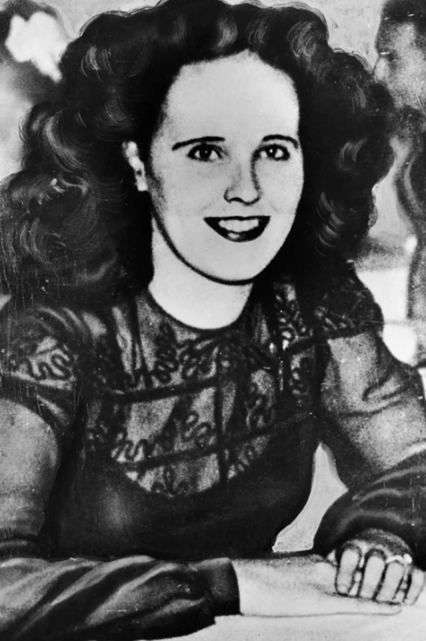
Born on July 29, 1924, Elizabeth Short’s short life was far from carefree, marked by family troubles and serious health issues. She spent her early years in New England and Florida before moving to California. Although many media outlets described her as an “aspiring actress,” she never landed any major roles or received significant acting credits. However, multiple sources confirm that becoming a movie star was her genuine dream.
Her childhood was particularly difficult. In 1929, the stock market crash wiped out her father’s family savings, and he vanished shortly after. His car was found abandoned on the Charlestown Bridge in Boston, leading his family to believe he had died by suicide. Elizabeth’s mother, left to support five daughters (Elizabeth was the third), took a job as an accountant to keep the family afloat.
As a child, Elizabeth suffered from severe respiratory illnesses, including bronchitis and asthma, and underwent lung surgery at 15. She often spent winters in Miami, Florida, with family friends to help with her health. It’s also known that she dropped out of Medford High School during her sophomore year.
California: Dreams That Died
The story of Elizabeth’s father took an unexpected turn in 1942. Her mother received a letter of apology from him, revealing he hadn’t died but had started a new life in California. Elizabeth, hopeful for a fresh start, moved in with him in January 1943. However, their relationship soured quickly, and she moved out soon after.
She found work on an army base, now known as Vandenberg Space Force Base, where she briefly lived with a U.S. Army Air Forces sergeant who reportedly abused her. By mid-1943, she had relocated to Santa Barbara, where she was arrested for underage drinking in a local bar.
After this incident, she returned to Florida. It was there she met and became engaged to Major Matthew Michael Gordon Jr. The relationship was brief, however, as he was killed in a plane crash on August 10, 1945.
In July 1946, Elizabeth made her final move to Los Angeles.
For the last six months of her life, she worked as a waitress and rented a room behind the Florentine Gardens nightclub on Hollywood Boulevard.
A week before her death, Elizabeth was returning from a short trip to San Diego with her on-again, off-again boyfriend, Robert “Red” Manley, a 25-year-old married salesman. Manley recalled dropping her off at the Biltmore Hotel in Los Angeles, where she was supposed to meet one of her sisters. Hotel staff saw her making a phone call in the lobby, and she was later spotted by patrons at the Crown Grill cocktail lounge, located just a few blocks away. It was the last time anyone saw her alive.
The Discovery
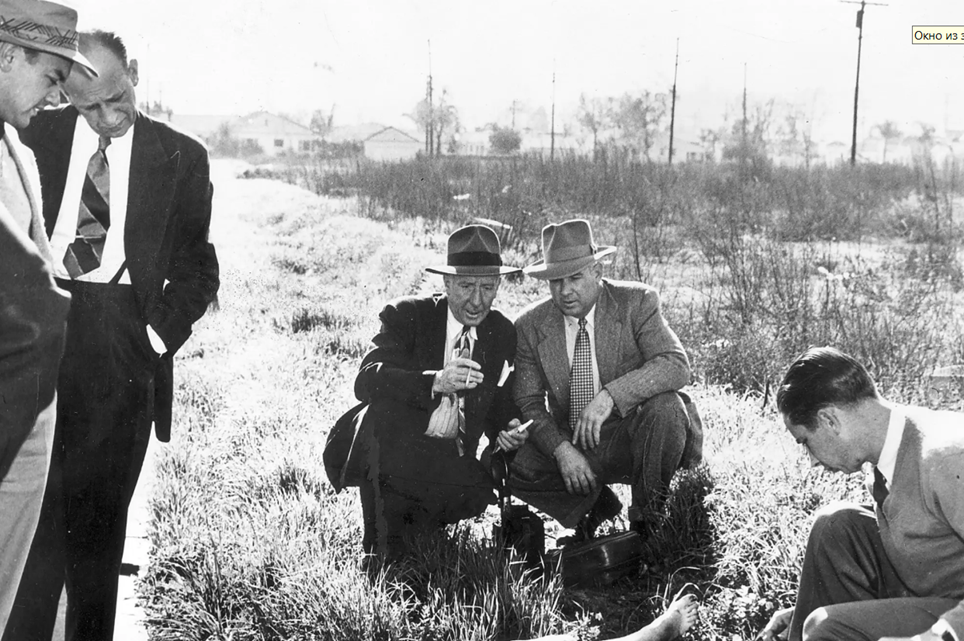
On the morning of January 15, 1947, a woman named Betty Bersinger was taking a stroll with her three-year-old daughter when she came across a truly gruesome sight. At first, she thought she’d stumbled upon a discarded mannequin, but it was the naked body of Elizabeth Short, severed cleanly in half at the waist. The body was discovered on an empty lot on the west side of South Norton Avenue.
Strangely, not a single drop of blood was found at the scene. This led the Los Angeles Police Department to believe the body had been moved and deliberately left there. Another theory was that the killer had meticulously washed the body. Elizabeth’s face was also mutilated, with a cut from the corners of her mouth to her ears, creating a horrifying “Glasgow smile.”
Bersinger immediately contacted the authorities. The unsolved case quickly gained notoriety as “The Black Dahlia” — a nickname reportedly inspired by Elizabeth’s striking dark hair and her preference for black clothing. The name also echoed the 1946 film noir, The Blue Dahlia, and was sensationalized by the media, which referred to the case as a “sex fiend’s murder.”
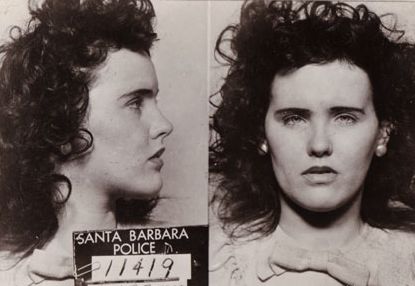
A Massive Investigation and Lingering Questions
The Los Angeles Police Department launched a massive investigation, questioning over 150 suspects, but no arrests were ever made. On January 21, a man claiming to be the killer called the offices of the Los Angeles Examiner. He promised to turn himself in and told editor James Richardson to expect “souvenirs from Beth Short” by mail. Three days later, the newspaper received a chilling package. Inside were the victim’s birth certificate, business cards, photos, and names written on pieces of paper. The entire package was carefully wiped down with gasoline, just like her body.
Despite the meticulous cleaning, police managed to lift several partial fingerprints, which were sent to the FBI for analysis. However, they were too smudged to be useful. Another package arrived later, containing the victim’s purse and black suede shoes, which had also been doused in gasoline and left near Norton Avenue.
On March 14, a shoe was found on the beach in Venice, along with a suicide note that read: “To whom it may concern: I have waited for the police to arrest me for the Black Dahlia killing but haven’t. I’m too much of a coward to turn myself in, so this is the best way out for me. I couldn’t help it for me nor this. Sorry, Mary.”
The police linked the note to Mark Hansen, a wealthy nightclub and theater owner who owned the Florentine Gardens in Hollywood. Elizabeth’s neighbor, Ann Toth, stated that Elizabeth had rejected Hansen’s sexual advances, suggesting a potential motive. Toth herself, an actress, was dating Hansen, which raised eyebrows, but he was eventually cleared of suspicion.
The investigation became a huge undertaking, involving 750 detectives from the LAPD and other departments, along with 400 sheriff’s deputies and 250 California Highway Patrol officers. After extensive searches of abandoned buildings and storm drains, a $10,000 reward was announced to help crack the case. The media frenzy continued to fuel public interest, similar to the widespread attention surrounding the assassination of Robert F. Kennedy in Los Angeles.
Most of the tips received were dismissed as false, and some individuals were even charged with obstruction of justice.
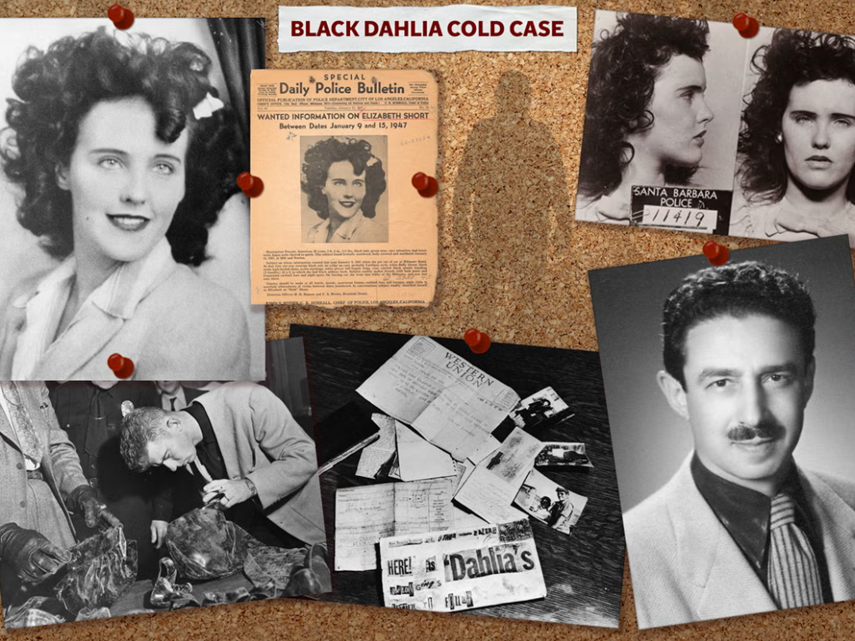
A Legacy of Art
Despite the passage of time, the unsolved case has become a wellspring of inspiration for writers and filmmakers.
Brenda Haugen penned The Black Dahlia: Shattered Dreams, while Piu Eatwell wrote Black Dahlia, Red Rose in 2017. The case is considered one of the first major post-war crimes to capture the entire nation’s attention and remains one of the oldest unsolved cases in Los Angeles County. It stands as one of the most famous cold cases in U.S. history.