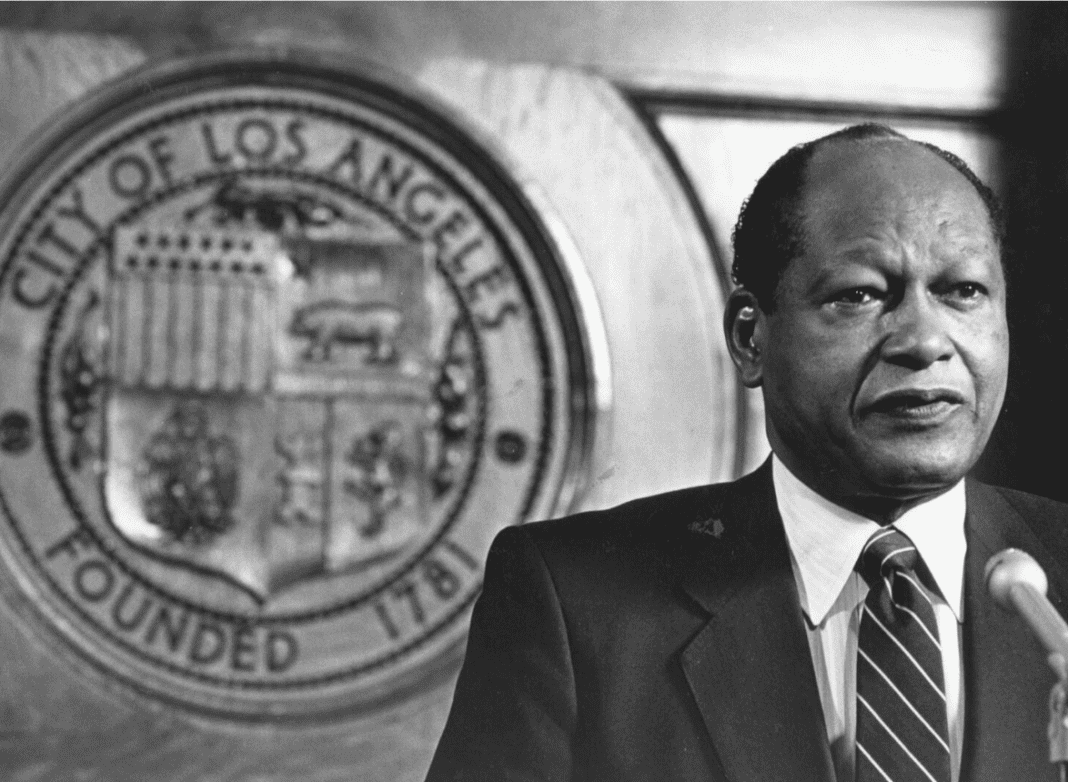

Tom Bradley’s life story is a classic American success story. The grandson of slaves and the son of sharecroppers, he battled discrimination to help transform Los Angeles into a great U.S. city. He managed to overcome racial barriers to achieve the American dream. He became the first African American mayor of Los Angeles, leading the city from 1973 to 1993. His 20-year tenure was the longest in the city’s history and symbolized significant social, political, and economic change. More at layes.
Biography
Thomas Bradley was born on December 29, 1917, in rural Texas to a family of sharecroppers. Bradley’s parents moved to Los Angeles when he was 7 years old. For the more than one million African Americans who migrated west in the early 20th century, Los Angeles was seen as a land of hope for a better life. Bradley grew up near Central Avenue in Los Angeles. From childhood, he challenged every obstacle in his path. He was an ambitious student, attending the University of California, Los Angeles (UCLA) in 1937. He also became a track and field star and team captain.
Bradley served as an officer with the Los Angeles Police Department (LAPD) for 21 years, reaching the rank of lieutenant—the highest position an African American could obtain at the time. When systemic racism blocked his path up the career ladder, Bradley realized he had to make a change. He attended law school at night, passed the bar, and became an attorney. After this, he resigned from the LAPD. Bradley became active in politics, particularly with the Democratic Minority Conference and the California Democratic Council—progressive, liberal reform groups. In 1949, Bradley worked on the election of Mexican-American City Councilmember Edward Roybal, whose innovative and inter-ethnic model of coalition politics influenced Bradley when he later ran for city council and mayor.
Political Career
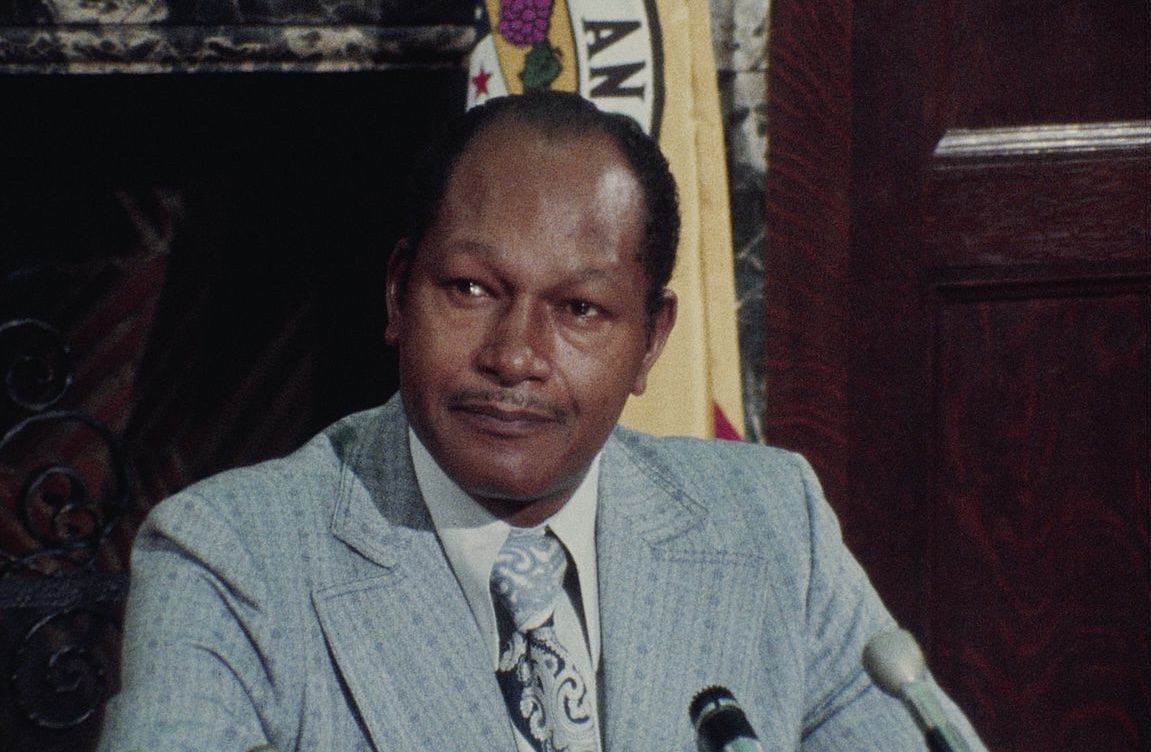
In 1963, backed by church leaders and a coalition of African Americans, Bradley was elected to the City Council. It was the first time in history an African American had been elected to the Los Angeles City Council. These victories demonstrated how an organized and united community could overcome hostility and indifference to win political representation. Los Angeles became a testing ground for an innovative and powerful new type of political coalition. After two years on the city council, Tom Bradley decided he was the person who would change Los Angeles.
The Groundwork for Bradley’s Election
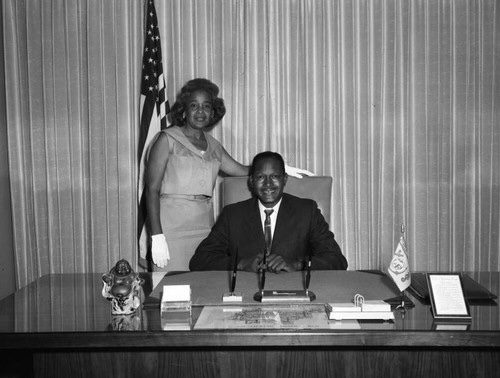
On May 29, 1973, Los Angeles City Councilmember Tom Bradley made history when he won the election to become the city’s first African American mayor. At that time, achieving an executive office was just a dream for an African American. Until 1967, when Carl Stokes in Cleveland and Richard Hatcher in Gary, Indiana, won their mayoral elections, there were no Black mayors in major US cities. It was astonishing that this breakthrough happened in distant Los Angeles, where politics differed from the more traditional politics of Eastern and Midwestern cities. Los Angeles was a city with a relatively small African American population and had a political system that was difficult for progressives to influence.
Bradley was a respected man in the city. The former LAPD lieutenant had risen to the highest rank any African American had ever achieved in the Department. His first attempt at the office was unsuccessful. He lost the campaign to incumbent Mayor Sam Yorty. Yorty painted Bradley as a tool of Black militants and white radicals, terrifying white voters. Bradley lost by just 4% of the vote. That could have been the end of the story—another case of a qualified candidate failing to break into high office. But when Bradley challenged Yorty again in 1973, the city began to learn more about him as a person, and about the deep and long-standing career investments he had made in the face of racial discrimination.
Bradley was a leader of a progressive surge in both the Democratic Party and the city. He united and championed the ideas of civil rights and civil liberties groups. He was a supporter of City Councilmember Ed Roybal, an icon of the Latino community. Bradley became a leading voice for police reform in the city, facing a hostile LAPD.
At the same time, Bradley developed strong relationships with Jewish liberals and activists. The deep trust and shared beliefs among activists in these and other communities became Bradley’s power base, allowing him to build a true interracial coalition.
Election Results
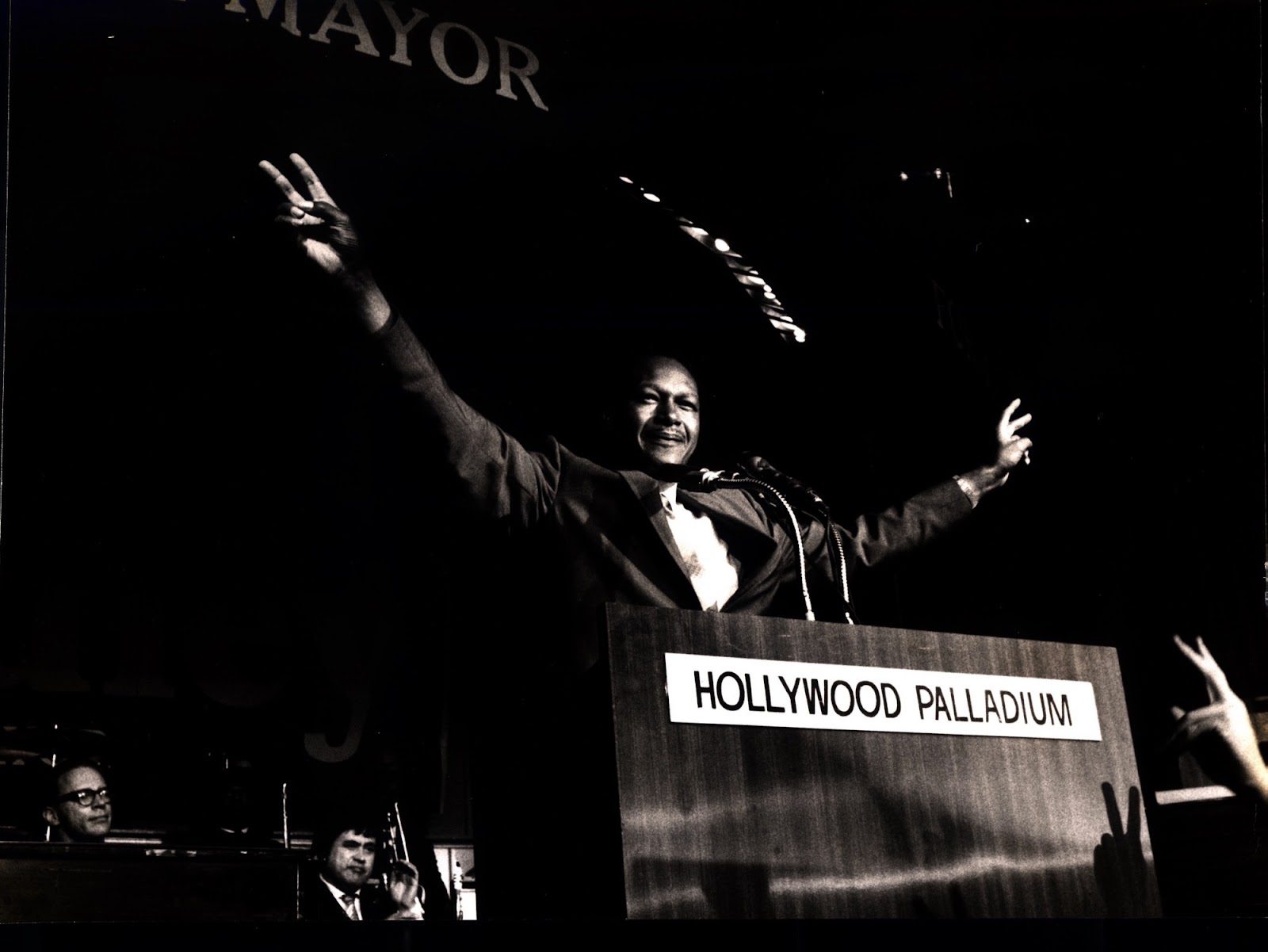
On May 29, the election results were in. Bradley captured 54% of the vote. Turnout was very high at 64%. For the first time, an African American mayoral candidate had won an election in a major city with a predominantly white majority population. USC researchers found that Bradley received 46% of the white vote, significantly higher than the single-digit support his opponents had received.
After his victory, Bradley became an immensely popular mayor and a global figure, especially in the Far East, where he was often treated like a head of state. He served for five terms. Bradley’s election marked a divergent path for Los Angeles from New York politics. As liberalism in New York gave way to less liberal urban policies, Los Angeles transformed from a relatively conservative system to a more liberal one.
The echoes of Bradley’s story resonated with the rise of Barack Obama, who also ran against the system to win the world’s most important elected office. They also resonate with the election of Mayor Karen Bass, who grew up in the Bradley era. Her personal characteristics and coalition strength share elements of the Bradley model.
Achievements as Mayor
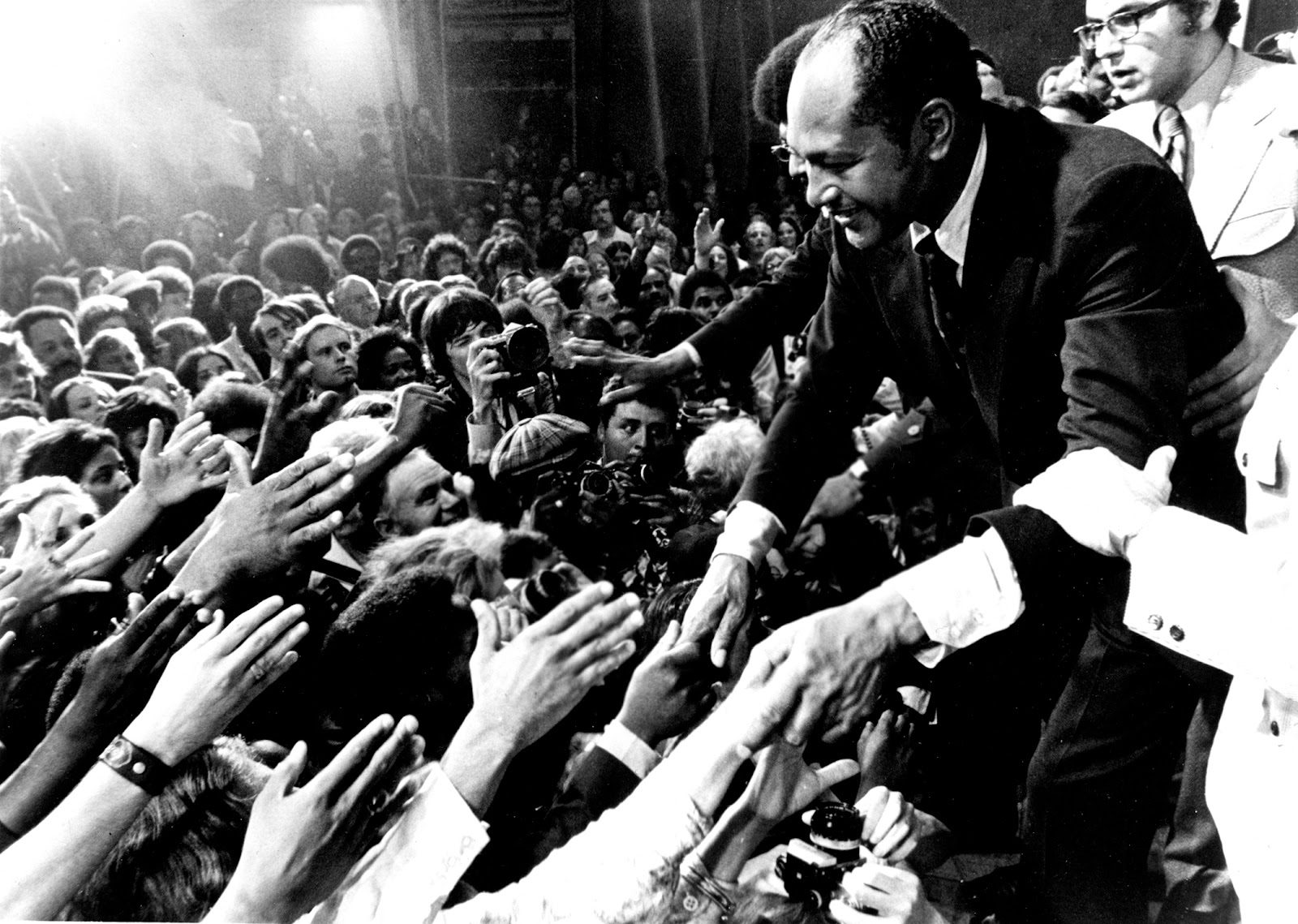
Mayor Tom Bradley changed Los Angeles. He opened up City Hall and city commissions to women, minorities, and people with disabilities. He transformed Los Angeles from a conservative white city into a vibrant U.S. center and revitalized its financial and business districts. He influenced two generations of politicians and leaders. Tom brought the city global attention with the 1984 Olympic Games—the first profitable games in history.
He passed environmental reforms and strong programs that banned discrimination against the LGBT community and people with AIDS. He won the long fight for reform and civilian oversight of the LAPD. Tom ran twice for Governor of California. Had he won, he would have become the nation’s first elected African American governor. But Mayor Bradley also presided over a city that was becoming increasingly polarized between rich and poor, where drugs and gang violence were rampant, police abuse and unemployment were widespread, and amenities like banks and supermarkets were almost nonexistent. His carefully built coalition between the African American and Jewish communities strained over the years, and African American-Latino relations deteriorated.
In 1992, as Bradley neared the end of his fifth term as mayor, Los Angeles exploded in three days of civil unrest. They were sparked by the acquittal of the police officers involved in the beating of Rodney King. Three years after these events, he suffered a stroke that left him partially paralyzed and unable to speak for the rest of his life. In 1998, he died of a heart attack at the age of 80.