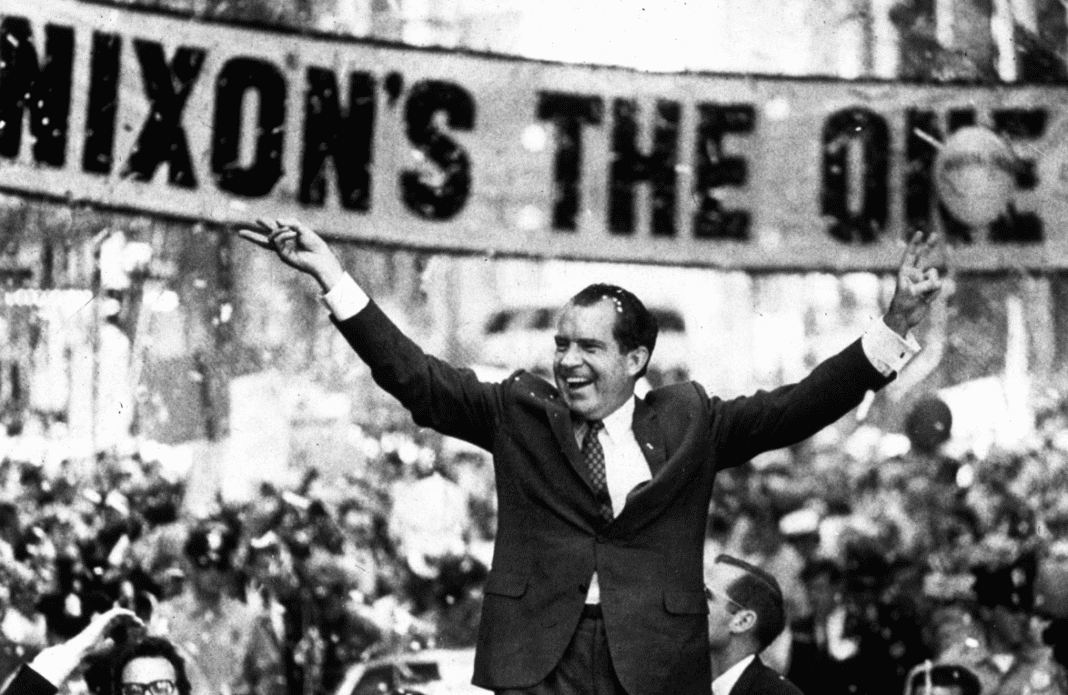

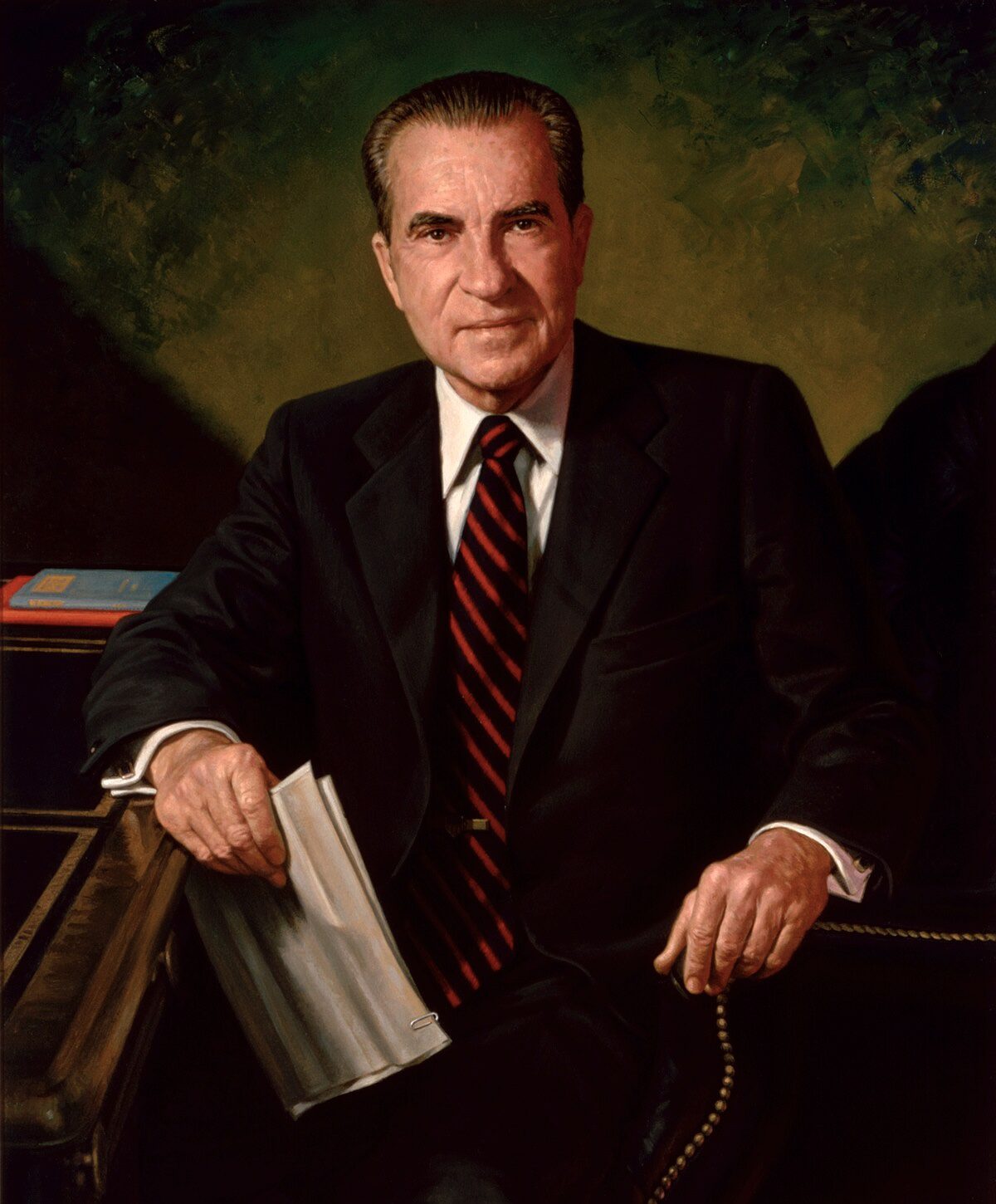
The 37th President of the United States, he is one of the most controversial figures in American history. His foreign policy achievements, such as normalizing relations with China and signing disarmament treaties with the USSR, are often overshadowed by the Watergate scandal, which culminated in his resignation. More at layes.
Biography
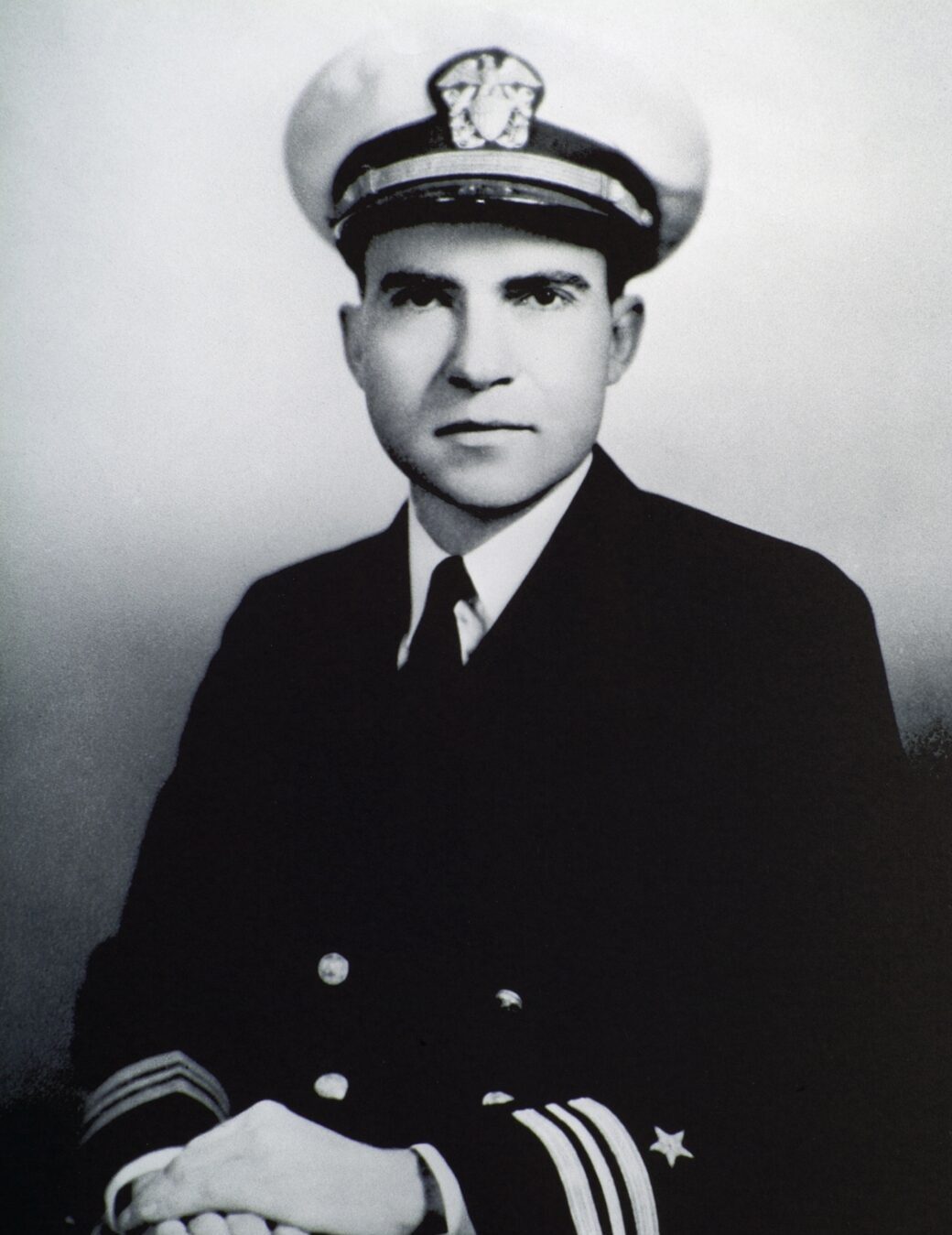
Richard Nixon was born on January 9, 1913, in the small California town of Yorba Linda. His maternal grandfather was said to be descended from England’s King Edward III and was named after Richard the Lionheart. The boy grew up in a Quaker family. The family had a ranch and a lemon grove. After the farm failed, the family moved to Whittier, a town with a large Quaker community. Richard excelled in school. He was later accepted to Harvard, but his family could not afford the costs. Instead, he attended a local college. After graduating, Richard worked as an attorney. Following the attack on Pearl Harbor, he joined the U.S. Navy and served until the end of World War II.
In 1946, he began his political career and was elected to the U.S. House of Representatives. From 1950 to 1953, he served as a senator from California, and immediately afterward, he became vice president in the Eisenhower administration. He would later write about these years in detail in his memoir, “Six Crises.”
Richard Nixon played the piano and also mastered the saxophone, clarinet, accordion, and violin. These skills proved useful in his political career. During his presidency, he sometimes played the piano in the White House and on television shows. He also loved bowling and had a bowling alley built in the White House basement. Nixon made history as the first person to be elected to two terms as vice president and two terms as president.
The “Nixon Doctrine”
When Richard Nixon took office on January 20, 1969, the US was a member of five regional military blocs and 42 bilateral defense pacts. Outside of American territory, there were 302 large and 2,000 smaller military bases. The number of American troops had reached 3.5 million, and the military budget was $75 million. The Vietnam War was disastrous for Washington’s image, demonstrating to the world the true cost of adhering to the “domino theory” and the fact that the White House could no longer impose its will on everyone.
These events forced the Nixon administration to quickly solve foreign policy problems that threatened to roll back America’s influence to pre-war levels. The new course had to be a middle ground between the “disengagement” and “overextension” that the public demanded. Under these conditions, on July 25, 1969, the president announced the “Nixon Doctrine.” The Doctrine first and foremost revised the list of countries within America’s sphere of national interest. Countries were divided into two groups. The president promised to provide a “US nuclear shield” for certain states. Others were promised military and economic aid in line with treaty obligations.
Nixon sought to resolve the Vietnam issue as quickly as possible, for which the “Vietnamization” plan was developed. This policy shifted responsibility away from the White House and reduced America’s economic and military losses. Despite the threat of losing influence in the region, he managed to solidify America’s position. The Nixon administration planned to unite countries around ideas of shared positive aspirations.
Nuclear Deterrence and Economic Development
Nixon returned to the topic of nuclear peace. In 1972, the first bilateral treaty between the US and the Soviet Union, SALT I (Strategic Arms Limitation Treaty), was developed and signed. It placed limits on the stockpiling of nuclear weapons. The Anti-Ballistic Missile (ABM) Treaty was also signed.
In addition to armaments, the nations also competed in the space race. But during the Nixon era, tensions eased in this sphere as well. On May 24, 1972, the president approved a five-year cooperation program between NASA and the Soviet space program. This led to the joint mission of the American “Apollo” and Soviet “Soyuz” spacecraft, which docked in space.
Another of Nixon’s goals was to preserve America’s economic position. The president understood that the rapid development of European and Asian countries would sooner or later lead to a decrease in US influence. This led to the “five-power world” theory, whose participants were to be the US, Western Europe, Japan, China, and the USSR. Nixon believed these five great powers would determine the world’s economic future.
A Second Term as President
On November 7, 1972, Richard Nixon won a landslide victory in the presidential election to remain in the White House for a second term. He won the popular vote by a 23% margin. One of the main factors in his victory was following through on his promise to end the war in Vietnam. The gradual withdrawal of American troops continued, the military draft was scaled back, and in 1973, the military transitioned to an all-volunteer force. After many years of fighting, the Paris Peace Accords were signed on January 27, 1973. The treaty mandated a ceasefire and allowed for the withdrawal of remaining American troops. The following years of Nixon’s administration were characterized by clear adherence to his chosen course and significant public support. 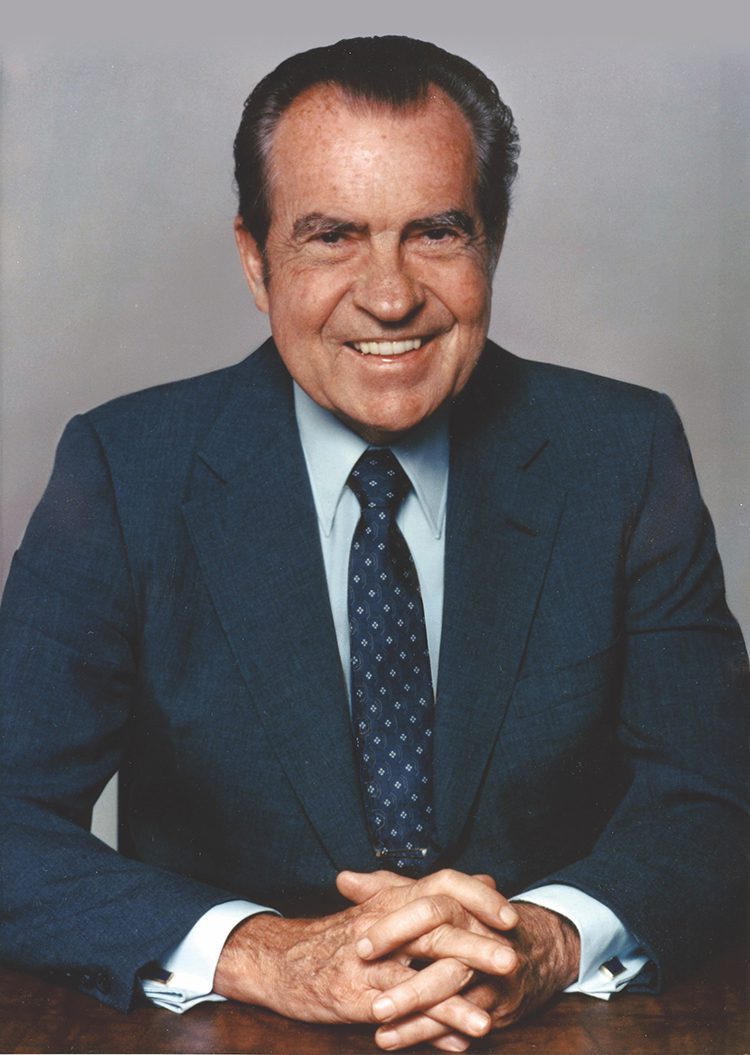
Resignation from Office
The implementation of all the president’s plans was thwarted by the Watergate scandal, which began four months before the 1972 presidential election and led to Richard Nixon’s resignation on August 9, 1974.
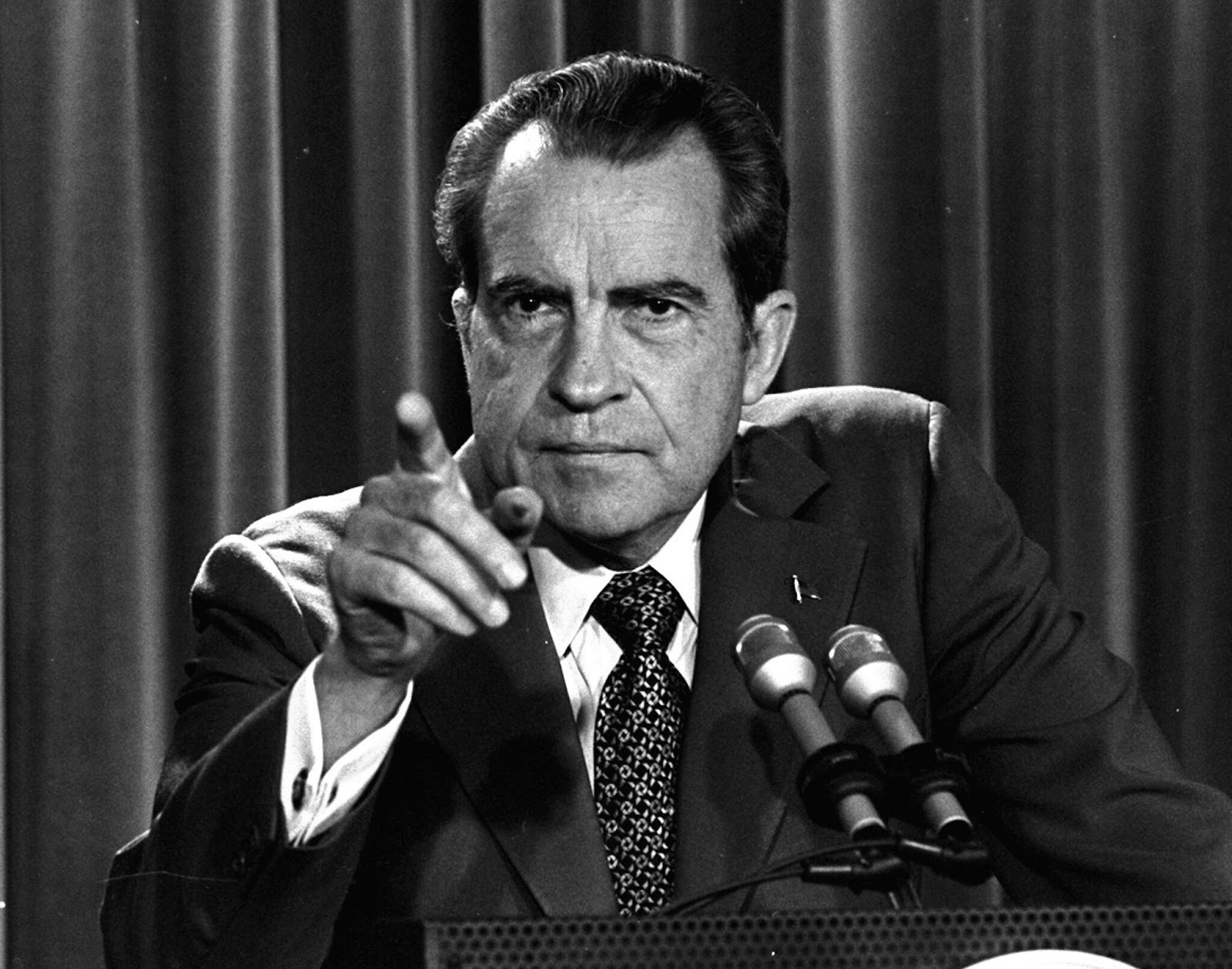
In 1972, during the presidential campaign, people associated with the Nixon administration were caught breaking into the Democratic Party headquarters at the Watergate complex. They bugged the offices and photographed internal documents. Although Nixon initially denied his involvement, the subsequent investigation revealed that the president participated in the attempt to cover up the crime. In August 1974, after the House of Representatives initiated the impeachment process, Nixon announced his resignation. He became the first and only US president to resign from office.
After his resignation, Nixon dedicated himself to writing memoirs and analytical works. He worked for a long time to rehabilitate his reputation, consulting subsequent US presidents and serving as an expert on foreign policy. Richard Nixon passed away on April 22, 1994, in New York City at the age of 81.
Ultimately, the 37th president’s actions led to the restoration of the nation’s image on the world stage, the beginning of “détente” in relations with the USSR, the end of the Vietnam War, the establishment of bilateral relations with the PRC, the normalization of the domestic situation, and a significant improvement in America’s economic position. However, Nixon is an example of how even the highest political ambitions can be destroyed by personal failings and an abuse of power. His story remains a lesson for politicians and citizens on the importance of accountability and transparency in government.