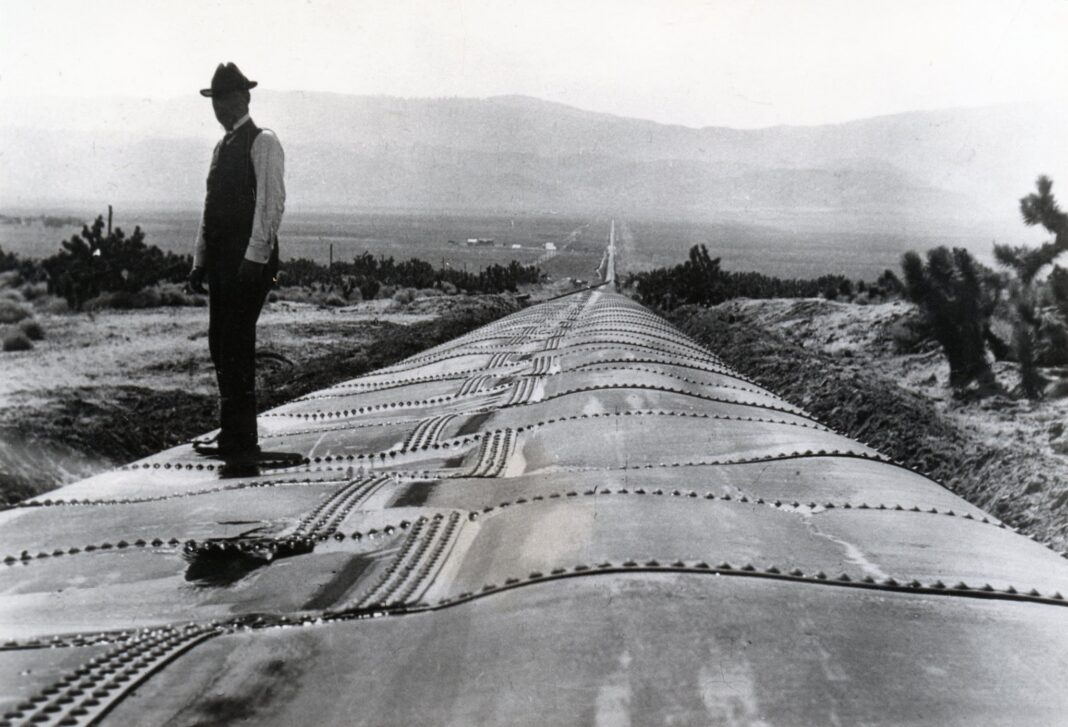

It is hard to imagine Los Angeles without its vast sprawl, sprawling suburbs, and valleys—now integral parts of one of the largest metropolitan areas in the United States. Yet the city’s modern shape was far from inevitable. At the dawn of the 20th century, Los Angeles lacked the single most vital resource for its future growth: water. The struggle for water became a defining chapter in the city’s history. At the heart of this transformation was William Mulholland, a self-taught engineer who spearheaded the construction of a monumental aqueduct. Read more on layes.
Los Angeles Before Mulholland
The climate of Los Angeles has always posed a major challenge to large-scale urban development. Located in a semi-arid region, the area lacked sufficient local water sources to sustain unlimited population growth. According to the Los Angeles Department of Water and Power, the city’s population surged from 5,728 in 1870 to 102,479 by 1900. Demand for water grew exponentially. At the time, the city’s water supply relied almost entirely on the Los Angeles River and groundwater aquifers. City officials realized that if Los Angeles was ever to become a major metropolis, it needed a new source of water. That turning point marked the rise of William Mulholland.
His career path was anything but conventional. Lacking formal engineering training, Mulholland gained his expertise entirely on the job, working on the city’s water system while teaching himself mathematics, hydraulics, geology, and other disciplines. In his youth, he worked as a ditch tender, managing water distribution through a network of open canals. Over the years, Mulholland rose through the ranks from an entry-level laborer to superintendent and chief engineer of the water department. His most daring vision was to import water to Los Angeles all the way from the Eastern Sierra Nevada.
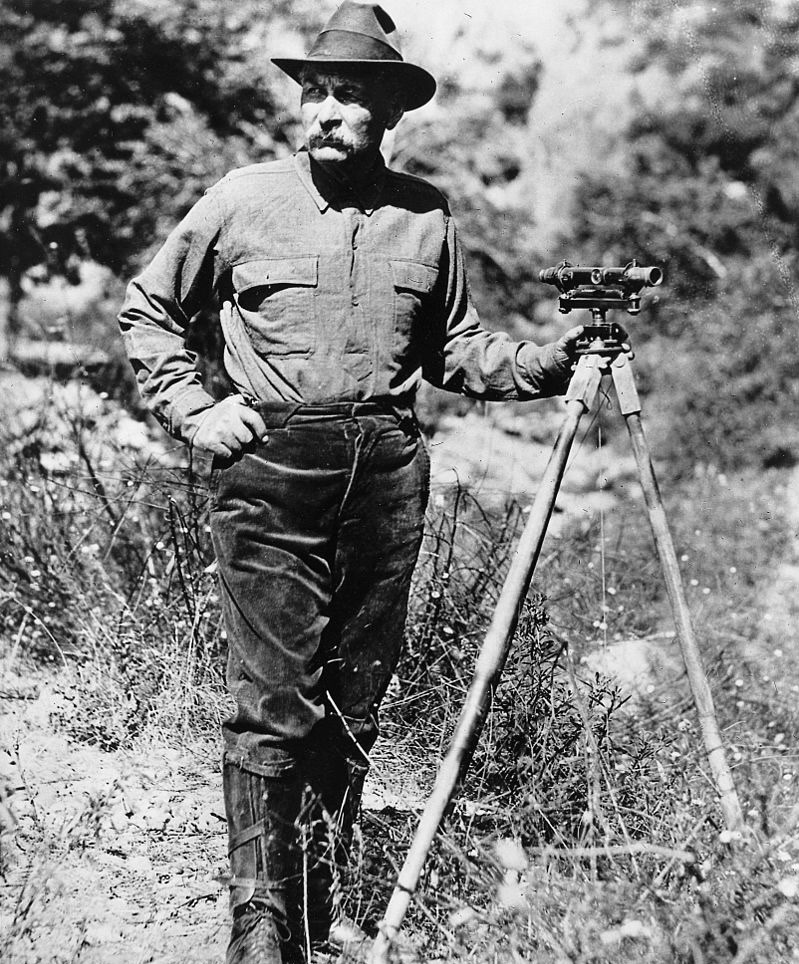
However, Mulholland was not the sole architect of the plan. A pivotal role was played by Fred Eaton—an engineer, politician, and former mayor of Los Angeles. Eaton and Mulholland shared a bold vision for a city that would far exceed its then-modest boundaries. It was Eaton who first proposed tapping into the water resources of the Owens Valley. Mulholland, in turn, engineered a system designed to transport that water entirely by gravity. The ambitious plan called for an aqueduct capable of delivering water from the Eastern Sierra to Los Angeles without the need for continuous mechanical pumping.
Securing the Land
Engineering the project was only half the battle; Los Angeles also had to secure land and water rights. In March 1905, Fred Eaton traveled to the Owens Valley and began acquiring land options and water rights. According to the official history of the Los Angeles Aqueduct, one of the most significant deals was an option on property in the area of what would become the Long Valley Reservoir. Eaton paid $450,000 for a two-month option to purchase a ranch and 4,000 head of cattle. In all, he secured rights to more than 50 miles of riparian land—virtually every crucial parcel not already controlled by the federal Reclamation Service. It was a decisive turning point: water ceased to be merely a natural resource, evolving into an economic asset, a political lever, and a prime driver of real estate value.
In 1905, Los Angeles voters approved a $1.5 million bond issue to purchase lands and water rights in the Owens Valley. Two years later, they passed another bond issue for $23 million to fund the construction of the 233-mile aqueduct. For its time, it was a massive infrastructural gamble. Los Angeles was staking everything on the future, investing heavily not just in water pipes, but in the potential to dramatically expand its population, territory, and urban landscape.
An Engineering Revolution
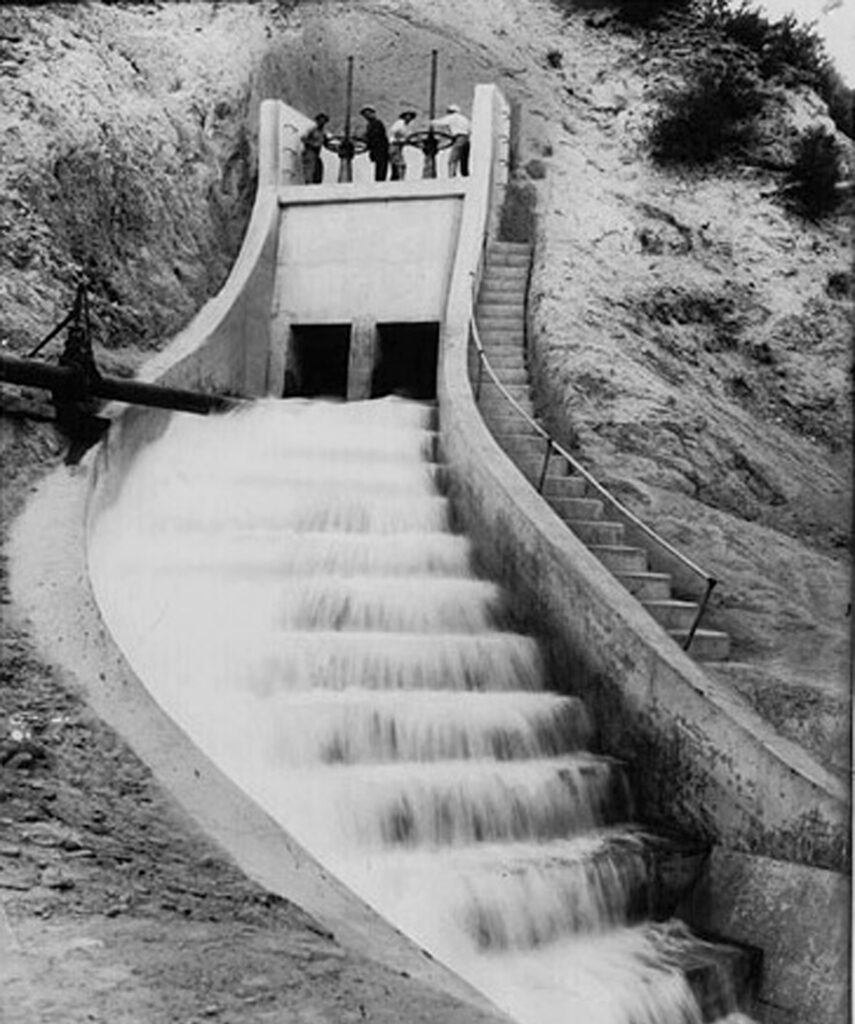
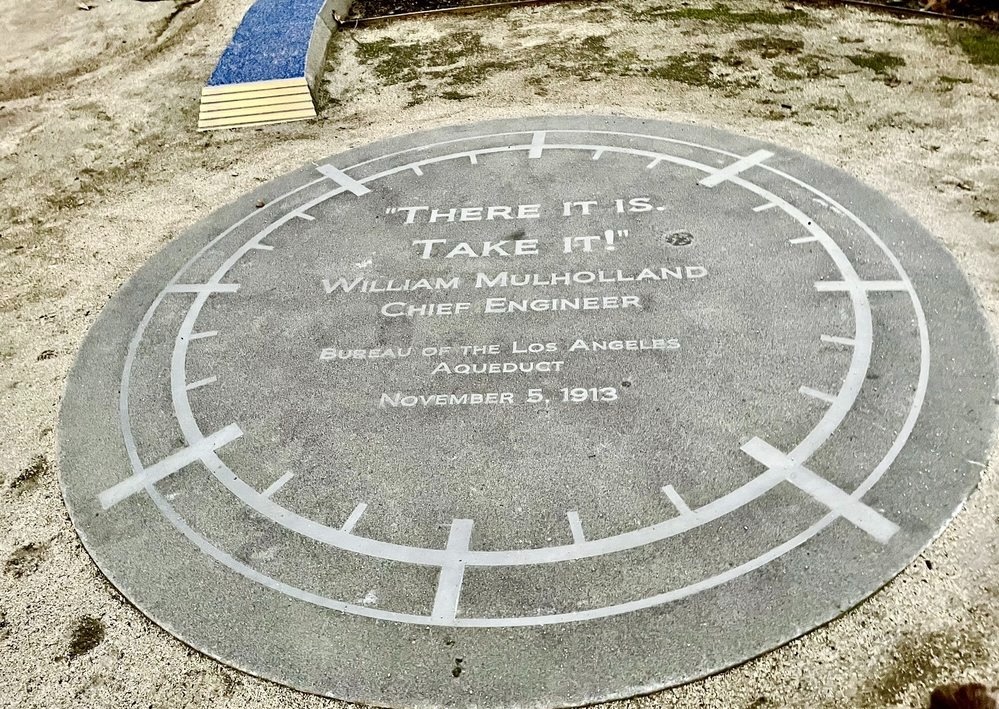
Construction of the Los Angeles Aqueduct began in 1908. Under Mulholland’s leadership, a workforce of around 5,000 men tackled an extraordinary engineering challenge that required building tunnels, canals, pipelines, and reservoirs. On November 5, 1913, water from the Owens Valley reached Los Angeles for the first time, marking a defining milestone in the city’s history.
Mulholland understood that a stable water supply would dictate the scale of Los Angeles’s future. Without an outside source, the city could hardly sustain a population beyond 500,000. The aqueduct completely transformed that outlook. It allowed Los Angeles to break free from local resource constraints and emerge as a metropolis capable of importing water across hundreds of miles—laying the groundwork for modern Southern California urban development.
The influx of water quickly transformed the agricultural landscape. Fields previously limited to dry-farmed grains gave way to irrigated crops. In the San Fernando Valley, orchards, produce farms, and agricultural enterprises flourished. Eventually, urban development began encroaching on these farmlands, transforming rural acreage into residential neighborhoods. In this sense, the story of water in Los Angeles is inextricably tied to the story of its urbanization. Without water, there would have been no population boom; without people, no real estate market; and without land development, the city’s modern neighborhoods would never have taken shape.
The Price of an Engineering Career
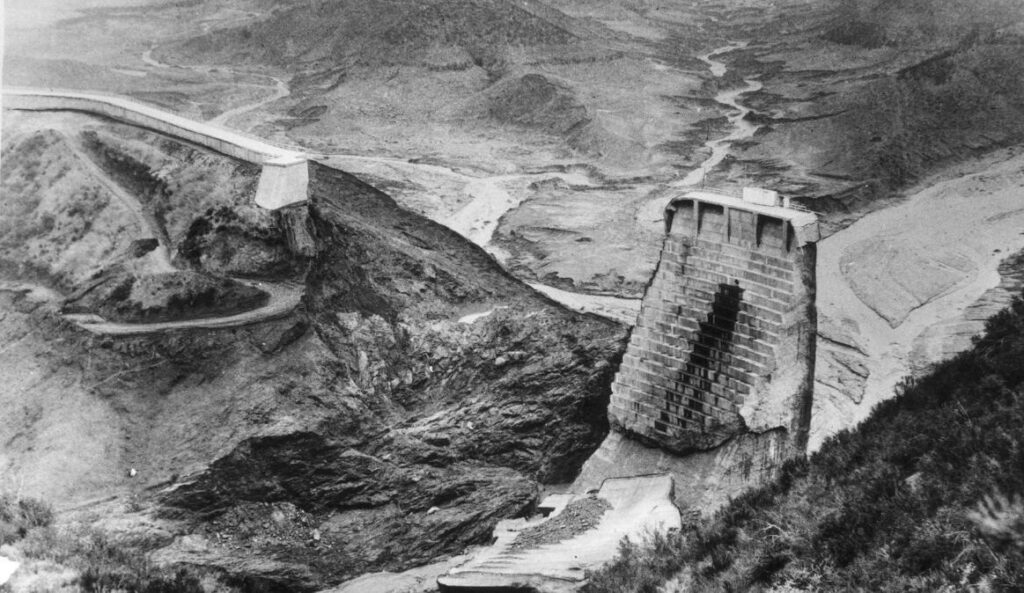
William Mulholland’s legacy, however, also carries a tragic chapter. On March 12, 1928, disaster struck when the St. Francis Dam in San Francisquito Canyon failed catastrophically. A towering wall of water swept down the canyon, claiming the lives of at least 431 people, though the exact death toll remains uncertain. The catastrophic flood carved a path of total destruction. The collapse of the St. Francis Dam stands as one of the deadliest engineering disasters in California’s history. Mulholland himself had personally inspected the dam just hours before the failure.
The tragedy brought his distinguished career to an abrupt end. Taking full responsibility for the failure, Mulholland resigned later that year. He stepped away from public life and spent his final years in seclusion. Mulholland passed away in 1935, but his name remains etched into the fabric of the city. Mulholland Drive, Mulholland Highway, and the Mulholland Dam serve as lasting reminders of the man who radically reshaped Los Angeles’s water system.
The history of Los Angeles illustrates how city boundaries are often shaped by more than just political decisions; sometimes they are defined by water. First, Los Angeles searched for the vital resource needed to survive and grow. Then, it tapped the Owens Valley and built the Los Angeles Aqueduct, securing the necessary land and water rights along the way. That new water supply made the development of the San Fernando Valley possible, paving the way for annexations and rapid integration into the urban grid. As farmland transformed into suburbs, water ultimately dictated where old Los Angeles ended and where its modern neighborhoods began.