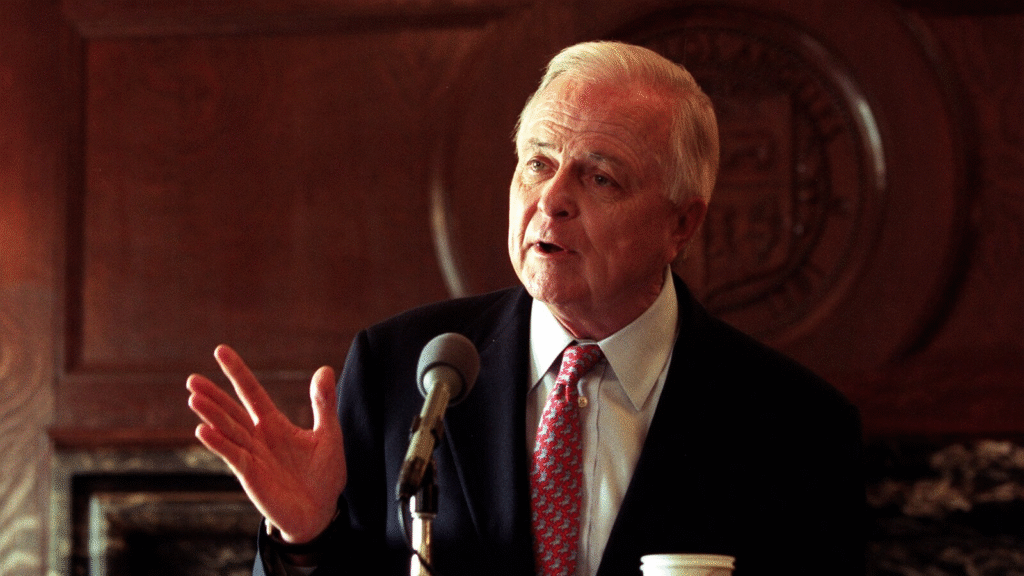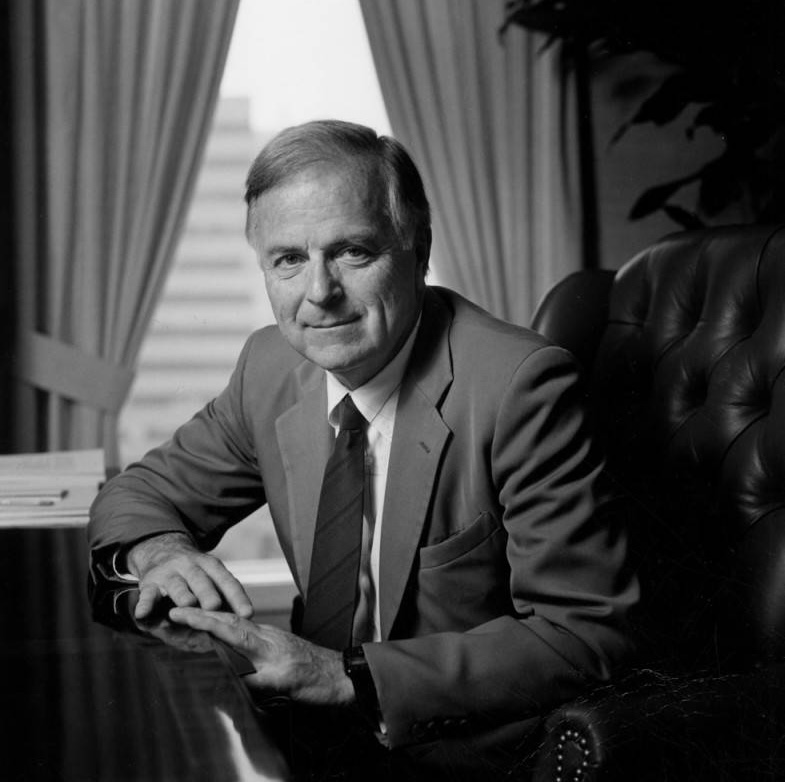

He was a prominent political figure and the 39th mayor of Los Angeles, known for his commitment to reform and improving city governance. His term, from 1993 to 2001, coincided with challenging times for the city, including the recovery from the 1992 riots and the 1994 Northridge earthquake. Riordan brought a unique blend of experience as a successful businessman, attorney, and philanthropist, leaving a significant legacy in the development of Los Angeles and its communities. More on this from layes.info.
Biography
Richard Riordan was born in Flushing, Queens, to an Irish-American family. He was the youngest of nine children of Geraldine (Doyle) and William Riordan. He spent his childhood in New Rochelle, New York, where his core values and dedication to education took shape. Riordan initially attended Santa Clara University on a football scholarship before transferring to Princeton University, graduating in 1952 with a bachelor’s degree in philosophy. After completing his studies, Riordan served in the U.S. Army as a first lieutenant during the Korean War, an experience that honed his leadership skills and discipline.
Following his military service, he continued his education, earning his law degree from the University of Michigan Law School in 1956. That same year, Riordan moved to Los Angeles and joined the law firm O’Melveny & Myers. In 1959, he became a partner at the firm Nossaman LLP, and in 1975, he founded his own law firm, Riordan & McKinzie, which later merged with Bingham McCutchen in 2003.
In parallel with his legal career, Riordan was an active investor. Starting in the 1950s with an $80,000 inheritance from his father, he grew his wealth into a multi-million-dollar fortune. In 1982, he co-founded the private equity firm Riordan, Lewis & Haden, specializing in venture capital and supporting innovative business projects. Beyond his business and legal pursuits, Riordan was a well-known philanthropist. He established the Riordan Foundation, a charitable organization focused on promoting childhood literacy and education, creating new opportunities for youth, and contributing to the social development of the Los Angeles community.
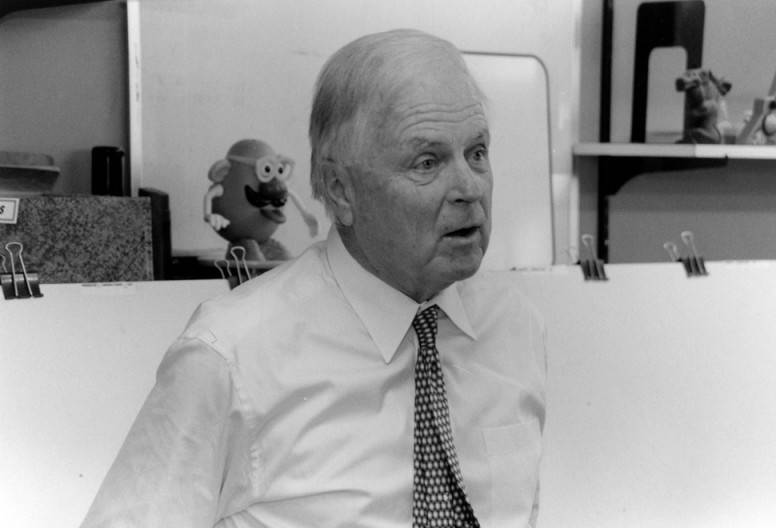
Mayor of Los Angeles
When Tom Bradley announced his retirement as mayor of Los Angeles, Richard Riordan set his sights on the 1993 election. He won with 54% of the vote, becoming the city’s first Republican mayor in 36 years. Despite his victory, Riordan faced challenges implementing his initiatives due to a predominantly Democratic City Council, which often blocked his proposals or made them difficult to execute. For instance, Riordan’s plan to expand the police force ran into obstacles, as the police academy lacked the classroom space and instructors to train the number of new officers the mayor had promised.
His term was also marked by controversies surrounding cost overruns on the construction of the L.A. Metro, particularly the Red Line. Due to these overruns, MTA funds were diverted from bus services, prompting the Bus Riders Union to file a lawsuit alleging racial discrimination. This led to a 1996 consent decree that effectively cut MTA funding for subway and light rail projects. Riordan later admitted this was his biggest mistake as mayor.
Before his election, Riordan had championed a successful term-limit initiative, which meant he was unable to run for re-election after 2001. He endorsed his advisor and friend, Steven Soboroff, to succeed him, but Soboroff finished third in the primary election.
After his mayoral term ended, Richard Riordan decided to run for Governor of California in 2002. In the Republican primary, he faced conservative businessman Bill Simon and former California Secretary of State Bill Jones. Riordan started the campaign with a significant 30-point lead, but he ultimately lost to Simon by 18 points. Analysts attributed his defeat to the Republican Party’s conservative base, which did not embrace Riordan’s moderate views and his efforts to move the party toward the political center. Additionally, the incumbent Democratic Governor, Gray Davis, believed he had a better chance of defeating Simon in the general election and spent millions on attack ads targeting Riordan during the Republican primary.
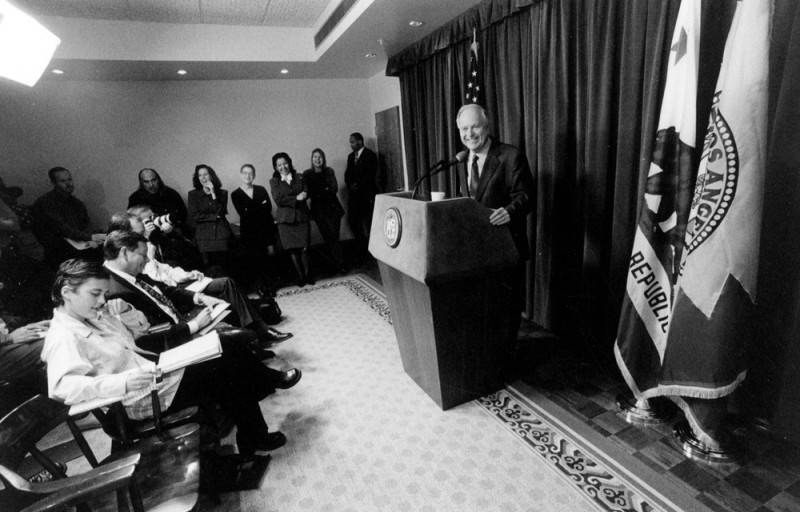
Key Decisions in Office
During his two terms as mayor of Los Angeles, Richard Riordan made a series of important decisions that shaped the city and its community. One of his key priorities was reforming city governance. He spearheaded the creation of neighborhood councils, designed to increase citizen involvement in decision-making and provide oversight for local projects. This move helped decentralize power, making the governance process more transparent and effective.
Another significant decision was reforming the public safety system. The mayor worked actively to reduce crime rates, expanding the police force and implementing new programs to combat violence in the city. These efforts helped improve residents’ safety and stabilize the city in the aftermath of the 1992 riots.
Riordan also focused on economic development and investment. He supported small and medium-sized businesses, fostered innovative projects, and modernized infrastructure, which created additional jobs and boosted Los Angeles’s competitiveness.
Equally important was his commitment to improving the education system and supporting young people. Riordan launched programs and initiatives aimed at enhancing the quality of school education and creating more opportunities for the professional and personal growth of the city’s youth.
Through these decisions, Riordan successfully combined administrative reform, economic development, and social initiatives, leaving behind a legacy of effective and responsible governance.
Legacy and Impact
After completing his two terms as mayor, Richard Riordan remained active in public life. He continued his philanthropic work, founding and supporting educational programs aimed at youth development and raising the level of education in Los Angeles. Riordan believed that investing in education was the key to the city’s sustainable development and improving the lives of its residents.
The Los Angeles Central Library is named in his honor, as are numerous programs that support schools, students, and youth initiatives. His work created new opportunities for the professional development of young people and provided support for socially vulnerable populations.
Riordan’s impact is also felt in the areas of city governance and civic engagement. His reforms, aimed at decentralizing power and creating neighborhood councils, remain a crucial part of Los Angeles’s governance system. Riordan’s approach blended administrative efficiency with transparency, citizen engagement, and accountability, setting an example for future generations of city leaders.
Richard Riordan passed away on April 19, 2023, at the age of 92 at his home in Brentwood, Los Angeles. His life and career left a profound mark on the city’s development, and his contributions to education, public safety, and governance will forever be a part of Los Angeles’s history.