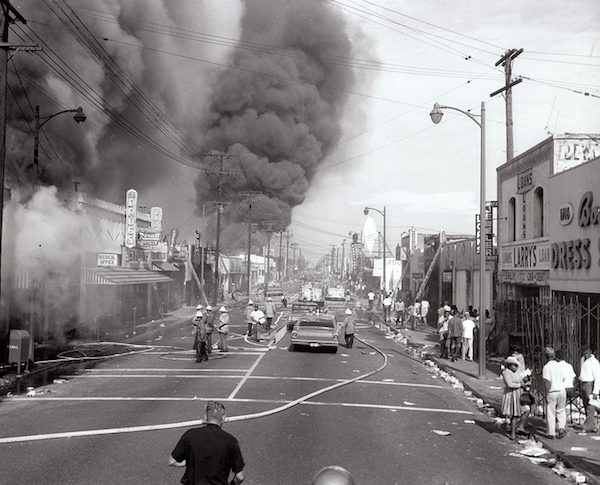

Watts is a neighborhood in Los Angeles with a history of its own. In particular, this Los Angeles neighborhood was the site of the 1965 riots. The rebellion lasted six days but caused much trouble. Today we will go into more detail about this unpleasant event that unfolded in Los Angeles. For more information, check out our layes.info pages.
Where it all started
By 1940, the black population in Los Angeles had increased significantly. Two major migrations contributed to that, one in the 1920s and the other at the beginning of World War II. Los Angeles has developed a substantial African American community. However, there were some restrictions on the black population in Los Angeles. It was forbidden to buy or rent housing in some parts of the city, as well as problems with employment.
The large number of African Americans in the city prompted developers to venture into new neighborhoods. For instance, land in Compton has begun to be actively developed. Construction companies offered black people good conditions to live in, raise children, etc.
However, the situation was becoming more complicated with a large African American population. The South Central Los Angeles area turned into a hotbed of racial tension. In the 1950s, there were frequent scuffles and shootings there.
Also, African Americans endured discrimination at the hands of the Police. In 1950, William Parker, who thought whites should dominate blacks, was appointed Chief of the Los Angeles Police Department. As a result, police officers turned their focus heavily on African American children and adolescents.
Beginning of the rebellion
The Los Angeles rebellion is said to have begun on August 11, 1965. On this particular day, a white police officer pulled over a young black man, Marquette Frye and his brother. The police officer suspected that the 20-year-old young man was under the influence of alcohol. The officer verified that the driver was intoxicated and radioed for his car to be towed. At that time, a crowd started gathering towards the vehicle.
Given that the incident occurred near Frye’s home, his mother appeared to see her son fighting back against arrest. Frye’s mother and brother clashed with officers and were eventually arrested along with Marquette Frye. However, the crowd did not disperse, but more flocked in. Police arrived on the scene several times overnight to disperse the crowd but were attacked by African Americans throwing rocks at the officers. Twenty-nine people were arrested.
The very next day, the black community leaders met with the police to reduce tensions and discuss the way forward. However, no compromise was ever reached. As the riots escalated, martial law and a curfew were imposed in the area. Furthermore, the entire Watts neighborhood was cordoned off by police officers. Over thirty thousand people participated in the rebellion.
White Los Angeles people saw the insurgents as marauders and criminals, while African Americans saw it as a large protest. They could demonstrate that they would no longer obediently live on the city’s outskirts.
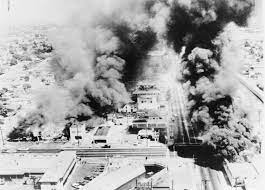
It wasn’t only law enforcement officers who were affected by the protesters, but also white drivers and the work of firefighters was blocked, while stores and institutions were looted and set on fire.
It’s worth noting that the riots caused forty million dollars worth of damage, with nearly a thousand homes destroyed and burned. In all, the Watts Riots lasted six days.
After the riots ended, a special commission, called the McCone Commission, was set up to investigate and name the causes behind the riots. The commission determined that the protests occurred as a result of excessive unemployment, insufficient elementary and secondary education and the low standard of living among the black community in the Watts neighborhood. The McCone Commission has also provided recommendations for improving education and health care, developing job training programs, etc.
The majority of these recommendations failed to be carried out.
We hope you found our material informative and drew the appropriate conclusions.