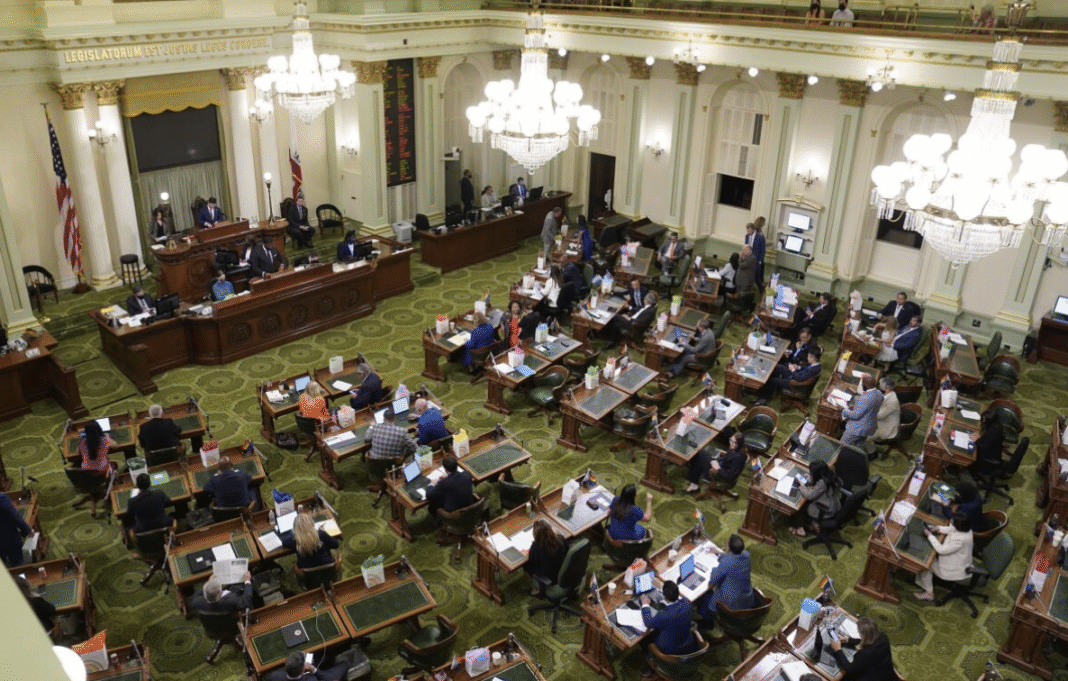

Behind the prominent names of mayors, city council members, congressional representatives, and public officials stand families for whom public service became a multigenerational calling rather than a brief career stop. Los Angeles politics showcases a wide variety of these dynasties. Here, the concept doesn’t necessarily mean a single household controlling City Hall or monopolizing a specific elected seat. More often, it reflects a far more nuanced phenomenon: successive generations remaining deeply woven into the city’s civic and political fabric. Read more on layes.
What Is a Political Dynasty in Los Angeles?
An American political dynasty does not have to resemble the Kennedys, where multiple generations held the country’s highest offices and commanded nationwide clout. California follows a different playbook. A political career here might start on a local school board, move to the city council, and then climb to the county administration, the state legislature, or the U.S. Congress. It is precisely at this grassroots and municipal level that leaders build the foundational experience that eventually propels them onto a larger stage.
The Hahn Family: One of LA’s Most Storied Political Dynasties
If you look for a family that best embodies the Los Angeles political dynasty, the Hahns immediately come to mind. Kenneth Hahn was one of the city’s most formidable political figures throughout the 20th century. After serving on the Los Angeles City Council, he spent nearly four decades representing his district on the Los Angeles County Board of Supervisors. His long career paved the way for the next generation. Kenneth’s son, James K. Hahn, served as mayor of Los Angeles from 2001 to 2005, while his daughter, Janice Hahn, also built a major career in public office.
In the Hahns’ case, the concept of a dynasty is quite literal. For decades, the family has held influence across every tier of government: Kenneth Hahn in municipal and county governance, James Hahn at City Hall, and Janice Hahn spanning the City Council, the U.S. House of Representatives, and the County Board of Supervisors.
Janice Hahn’s career vividly illustrates how political succession operates in Los Angeles. Her path to Capitol Hill ran straight through local government: she was elected to the Los Angeles City Council in 2000, then won a special election to the U.S. House of Representatives in 2011. Later, she returned to county government, winning a seat on the Los Angeles County Board of Supervisors in 2016. Her trajectory highlights a defining feature of local governance: unlike Washington, where political weight is measured primarily by federal office, municipal and county bodies in Los Angeles wield immense authority and direct power.

The Garcetti Family
Another prominent example is the Garcetti family. Gil Garcetti served as Los Angeles County District Attorney from 1992 to 2000. Prior to his election as DA, he spent 32 years as a prosecutor, and after leaving office, he transitioned into photography, academia, and public speaking. His son, Eric Garcetti, rose to become mayor of Los Angeles, leading the city from July 1, 2013, to December 12, 2022. Before stepping into the mayoral suite, Eric spent years on the Los Angeles City Council representing the 13th District and was elected council president four times. Together, father and son bridged two critical centers of regional influence: the father shaping county criminal justice, and the son rising through municipal ranks to lead Los Angeles City Hall.

The Lempert Family
While the Hahns and Garcettis built their power bases in Los Angeles, the Lemperts represent a different type of California political family. Their primary base of operations has historically centered around the San Francisco Bay Area.
Sue Lempert served on the San Mateo City Council and as mayor of San Mateo. Her son, Ted Lempert, climbed even further within the California political system. He served in the California State Assembly during 1988–1992 and 1996–2000 before joining the San Mateo County Board of Supervisors. Today, Ted Lempert serves as president of Children Now, a statewide organization dedicated to children’s welfare, education, healthcare, and public policy. He also teaches California politics at UC Berkeley. His path reflects an evolution beyond traditional electoral politics, where civic influence transitions into policy research, advocacy, and education.

Another reflection of this family tradition is Liz Lempert, whose political career flourished outside California. After moving to New Jersey, she became a prominent voice in local Princeton politics and ultimately led the community as mayor.
As these examples demonstrate, family political succession is not necessarily tethered to a single city or state. Sue served in San Mateo, Ted worked in California’s legislative and county branches, and Liz served in New Jersey municipal leadership. This dynamic is less about handing down a specific legislative district than passing on a shared commitment to public service.
Why Does Local Politics Remain a Family Business?
Governing a major American metropolis requires specialized knowledge. It takes an intricate understanding of distinct neighborhoods, transit systems, municipal budgets, public school networks, housing initiatives, city agencies, and the delicate relationship between the city and county. Someone raised in a political household sees this machinery up close long before launching a first campaign. That does not guarantee victory, but it provides a wealth of social and professional capital. That is why political families hold their ground for decades: they pass down not just a recognizable name, but networks, policy literacy, practical experience, and a deep familiarity with local political dynamics.
Does a political dynasty equate to total control over power? Not necessarily, and making that distinction matters. Having several members of the same family in public office does not mean they control voters or institutions. The American system remains an electoral one: every office requires winning a vote, and any candidate can lose regardless of lineage. Still, a recognized name carries undeniable political value. Voters know the family history, media outlets pay attention faster, and donors and advocacy groups often have existing working ties with the household. It is not an automatic victory, but it is an undeniable head start.

Are Los Angeles Political Dynasties Disappearing?
There is little reason to believe that political families will vanish. On the contrary, the political structure of major cities continues to create fertile ground for households with long histories of civic service. Yet the nature of these dynasties is evolving. Newer generations are no longer bound to run for the exact seats their parents once held. Instead, they often pursue careers in non-profits, law firms, universities, think tanks, campaign management, or tech companies.
Their influence may be less headline-grabbing, but it is no less potent. That is why the future political landscape of Los Angeles is being shaped not only inside City Hall, but in university lecture halls, policy institutes, non-profits, community initiatives, and grassroots campaigns.