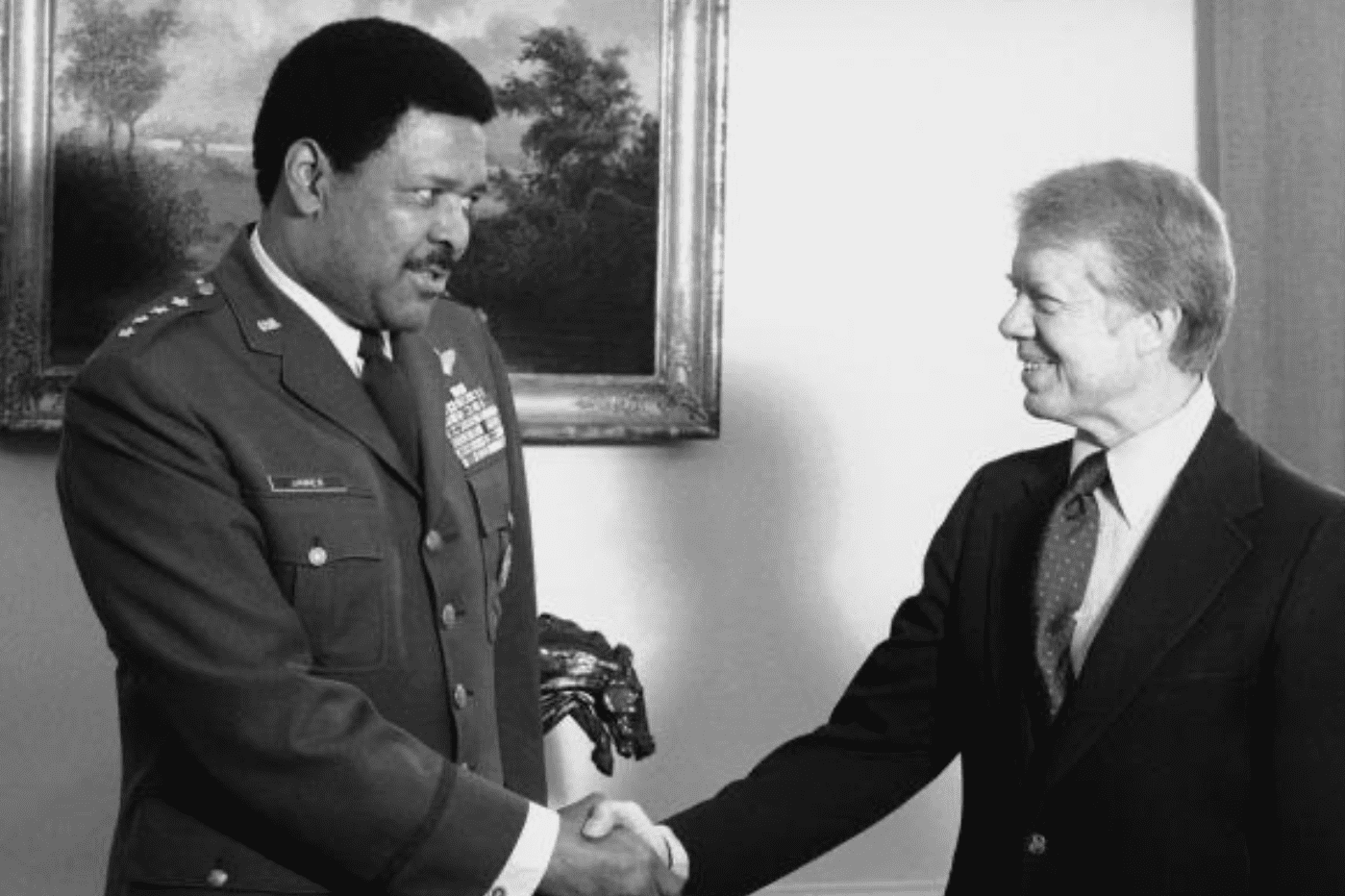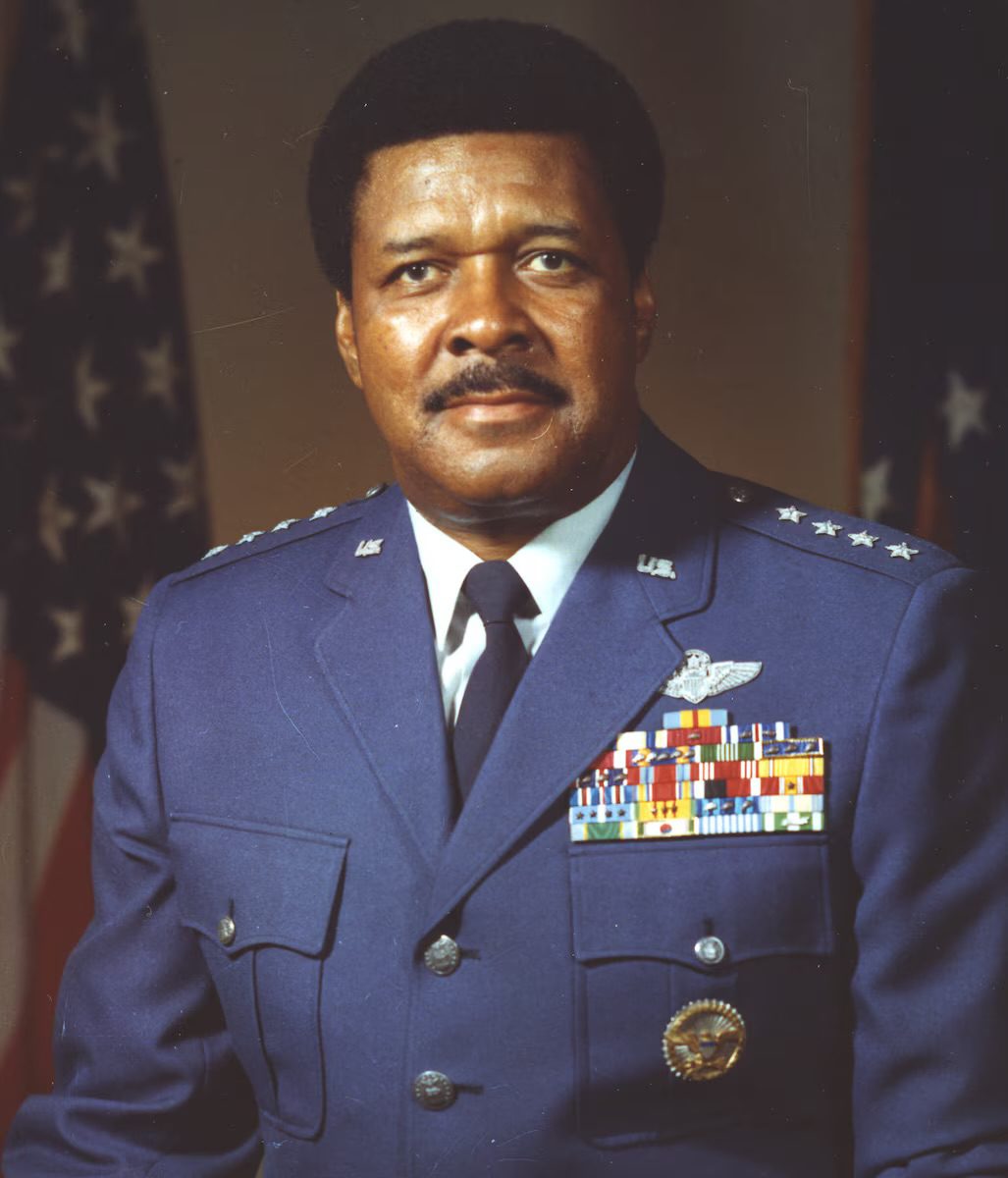

An eminent figure in U.S. history, military aviation, and the Civil Rights Movement, Daniel “Chappie” James Jr. became the first African American to achieve the rank of four-star General in the U.S. Air Force. He shattered racial barriers and became a symbol of honor, dignity, and unwavering dedication to service. His remarkable career spans participation in three major wars, diplomatic missions, and decades of fighting for equality within the American military ranks. Read more at layes.
Biography
Daniel James Jr. was born on February 11, 1920, in Pensacola, Florida, to a family of educators who not only strove to provide their children with education but also directly challenged the system of racial segregation. His father, Daniel James Sr., was a carpenter, and his mother, Lillie James, was a teacher and the founder of a private school for Black children, which she opened in her own home. This school became a place that not only taught reading and writing but also nurtured a spirit of dignity, perseverance, and civic courage. From an early age, Daniel lived in a world of double standards, where the pursuit of freedom and knowledge clashed with the humiliating reality of segregation, restrictions, and racial injustice. It was under these conditions that his worldview was formed: with a deep belief in justice, a strength of character, and the dignity instilled by his parents.
For Daniel James, education was not only a path to personal development but also a tool for fighting for equality. After graduating from high school, he enrolled at Tuskegee Institute in Alabama—one of the few higher education institutions for African Americans with a strong science and technical base. There, he studied industrial education, preparing to become a teacher or an engineer. But aviation changed his destiny.
In 1942, James entered the African American Pilot Training Program at the Tuskegee Army Airfield, which marked a historical breakthrough for Black Americans who were previously barred from serving in combat aviation units. It was at Tuskegee that James received his flight training and became part of the legendary “Tuskegee Airmen”—the first combat aviation unit in U.S. history staffed by African Americans. In 1943, he earned his military pilot qualification and became a commissioned officer in the U.S. Army Air Forces.
Military Career
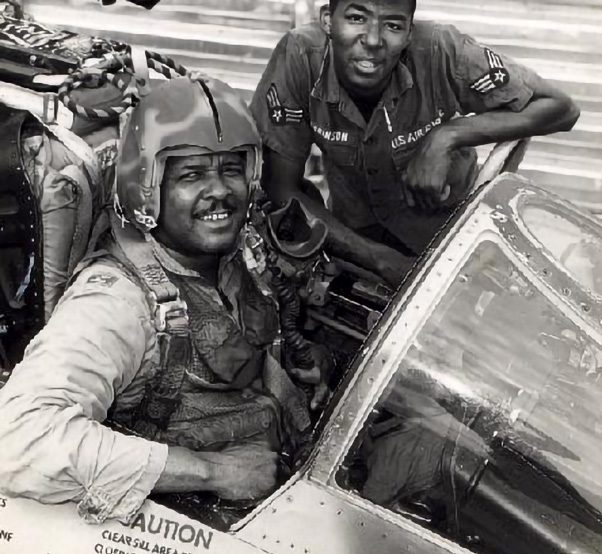
After qualifying as a military pilot in 1943, Daniel James Jr. became one of the few African Americans admitted to active duty in U.S. military aviation. Although he completed full flight training at Tuskegee, World War II ended before he could participate in combat. During that period, racial discrimination remained systemic. Even with training on par with the best officers, Tuskegee Airmen were often denied participation in key operations. Yet, for James, this was only the beginning. In the postwar era, he remained in service, continuously refining his skills and persistently carving out a place for himself and his comrades within the military hierarchy.
When the Korean War began (1950–1953), Captain James was already an experienced pilot. He flew 101 combat missions, piloting F-51 Mustang, F-80 Shooting Star, and later, the F-86 Sabre fighters. His assignments included air cover, escorting strategic bombers, and attacking ground targets. In combat, he proved himself to be a resolute, calm, and exceptionally effective commander. His subordinates recalled him as a leader who not only flawlessly executed missions but always prioritized crew safety.
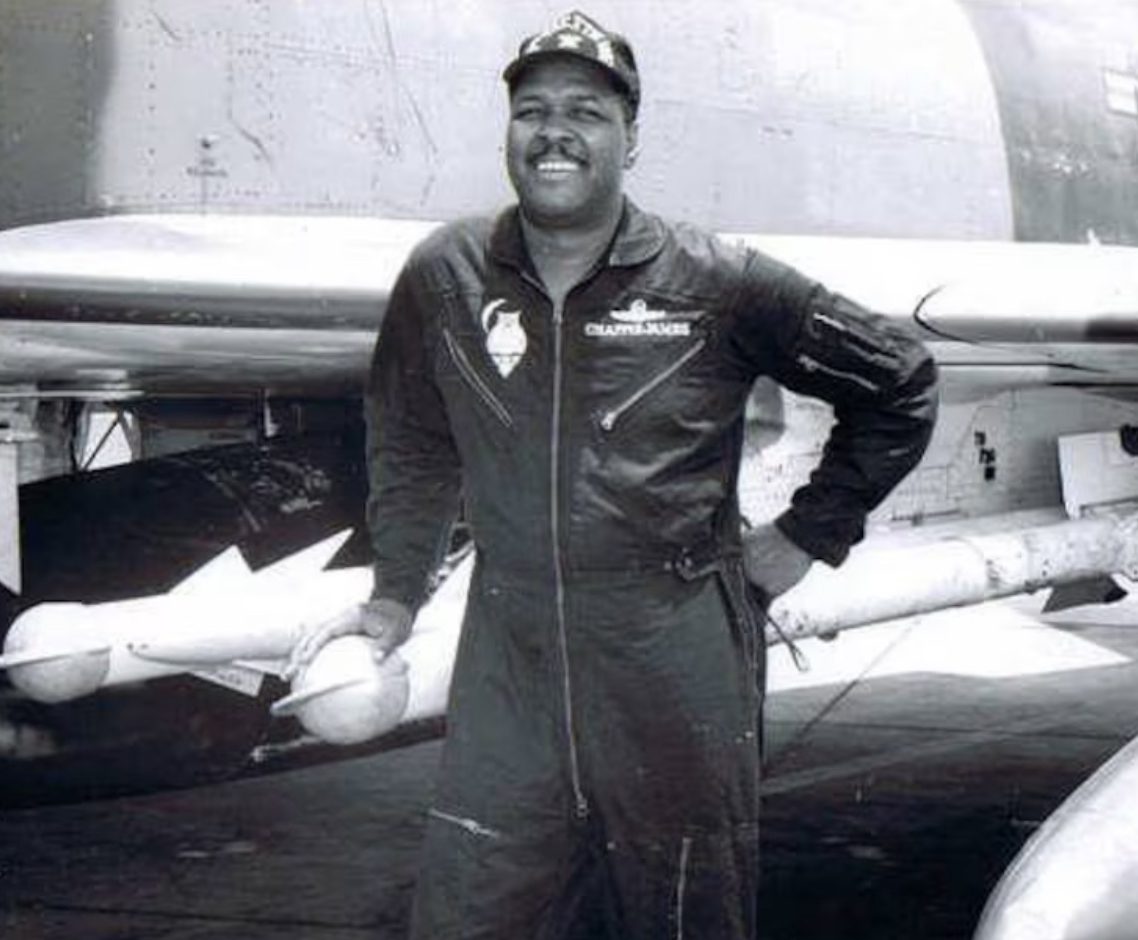
James faced his next major test during the Vietnam War, where he served as commander of the 727th Tactical Fighter Squadron. By then, he was a Lieutenant Colonel, piloting the F-4 Phantom II—a supersonic fighter capable of performing complex missions deep behind enemy lines. He flew 78 combat sorties over North Vietnam. His bravery was repeatedly recognized with combat awards, including the Distinguished Service Cross, the Air Medal, the Legion of Merit, and others.
The Career Breakthrough
By the early 1970s, Daniel James Jr. had three decades of service, two front lines, and a reputation as an exceptionally capable officer behind him. But even despite his numerous achievements, the path to the highest echelons of command remained nearly impassable for an African American in the U.S. Armed Forces.
In 1970, he was appointed Vice Commander of the First Air Force, and subsequently—Commander of the First Combined Air Force of the North American Aerospace Defense Command (NORAD), located at Ent Air Force Base in Colorado Springs. This was a historic appointment: the first time an African American officer commanded a structure of such scale—responsible for the air defense of the U.S. and Canada during the Cold War.
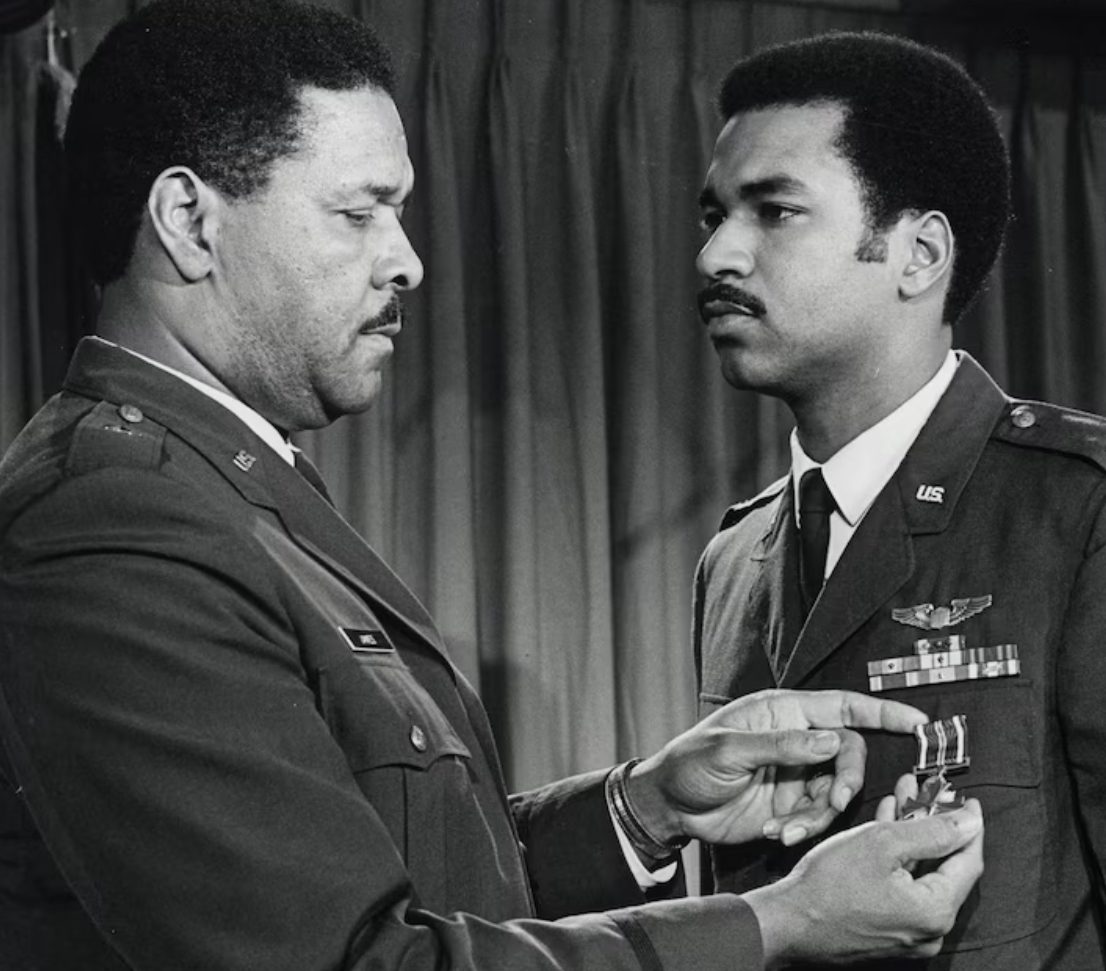
The true breakthrough came with his appointment in 1975 as the Commander-in-Chief of NORAD—the organization responsible for defending the continent against aerial nuclear attack. It was then, on September 1, 1975, that Daniel James became the first African American to be promoted to four-star General in the U.S. Armed Forces. As NORAD Commander, he not only coordinated the complex defense systems of the U.S. and Canada but also conducted diplomatic negotiations, developed missile attack early warning strategies, and oversaw the modernization of air threat tracking technologies. His leadership qualities were highly valued not only by the military but also by the U.S. political leadership. As a General and Chief of Air Force Mobilization Command, James paid special attention to topics of leadership, inclusion, and military ethics. He not only overcame his own barriers but also opened doors for future generations of African Americans in the military. His phrase, “I never allowed myself to become a victim,” became a motto for many aspiring to achieve their goals despite prejudice.
Legacy
After retiring in 1978, General Daniel James Jr. remained a distinguished figure not only in military circles but also in American society. His stature became a symbol that hard work, integrity, and dedication to duty can break even the toughest stereotypes. James never politicized the race issue, but he never avoided it either. In retirement, he participated in many community initiatives, supported educational programs for youth, and spoke at conferences and universities. He was often invited as a guest of honor to events related to civil rights and the integration of veterans into civilian life.
Daniel James Jr. passed away on February 25, 1978, shortly after his retirement. His death was seen as a great loss for the entire nation. He was buried with military honors at Arlington National Cemetery—alongside those who shaped and defended U.S. history. Schools, military facilities, and support programs for African American cadets are named after him. His story is an example of how personal courage can impact national history.
Also, find out about the weird roadside architecture of Los Angeles.