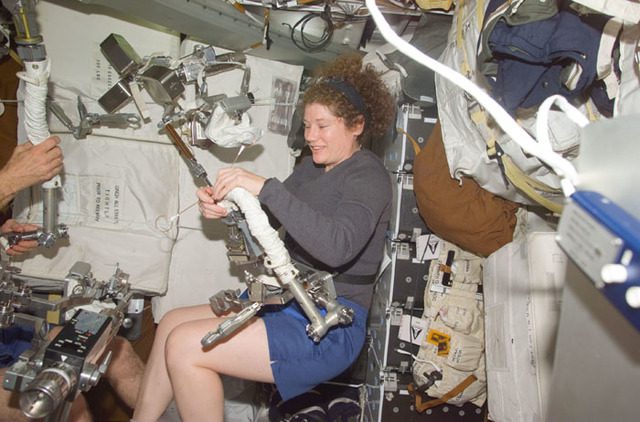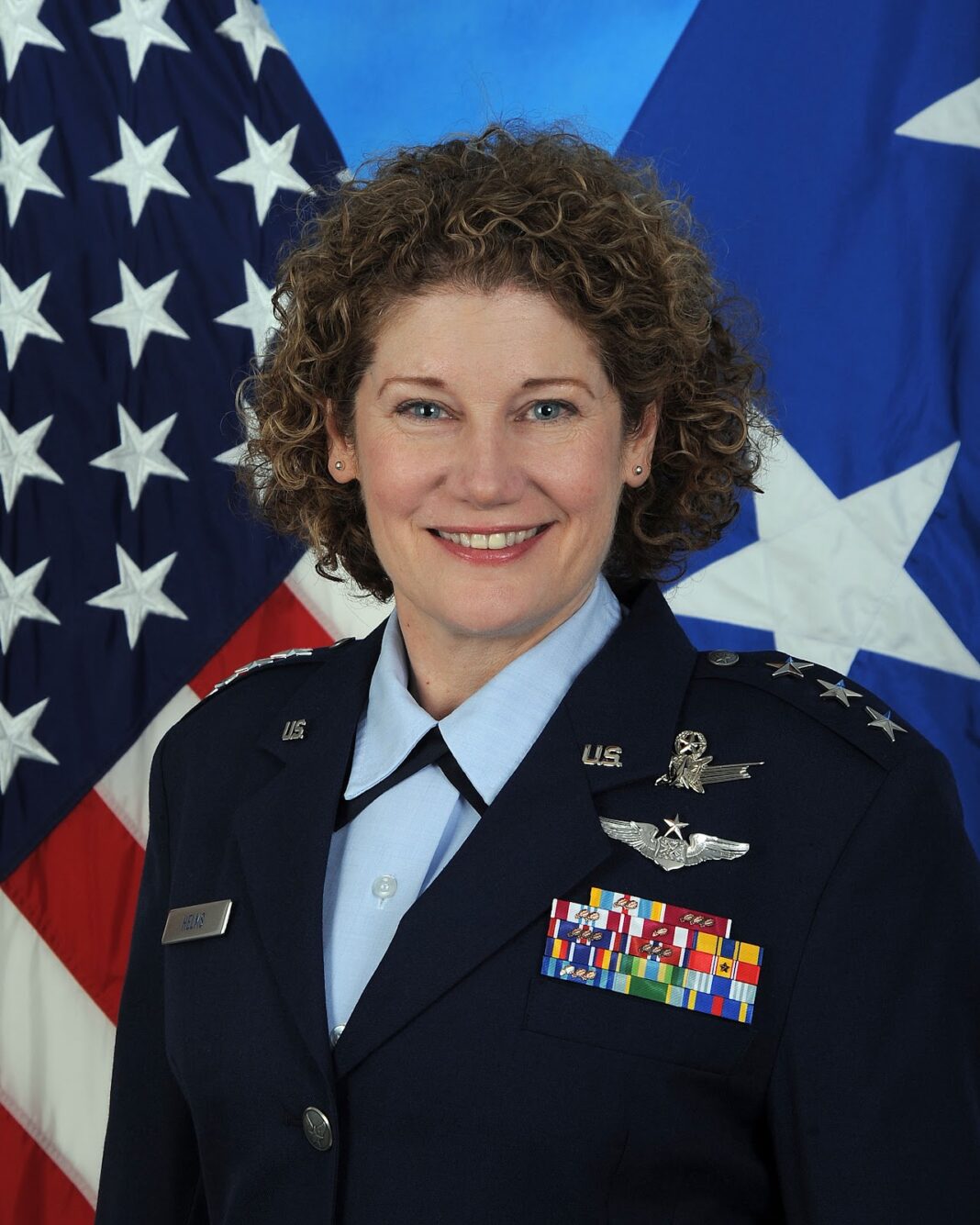

She is one of the most distinguished women in the history of the U.S. Air Force (USAF) and NASA. Her career encompasses not only service in the Armed Forces but also five spaceflights, including a spacewalk that held the record for the longest duration at the time. She has become a symbol of perseverance, intellect, and female strength in traditionally male-dominated fields—the military and space exploration. Learn more about the life of Francisco Carlos “Frank” Rubio, U.S. Army Lieutenant Colonel. Read more at layes.
Biography
Susan Helms was born on February 26, 1958, in Charlotte, North Carolina, but grew up in Portland, Oregon. From childhood, she showed a great interest in science, technology, and flying, dreaming of the sky and distant space. Her technical interests were supported by her family, especially her father, who encouraged his daughter to set ambitious goals. In 1980, Susan graduated from the U.S. Air Force Academy in Colorado Springs with a Bachelor of Science degree in Aerospace Engineering. Her academy training was rigorous and competitive, but Helms stood out among the cadets for her intelligence, discipline, and determination. She then pursued further education at Stanford University, earning a Master’s degree in Aeronautics and Astronautics in 1985—another step toward her lifelong dream of space.
Helms began her service in the Air Force as a research and development engineer, focusing on weapons systems. She worked on projects related to improving aviation and ballistic technologies, particularly in the fields of guided missiles and combat system integration. Her technical competence, analytical thinking, and ability to work in interdisciplinary teams quickly caught the attention of the command.
In the 1980s, she worked at the U.S. Air Force Armament Center at Eglin Air Force Base, Florida, where she participated in the testing of advanced air combat systems. She was later transferred to the Air Force Space and Missile Center at Vandenberg Air Force Base in California. There, she analyzed missile trajectories, oversaw satellite launches, and modeled space operations—knowledge that would later become critically important in her astronaut career. Susan Helms rose from a junior engineer to a key specialist in military space systems. Her work not only helped strengthen U.S. defense capabilities but also opened the door to one of the world’s most elite technical groups—NASA.
The Path to NASA
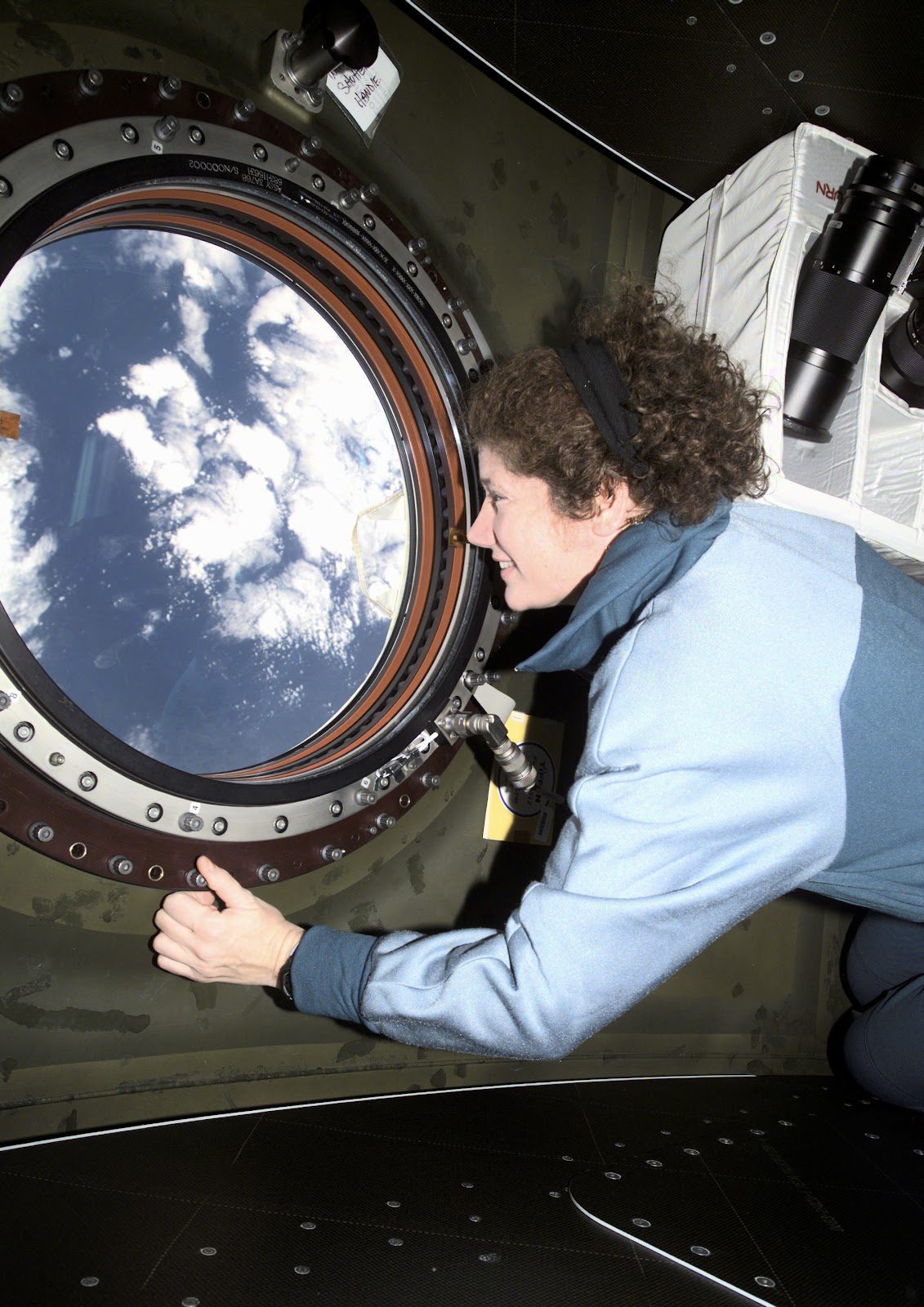
In 1990, Susan Helms was selected by NASA as an astronaut candidate from over two thousand applicants worldwide. She became part of the agency’s 13th group of astronauts (NASA Group 13), affectionately known as “The Hairballs”—an unofficial nickname for a group that gathered specialists from diverse fields: pilots, engineers, scientists, and doctors. Among the 23 selected candidates, only a few were women, and Helms immediately stood out due to her combination of military experience, technical education, and analytical mindset. Following two years of intensive preparation, which included neutral buoyancy training, studying shuttle systems, and medical and psychological conditioning, Susan Helms qualified as an astronaut. She specialized in working with robotic systems and conducting scientific experiments in microgravity.
She made her first spaceflight in January 1993 aboard the Space Shuttle Endeavour (mission STS-54). The flight’s objective was to deploy the TDRS-F communication satellite and perform scientific experiments. During this mission, Helms served as a mission specialist, demonstrating high precision and technical knowledge in operating equipment. In total, Susan Helms made five trips into space, spending over 211 days in orbit. Her flights included the following missions:
- STS-54 (1993) – First flight on the Shuttle Endeavour.
- STS-64 (1994) – Experiments with cutting-edge laser systems and testing the SAFER maneuvering unit.
- STS-78 (1996) – Flight on Columbia, conducting life and microgravity science research as part of the Life and Microgravity Spacelab mission.
- STS-101 (2000) – Flight to the International Space Station for repair and refueling.
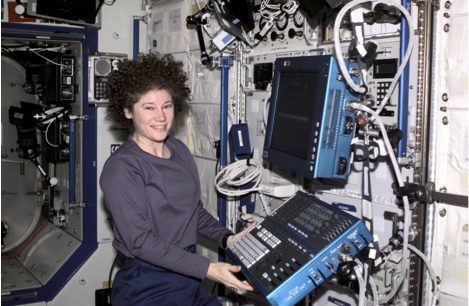
- Expedition 2 (2001) – Long-duration stay aboard the ISS as part of the second resident crew.
It was during Expedition 2 that Susan Helms made history by participating in what was then the longest spacewalk ever with fellow astronaut James Voss. Their extravehicular activity (EVA) lasted 8 hours and 56 minutes and was dedicated to the technical maintenance and modernization of the station’s systems. This record remained unbroken for several years. In space, she was also responsible for conducting dozens of scientific experiments, particularly in physiology, biology, materials science, and fluid dynamics. Her work helped lay the scientific foundation for continued research in prolonged microgravity conditions.
Return to the Air Force
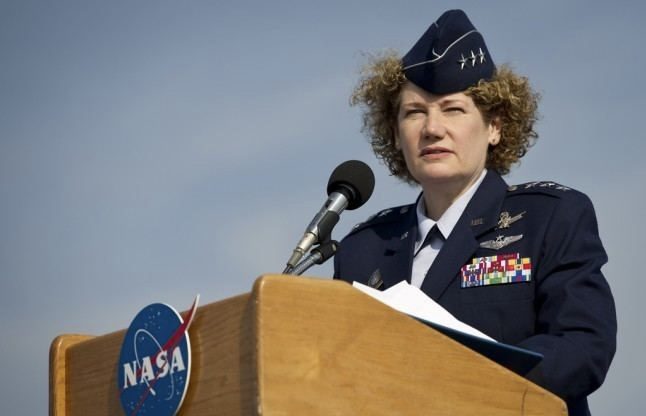
After concluding her active duty with NASA in 2002, Susan Helms returned to the U.S. Air Force, where she continued her career at a higher command level. Her unique background—as a military engineer, astronaut, and technical program manager—made her an invaluable specialist for the rapidly growing field of military space technology. Over the following years, she held key positions in structures responsible for the development, testing, and deployment of U.S. space defense systems. Notably, she was appointed Commander of the Air Force Space and Missile Test Center at Vandenberg AFB in California. Under her leadership, testing was conducted on satellites, launch vehicles, navigation systems, and missile defense components. Helms later became Vice Commander of the Air Force Space Command, which coordinated operations in space surveillance, satellite communication, navigation, and missile warning. In this role, she was responsible for the strategic planning and modernization of the United States’ space infrastructure.
In 2006, Susan Helms was promoted to the rank of Brigadier General—one of the highest ranks in the U.S. Armed Forces. This made her not only a symbol of the successful integration of women into military command but also the first female astronaut to achieve such a rank in the U.S. Air Force.
In 2011, she was nominated for the position of Vice Commander of U.S. Strategic Command (USSTRATCOM), but her 2013 appointment was withdrawn due to a prolonged political conflict in the Senate related to technical and procedural disagreements—not her personal or professional qualities. Following this incident, she retired from active military service but continued to participate in consulting and advisory work in the field of aerospace security.
Throughout her military career, Susan Helms received a number of high honors, including:
- Legion of Merit;
- Defense Superior Service Medal;
- Air Force Meritorious Service Medal;
- Numerous awards from U.S. engineering and scientific communities.
Legacy
Susan Helms not only became a role model for women in the military but also made history as an astronaut who expanded the understanding of human capabilities in space. She is an example of the combination of engineering talent, military discipline, and human resilience. Her story is not just a tale of personal achievement but proof that perseverance and professionalism have no gender barriers. Her name is etched in golden letters not only in the history of the U.S. Air Force and NASA but also in the general list of human pioneers who blazed the trail to the stars.