
Edwards Air Force Base (AFB) is one of the United States’ most critical military aviation centers. Located in the Mojave Desert, 90 miles north of Los Angeles, it’s famous as the testing ground for the most advanced aircraft, missiles, and aerospace technologies. For decades, it has not only been the core testing facility for the U.S. Air Force but has also collaborated closely with NASA, helping to test new airframes, conduct space missions, and provide landing sites for the Space Shuttle program. You can also find out about the history of the Watts Rebellion. Read more at layes.
A History of Innovation
Edwards AFB, one of the most important U.S. military aviation bases, traces its roots back to the 1930s. Its history is closely linked to the development of military aviation, technological breakthroughs, and landmark military research events. Before military infrastructure arrived, the area of the modern base was a desert plain featuring the dry Rogers Salt Lake. This natural terrain made it an ideal location for a landing strip. In 1933, the U.S. Army began considering the area as a potential site for military training. Initially, the location was used by California National Guard pilots for maneuvers and testing.
With the U.S. entry into World War II, the need for new testing grounds for combat aircraft soared. In 1941, the military command officially established Muroc Army Air Field, named after the nearby town. The base quickly developed and became a key facility for testing new combat aircraft models. During the war years, iconic machines tested here included:
- P-51 Mustang—one of the best World War II fighters.
- B-17 Flying Fortress—a heavy bomber that played a vital role in wartime campaigns.
- B-29 Superfortress—the strategic bomber that formed the basis for American nuclear operations.
The Base During the Cold War Era
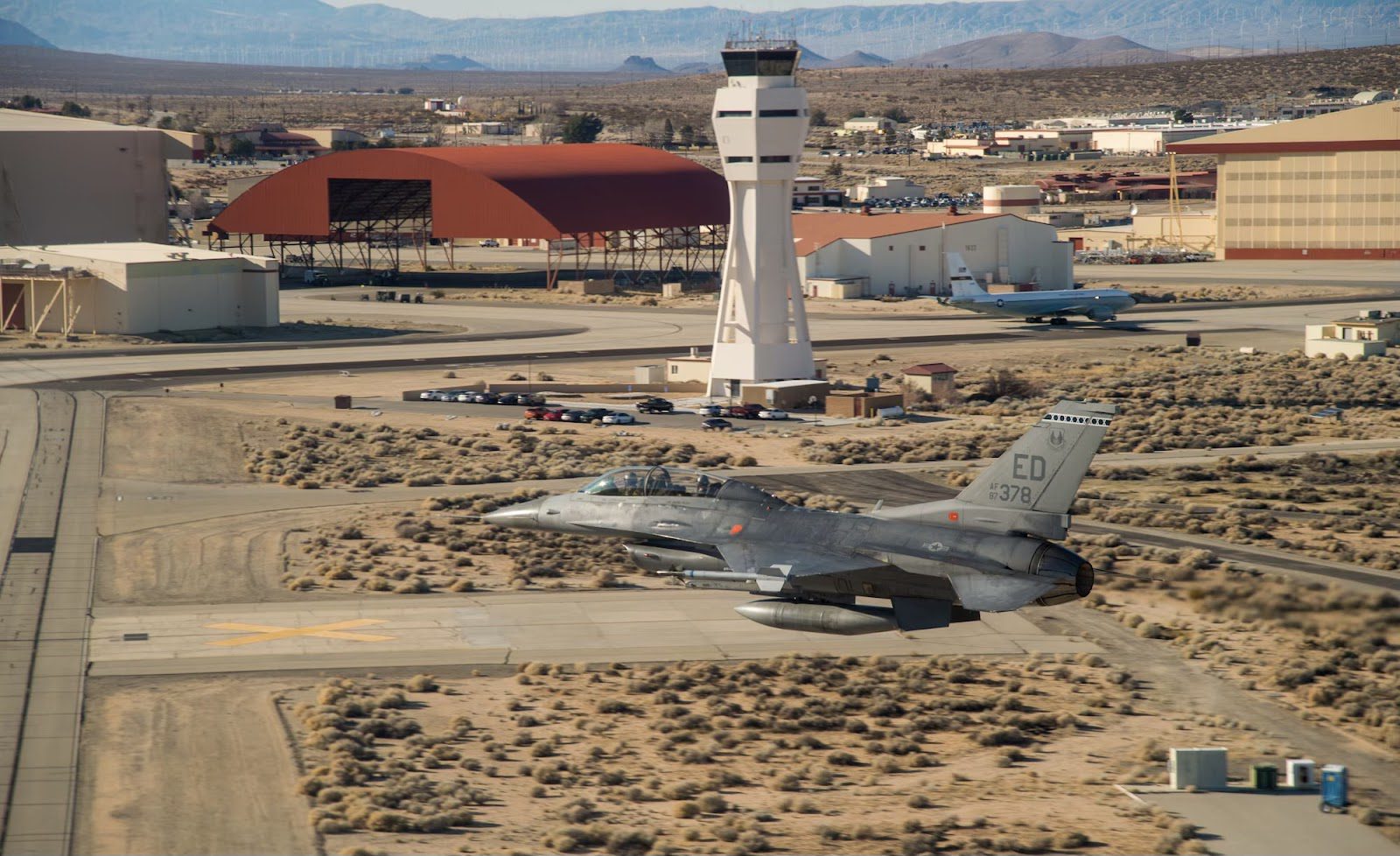
During the Cold War, Edwards Air Force Base became the crucial testing ground for the U.S.’s newest military aircraft. In this period, the Air Force focused on developing technologically advanced fighters, strategic bombers, and spy planes that ensured American superiority amid tensions with the USSR.
At the start of the Cold War, the main objective for American aircraft designers was creating supersonic aircraft. It was at Edwards AFB, on October 14, 1947, that Captain Chuck Yeager, flying the Bell X-1, first broke the sound barrier. This event ushered in a new era of aviation and laid the foundation for future research. In 1949, the base was officially renamed Edwards Air Force Base in honor of Captain Glen Edwards—a test pilot who died while testing the Northrop YB-49 flying wing.
In the 1950s and 1960s, the experimental X-series aircraft were tested here, including:
- X-15—the aircraft that reached the edge of space, becoming part of NASA’s research for future space flights.
- X-5—the first aircraft with variable-sweep wings, which became the prototype for future fighters.
The base also hosted testing for the F-100 Super Sabre, F-104 Starfighter, and F-4 Phantom II fighters, which became the backbone of the U.S. Air Force during the Cold War.
One of the U.S.’s main objectives during the standoff with the USSR was reconnaissance. Edwards AFB tested some of the most famous spy planes:
- U-2 Dragon Lady—a high-altitude reconnaissance aircraft used for surveillance over the Soviet Union.
- SR-71 Blackbird—the world’s fastest reconnaissance aircraft, capable of flying at 25 kilometers (85,000 feet) and evading anti-aircraft missiles.
These planes played a critical role in gathering intelligence, which helped the U.S. make strategic decisions.
During the Cold War, Edwards AFB became the premier test center for American military aviation. It was the birthplace of advanced technologies that changed the course of history: from supersonic flight and spy planes to stealth technology and space research. Thanks to Edwards, the U.S. maintained a technological edge over the USSR, which was vital in ending the Cold War.
The Age of Stealth and Modern Combat
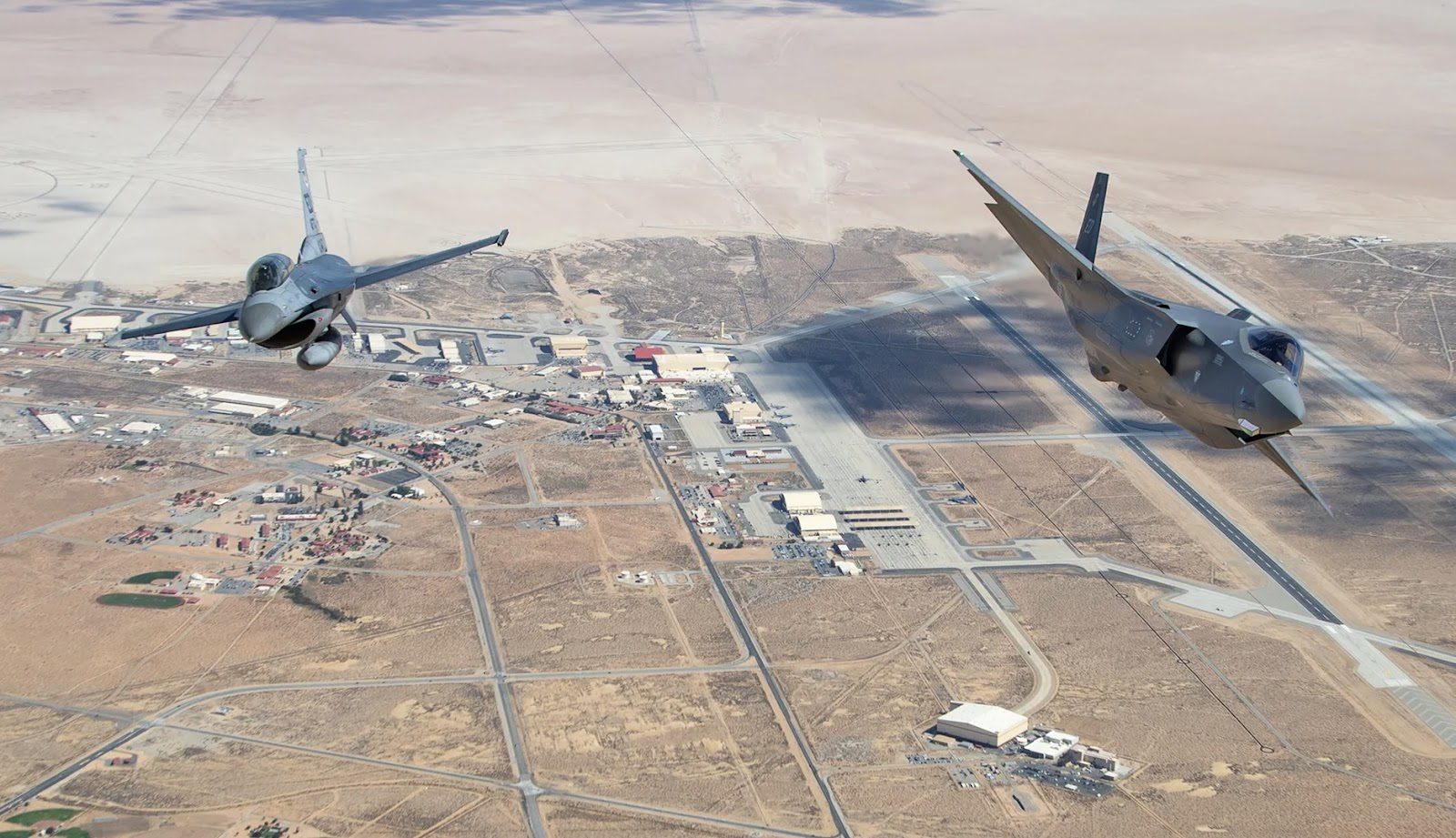
In the 1970s, Edwards AFB began testing a new concept: low-observability aircraft, which allowed planes to remain invisible to enemy radar. One of the first such aircraft was the F-117 Nighthawk, tested in the early 1980s. Its debut revolutionized military aviation, as it was the first combat aircraft to successfully combine stealth with strike power. The base also tested during this period:
- B-1B Lancer—a strategic supersonic bomber.
- B-2 Spirit—the world’s first stealth bomber, capable of carrying out nuclear strikes.
In the 21st century, Edwards remains the testing site for the latest combat aircraft, such as:
- F-22 Raptor—a fifth-generation multirole fighter.
- F-35 Lightning II—the most advanced stealth fighter.
- B-2 Spirit—the low-observability strategic bomber.
New models of unmanned aerial vehicles (UAVs), supersonic aircraft, and spacecraft are also tested here.
The Nexus with NASA
The connection between Edwards AFB and NASA began even before the space agency’s creation. In the 1940s and 1950s, the National Advisory Committee for Aeronautics (NACA)—the organization that later became NASA—operated at the base. It was here that the first experimental X-series aircraft, which were vital for future space programs, were tested.
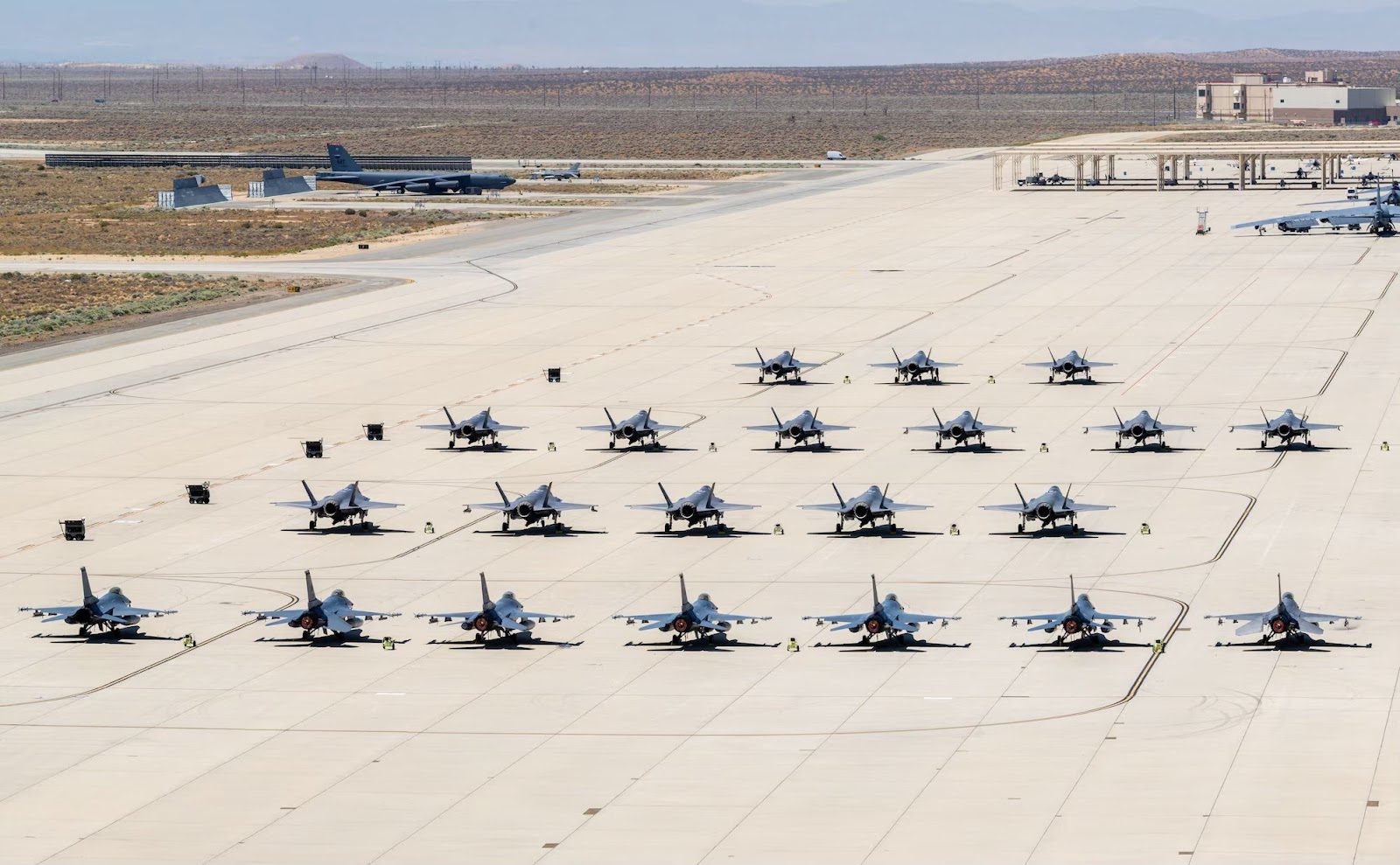
In the 21st century, the base continues to play a vital role in developing new aviation and space technologies. NASA uses it to test experimental aircraft, drones, and aerospace defense systems. The base employs about 10,000 military and civilian specialists who continue to advance American aviation. Edwards Air Force Base has been and remains the principal testing ground for aviation and space technologies. Its close collaboration with NASA has allowed the U.S. to achieve significant success in space exploration, supersonic aviation development, and the creation of reusable spacecraft. Thanks to this partnership, humanity has taken a massive leap into the future of space travel and technology.
Between 1959 and 1968, Edwards AFB tested the North American X-15—an experimental rocket-powered aircraft that explored high-altitude flight. The X-15 set speed and altitude records, reaching 107 kilometers above Earth—which is officially considered the boundary of space. X-15 pilots, including Neil Armstrong, gained invaluable experience operating aircraft under zero-gravity and high-G force conditions. These tests directly contributed to the development of the American space program, particularly the preparations for the Gemini and Apollo missions.
Since the 1970s, Edwards AFB became a key location for testing and landing NASA Space Shuttles. Thanks to its immense runways and the dry desert climate, the base was the ideal spot for test flights. In total, the base has accommodated over 50 Space Shuttle landings, including the Challenger, Discovery, Atlantis, and Endeavour.
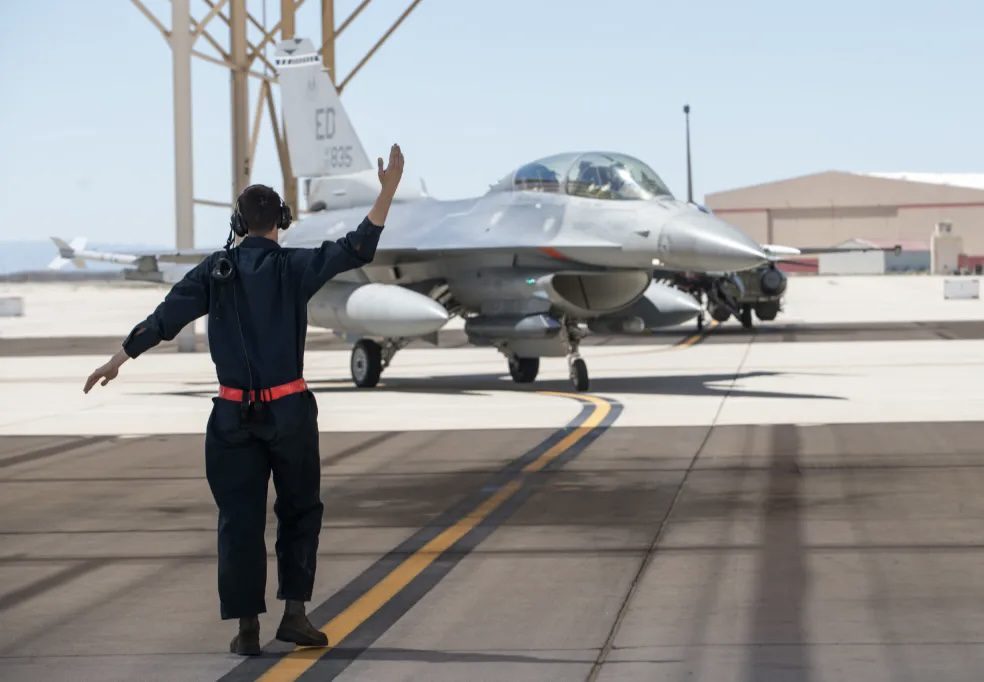
NASA, alongside the U.S. Air Force, continued to develop new aviation technologies at Edwards. In the 1990s and 2000s, the following were tested here:
- X-43A—a hypersonic aerial vehicle that set a speed record (Mach 9.6).
- X-51 Waverider—an uncrewed aircraft testing hypersonic flight technology.